Department of Politics and International Studies
The Department of Politics and International Studies at SOAS is today one of the most exciting places in the Anglophone world to learn about global politics with a focus on the politics of Asia, Africa and the Middle East. What distinguishes a SOAS Politics degree from other Politics degrees is that the students have the opportunity to apply the concepts and methods of the discipline to historical and contemporary conditions of Asia, Africa and the Middle East, as well as to broader trends in international relations. By contrast, in Politics degrees elsewhere, the empirical focus tends to be narrowly on Europe and North America, with the rest of the world receiving insufficient attention.
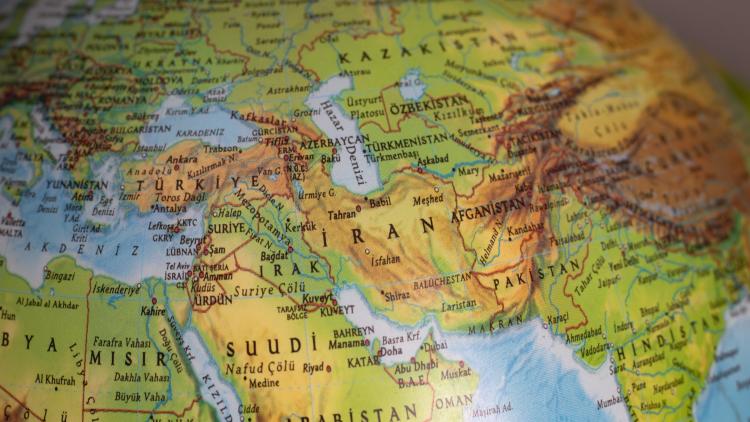
Asia, Africa and the Middle East contain most of the world’s population as well as the dynamic economies of the Asia-Pacific region (China, Japan, Korea, ASEAN) and India. Some of the principal hot spots in the world today (such as Iran, Libya, Syria, Afghanistan and Pakistan) are also located in these regions. The discipline of Politics has long involved debates about the forms of government most appropriate to the common pursuit of good life (as Aristotle wrote). The study of Politics is still built upon this fundamental question. At SOAS however, we go beyond the study of governments and also examine political contention, economic development, and ideologies and culture.
Originally established as the Department of Economic and Political Studies in 1962, two separate departments of Political Studies (& International Studies) and Economics came into existence in 1990. There are at present nearly 500 students studying for degrees (BA, Certificate, MSc and MPhil/PhD) in the Department. There are also visiting students who are here as part of a year's work towards degrees in other countries (notably the United States, EU, Korea and Japan).
The Department’s diverse staff are leading scholars in their fields, and have been trained in Politics and International Relations at institutions across the world. All are highly regarded specialists and most have knowledge of one or more of the languages of their regions of interest, in addition to disciplinary expertise. Their areas of expertise include nationalism, urban politics, political violence, migration and diaspora mobilization, Islamic political and intellectual history, transitional justice, politics of multiculturalism, international relations theory, gender, comparative political economy, human rights, and the study of ideologies inter alia.
In the 2008 UK HEFCE Research Assessment Exercise, the Department of Politics & International Studies received a strong evaluation: SOAS RAE details
National Student Survey: The Department scored a 96% satisfaction rate in the 2009 NSS
The Department of Politics and International Studies has been awarded a shared ESRC Politics research studentship as part of the Bloomsbury Consortium Doctoral Training Centre. For more information on how to apply please click here.
For Politics league tables, see:
- Guardian University Research League Tables: Politics
- The Independent 2010 ranking of Politics Departments
- The Guardian 2010 ranking of Politics Departments
- RAE League Tables - Research Fortnight
The Centre for the International Politics of Conflict, Rights and Justice (CCRJ), in the Department of Politics, conducts research and facilitates collaborative work among scholars, practitioners, and postgraduate students working on issues of human rights, humanitarianism, religion, and transitional justice in conflict and post-conflict situations. www.soas.ac.uk/ccrj/