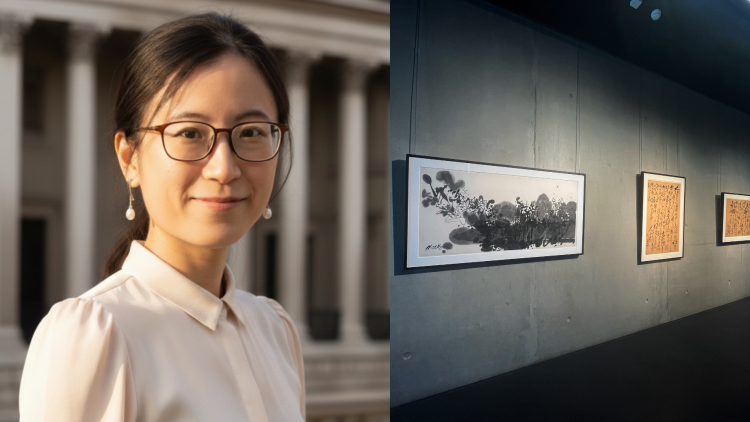
Professor of the History of Islamic Art
Department of History of Art and Archaeology
MA History of Art and Architecture of Islamic Middle East

You are viewing:
Key information

Key information
- Duration
- 1 year
- Start of programme
- September
- Attendance mode
- Full time or part time
- Location
- On Campus
- Fees
-
Home: £12,965
International: £25,320 - Course code
- PSO-HARMDE1FD, PSO-HARMDE2PD
- Entry requirements
-
We will consider all applications with a 2:2 (or international equivalent) or higher. In addition to degree classification we take into account other elements of the application such as your supporting statement. References are optional, but can help build a stronger application if you fall below the 2:2 requirement or have non-traditional qualifications.
-
Rwanda: Qualifications (Bachelor equivalency): Bachelor (4-year)
Equivalent to 2:ii: Lower Second Class Honours or 65-69% or 14/20
-
Saudi Arabia: Qualifications (Bachelor equivalency): Bachelor degree
Equivalent to 2:ii: GPA of 3.0/4.0 or 3.5/5.0 or overall 70%
-
Singapore: Qualifications (Bachelor equivalency): Bachelor degree
Equivalent to 2:ii: CAP 3.5/5.0 or 3.0/4.0
-
Slovakia: Qualifications (Bachelor equivalency): Bakalár / Bachelor
Equivalent to 2:ii: 70% or 2.0 overall or C
-
South Africa: Qualifications (Bachelor equivalency): Bachelor (4-year)
Equivalent to 2:ii: 60%
-
South Korea: Qualifications (Bachelor equivalency): Bachelor degree
Equivalent to 2:ii: GPA 2.7/4.0 or 3.0/4.3 or 3.3/4.5
-
Spain: Qualifications (Bachelor equivalency): Título de Grado / Título de Licenciado / Título de Ingeniero / Titulo de Arquitecto
Equivalent to 2:ii: 6.5/10 or GPA 1.75/4.0
-
Sri Lanka: Qualifications (Bachelor equivalency): Bachelor Special Degree or Professional Degree (4-year)
Equivalent to 2:ii: 55% or 2:2 or GPA 3.0/4.0
-
Sudan: Qualifications (Bachelor equivalency): Bachelor (5-year)
Equivalent to 2:ii: 65%+ or B
-
Sweden: Qualifications (Bachelor equivalency): Bachelor degree / Kandidatexamen / Yrkesexamen
Equivalent to 2:ii: B (90 credits) and C (90 credits) or Very Good (70 credits) and Good (110 Credits) or C (180 credits)
-
Switzerland: Qualifications (Bachelor equivalency): Diplom / Diplôme / Lizentiat / Staatsdiplom / Diplôme d’Etat
Equivalent to 2:ii: Overall 4.5/6 or 7/10 or 2.5/5
-
Syria: Qualifications (Bachelor equivalency): Licence / al-ijaza-fi / Bachelor
Equivalent to 2:ii: 70%+ or 'Good'
-
Taiwan: Qualifications (Bachelor equivalency): Bachelor degree
Equivalent to 2:ii: 68-70% or GPA 2.8/4.0-3.0/4.0
-
Thailand: Qualifications (Bachelor equivalency): Bachelor degree
Equivalent to 2:ii: GPA 3.0/4.0
-
Tunisia: Qualifications (Bachelor equivalency): Diplôme National d'Ingénieur / Diplôme National d'Architecture / Licence / Maîtrise
Equivalent to 2:ii: 12 out of 20
-
Turkey: Qualifications (Bachelor equivalency): Lisans Diplomasi
Equivalent to 2:ii: GPA 2.6/4 from the top universities and 3.0/4 from all others
-
Uganda: Qualifications (Bachelor equivalency): Bachelor degree
Equivalent to 2:ii: 2:2 (Lower Second) or B or GPA 3.0/5.0
-
Ukraine: Qualifications (Bachelor equivalency): Bachelor degree or Specialist Diploma
Equivalent to 2:ii: 8/12 or 3.8/5
-
United Arab Emirates: Qualifications (Bachelor equivalency): Bachelor degree
Equivalent to 2:ii: GPA 3.0/4.0 or 3.2/5.0
Information for prospective students from the United Arab Emirates
-
United States of America: Qualifications (Bachelor equivalency): Bachelor degree
Equivalent to 2:ii: GPA 3.0/4.0
-
Vietnam: Qualifications (Bachelor equivalency): Bachelor degree (4-year)
Equivalent to 2:ii: Overall score of 6.5/10
-
Yemen: Qualifications (Bachelor equivalency): Master's degree
Equivalent to 2:ii: Overall 'Good' (71-77%) or Aden University 80-83% (or 3.0/4.0)
-
Zambia: Qualifications (Bachelor equivalency): Master's degree
Equivalent to 2:ii: 65% or B or Credit or GPA 1.7/2.5 or 3.3/5.0
-
Zimbabwe: Qualifications (Bachelor equivalency): Bachelor degree
Equivalent to 2:ii: 2:2 or 65%
-
Afghanistan: Qualifications (Bachelor equivalency): Master's degree
Equivalent to 2:ii: 80% or 3.3/4.0
-
Argentina: Qualifications (Bachelor equivalency): Titulo / Grado de Licenciado
Equivalent to 2:ii: 7/10
-
Australia: Qualifications (Bachelor equivalency): Bachelor degree
Equivalent to 2:ii: 2:2 or Credit or 65%
-
Austria: Qualifications (Bachelor equivalency): Bachelor degree
Equivalent to 2:ii: 2.5/5.0 and overall Pass (Bestanden)
-
Bahrain: Qualifications (Bachelor equivalency): Bachelor degree
Equivalent to 2:ii: 75% or GPA 3.0/4.0
-
Bangladesh: Qualifications (Bachelor equivalency): Bachelor’s from Bangladesh University of Engineering and Technology or Master's degree
Equivalent to 2:ii: 60% or GPA 3.0/4.0
-
Belgium: Qualifications (Bachelor equivalency): Licentiaat or Licencié
Equivalent to 2:ii: 13/20 or 65%
-
Botswana: Qualifications (Bachelor equivalency): Bachelor degree (5-year) or Master's from University of Botswana
Equivalent to 2:ii: GPA 3.5/5.0 or 65% or B- or Good
-
Brazil: Qualifications (Bachelor equivalency): Título de Bacharel / Título de Licenciado (4-year)
Equivalent to 2:ii: 7/10 or 70%
-
Brunei: Qualifications (Bachelor equivalency): Bachelor degree
Equivalent to 2:ii: Lower Second Class Honours with 50% overall
-
Bulgaria: Qualifications (Bachelor equivalency): Bachelor degree
Equivalent to 2:ii: 4.3/6
-
Cameroon: Qualifications (Bachelor equivalency): Diplôme d'Ingénieur/ Diplôme d'Études Supérieures de Commerce (5-year)
Equivalent to 2:ii: 12-13 assez bien (fair); 70-74; or B+
-
Canada: Qualifications (Bachelor equivalency): Bachelor degree
Equivalent to 2:ii: GPA 3.0/4.0 or 74-77% or overall B
-
China Qualifications (Bachelor equivalency): Bachelor degree (4-year)
Equivalent to 2:ii:
73% or 2.6/4.0 (C9 unis)
75% or 2.8/4.0 (Double First unis)
80% or 3.25/4.0 (all other unis) -
Colombia: Qualifications (Bachelor equivalency): Licenciado / Titulo (4-year)
Equivalent to 2:ii: 3.5/5.0
-
Croatia: Qualifications (Bachelor equivalency): Baccalaureus / Baccalaurea (Bachelor degree)
Equivalent to 2:ii: Overall score 3/5
-
Cyprus: Qualifications (Bachelor equivalency): Bachelor degree
Equivalent to 2:ii: 6.5/10
-
Czech Republic: Qualifications (Bachelor equivalency): Bachelor degree (180 ECTS)
Equivalent to 2:ii: 1.75/4.0 or High C 'dobre’ (good)
Information for prospective students from the Czech Republic
-
Denmark: Qualifications (Bachelor equivalency): Bachelor degree
Equivalent to 2:ii: 7/12 or 8/13 or grade C
-
Egypt: Qualifications (Bachelor equivalency): Bachelor degree
Equivalent to 2:ii: 70% or 3.0/4.0
-
Estonia: Qualifications (Bachelor equivalency): Bakalaurusekraad / University Specialist's Diploma / Professional Higher Education Diploma
Equivalent to 2:ii: 4.0/5.0
-
Finland: Qualifications (Bachelor equivalency): Bachelor / Kandidaatti / Kandidat (180 ECTS credits)
Equivalent to 2:ii: 3/5 or 2/3
-
France: Qualifications (Bachelor equivalency): Licence or Diplôme from a grande école
Equivalent to 2:ii: 11.5 out 20
-
Gambia: Qualifications (Bachelor equivalency): Master's degree (2-year)
Equivalent to 2:ii: GPA 3.0/4.3 or 64% or B
-
Germany: Qualifications (Bachelor equivalency): Bachelor degree (180 ECTS)
Equivalent to 2:ii: 2.6/5
-
Ghana: Qualifications (Bachelor equivalency): Bachelor degree
Equivalent to 2:ii: 2:2 (Second Class Lower Division) or GPA 3.25/5.0 or 60%
-
Greece: Qualifications (Bachelor equivalency): Bachelor degree
Equivalent to 2:ii: 6.50/10
-
Hong Kong: Qualifications (Bachelor equivalency): Bachelor degree
Equivalent to 2:ii: Upper second class or GPA 2.7/4.0 or 75% or B Minus
-
Hungary: Qualifications (Bachelor equivalency): Bachelor (Alapfokozat) or Diploma (Egyetemi Oklevél)
Equivalent to 2:ii: 3.5/5.0
-
Iceland: Qualifications (Bachelor equivalency): Bachelor degree (Baccalaureus or Bakkalarprof)
Equivalent to 2:ii: 7.0 out of 10
-
India: Qualifications (Bachelor equivalency): Bachelor degree
Equivalent to 2:ii: CGPA: 55-60% or 5.5/10 - 6.0/10
-
Iraq: Qualifications (Bachelor equivalency): Bachelor degree (Licence/Karshani)
Equivalent to 2:ii: 0.7
-
Israel: Qualifications (Bachelor equivalency): Bachelor degree
Equivalent to 2:ii: 70% or C+
-
Italy: Qualifications (Bachelor equivalency): Laurea (180 ECTS)
Equivalent to 2:ii: 100/110
-
Japan: Qualifications (Bachelor equivalency): Bachelor degree
Equivalent to 2:ii: 70% or C+ or 3.0
-
Jordan: Qualifications (Bachelor equivalency): Bachelor degree
Equivalent to 2:ii: 3.0/4.0 or 70%
-
Kazakhstan: Qualifications (Bachelor equivalency): Bachelors (Bakalavr Diplomi) or Specialist Diploma
Equivalent to 2:ii: GPA 3.0/4.0 or GPA 4.0/5.0 or B
-
Kenya: Qualifications (Bachelor equivalency): Bachelor degree
Equivalent to 2:ii: 2:2 or 60%
-
Kuwait: Qualifications (Bachelor equivalency): Bachelor's degree from a recognised institution
Equivalent to 2:ii: GPA 2.67/4.0
-
Kyrgyzstan: Qualifications (Bachelor equivalency): Bachelor's degree or specialist diploma (min 4 years) from a recognised institution
Equivalent to 2:ii: 3.5/5.0 or 2.67/4.0
-
Latvia: Qualifications (Bachelor equivalency): Bakalaura Diploms (Bachelor's) or Profesionālā Bakalaura Diploms (Professional Bachelor's) from a recognised institution
Equivalent to 2:ii: 6/10
-
Lebanon: Qualifications (Bachelor equivalency): Bachelor's degree / Licence from a recognised institution
Equivalent to 2:ii: 70% or C or 2.7/4.0 or 12/20
-
Liberia: Qualifications (Bachelor equivalency): Master's degree from a recognised institution
Equivalent to 2:ii: 75% or 2.8/4.0
-
Libya: Qualifications (Bachelor equivalency): Bachelor's degree from selected institution
Equivalent to 2:ii: 65% or 2.8/4.0
-
Lithuania: Qualifications (Bachelor equivalency): Bachelors/Bakalauro (180 ECTS) from a recognised institution
Equivalent to 2:ii: 7/10
-
Luxembourg: Qualifications (Bachelor equivalency): Bachelor's degree from a recognised institution
Equivalent to 2:ii: 12/20
-
Macedonia: Qualifications (Bachelor equivalency): Bachelor's degree from a recognised institution
Equivalent to 2:ii: 7/10 or 2:2
-
Malawi: Qualifications (Bachelor equivalency): Master's degree from a recognised institution
Equivalent to 2:ii: 60% or 2.4/4.0
-
Malaysia: Qualifications (Bachelor equivalency): Bachelor's degree from a recognised institution
Equivalent to 2:ii: 2.6/4.0 or B- (Class 2 Division 2)
-
Maldives: Qualifications (Bachelor equivalency): Bachelor's degree from the Maldives National University (MNU)
Equivalent to 2:ii: 50%
-
Malta: Qualifications (Bachelor equivalency): Bachelor degree from a recognised institution
Equivalent to 2:ii: Lower Second Class / 60% / Category IIB
-
Mexico: Qualifications (Bachelor equivalency): Titulo de Licenciado from a recognised institution
Equivalent to 2:ii: 7.5/10
-
Morocco: Qualifications (Bachelor equivalency): Licence/Licence d'Etudes Fondamentales/Licence Professionnelle from a recognised institution
Equivalent to 2:ii: 11/20
-
Namibia: Qualifications (Bachelor equivalency): Bachelor's degree from a recognised institution
Equivalent to 2:ii: 60% or 2.5/4.0
-
Nepal: Qualifications (Bachelor equivalency): Master's degree / Bachelor's (4-year) from select institutions
Equivalent to 2:ii: 55% or 2.4/4.0
-
Netherlands: Qualifications (Bachelor equivalency): Bachelor's degree from a recognised institution
Equivalent to 2:ii: 6/10 or 2.7/4.0
-
New Zealand: Qualifications (Bachelor equivalency): Bachelor's degree (3 or 4 years) from a recognised institution
Equivalent to 2:ii: Lower Second Class Hons
-
Nigeria: Qualifications (Bachelor equivalency): Bachelor's degree from a recognised institution
Equivalent to 2:ii: Lower Second Class Hons
-
Norway: Qualifications (Bachelor equivalency): Bachelors/Bachelorgrad (180 ECTS) or Candidatus/a magisterii from a recognised institution
Equivalent to 2:ii: Overall C
-
Oman: Qualifications (Bachelor equivalency): Bachelor's degree from a recognised institution
Equivalent to 2:ii: 2.7/4.0
-
Pakistan: Qualifications (Bachelor equivalency): Bachelor's degree (4-year) from HEC recognised institution or 2 year BA + 2 year MA from HEC recognised institution
Equivalent to 2:ii: CGPA 2.7 or 55%
-
Palestine (State of): Qualifications (Bachelor equivalency): Bachelor degree (4-year) from a recognised institution
Equivalent to 2:ii: 75% or or 2.7/4.0
-
Papua New Guinea: Qualifications (Bachelor equivalency): Bachelor's (Honours) degree from a recognised institution
Equivalent to 2:ii: Class II Division B
-
Peru: Qualifications (Bachelor equivalency): Licenciado or Professional Title from a recognised institution
Equivalent to 2:ii: 12/20
-
Philippines: Qualifications (Bachelor equivalency): Master’s from recognised institution or Centre of Excellence; or Bachelor's from prestigious institution or Centre of Excellence.
Equivalent to 2:ii: 2.5/4.0 or 80% or 2.5/5.0 or Cum Laude
-
Poland: Qualifications (Bachelor equivalency): Licencjat or Inżynier from a recognised institution
Equivalent to 2:ii: 3.8/5.0
-
Portugal: Qualifications (Bachelor equivalency): Licenciado (180 ECTS) from a recognised institution
Equivalent to 2:ii: 12/20
-
Qatar: Qualifications (Bachelor equivalency): Bachelor's degree from a recognised institution
Equivalent to 2:ii: 2.7/4.0 or 3.3/5.0
-
Romania: Qualifications (Bachelor equivalency): Diplomă de Licenţă/Diplomă de Inginer/Diplomă de Urbanist Diplomat from a recognised university
Equivalent to 2:ii: 7/10
-
Russia: Qualifications (Bachelor equivalency): Diplom Bakalavra or Specialist Diploma from a recognised institution
Equivalent to 2:ii: 3.5/5.0
-
Rwanda: Qualifications (Bachelor equivalency): Bachelor's degree (4-year) from a recognised institution
Equivalent to 2:ii: Lower Second Class Hons; 60%; or 13/20
-
Saudi Arabia: Qualifications (Bachelor equivalency): Bachelor's degree from a recognised institution
Equivalent to 2:ii: 3.5/5.0 or 2.7/4.0 or 70%
-
Serbia and Montenegro: Qualifications (Bachelor equivalency): Bachelor's degree from a recognised institution
Equivalent to 2:ii: 7 / Good
-
Sierra Leone: Qualifications (Bachelor equivalency): Bachelor's Honours degree from a recognised institution
Equivalent to 2:ii: Lower Second Class Hons; 55%; 3.4/5.0; 2.75/4.0
-
Singapore: Qualifications (Bachelor equivalency): Bachelor's degree from a recognised institution
Equivalent to 2:ii: 3.3/5.0 or 2.8/4.0
-
Slovakia: Qualifications (Bachelor equivalency): Bachelor's degree (Bakalár) from a recognised institution
Equivalent to 2:ii: 70%; or 2.0 overall; or C
-
Slovenia: Qualifications (Bachelor equivalency): Diploma o pridobljeni univerzitetni izobrazbi (University Degree) or Diploma o pridobljeni visoki strokovni izobrazbi / Diplomirani (Diploma of Professional Higher Education) or Diplomant or Univerzitetni diplomant (first degree)
Equivalent to 2:ii: 7 out of 10
-
Solomon Islands: Qualifications (Bachelor equivalency): Bachelor's degree (4-year) from the University of the South Pacific
Equivalent to 2:ii: B/3.0
-
Somalia: Qualifications (Bachelor equivalency): Do not accept national qualifications for direct entry
Equivalent to 2:ii: N/A
-
South Africa: Qualifications (Bachelor equivalency): Bachelor's degree (4-year) from a recognised institution
Equivalent to 2:ii: 60%
-
South Korea: Qualifications (Bachelor equivalency): Bachelor's degree from a recognised institution
Equivalent to 2:ii: GPA 2.5/4.0; or 2.8/4.3; or 3.0/4.5
-
Spain: Qualifications (Bachelor equivalency): Título de Grado / Título de Licenciado / Título de Ingeniero / Titulo de Arquitecto from a recognised institution
Equivalent to 2:ii: 6/10 or 1.5/4.0
-
Sri Lanka: Qualifications (Bachelor equivalency): Bachelor Special Degree or Professional Degree (4-year) from a recognised institution
Equivalent to 2:ii: 55% or 2:2 or 3.0/4.0
-
Saint Kitts and Nevis: Qualifications (Bachelor equivalency): Bachelor's degree from the University of the West Indies
Equivalent to 2:ii: 2.7/4, B-, 60% or Lower Second Class Hons
-
Saint Vincent and the Grenadines: Qualifications (Bachelor equivalency): Bachelor's degree from the University of the West Indies
Equivalent to 2:ii: 2.7/4, B-, 60% or Lower Second Class Hons
-
Sudan: Qualifications (Bachelor equivalency): Bachelor's degree (5-year) from a recognised institution
Equivalent to 2:ii: 60% or B
-
Sweden: Qualifications (Bachelor equivalency): Bachelor's Degree/Kandidatexamen/Yrkesexamen from a recognised institution
Equivalent to 2:ii: Pass OR Godkänd (with a minimum of 90 credits at Good - C)
-
Switzerland: Qualifications (Bachelor equivalency): Diplom/Diplôme;Lizentiat;Staatsdiplom/Diplôme d’Etat from a recognised institution
Equivalent to 2:ii: 4/6; or 6/10: or 3/5
-
Syria: Qualifications (Bachelor equivalency): Bachelor's degree (Licence/ al-ijaza-fi) from a recognised institution
Equivalent to 2:ii: 65%+ or 'Good' from a public university
-
Taiwan: Qualifications (Bachelor equivalency): Bachelor's degree from a recognised institution
Equivalent to 2:ii: 65-70% or GPA 2.6/4.0 - 2.8/4.0
-
Tanzania: Qualifications (Bachelor equivalency): Bachelor's degree from a recognised institution
Equivalent to 2:ii: 2:2; or Lower Second; or GPA 2.7/5.0
-
Thailand: Qualifications (Bachelor equivalency): Bachelor's degree from a recognised institution
Equivalent to 2:ii: 2.6/4.0
-
Trinidad and Tobago: Qualifications (Bachelor equivalency): Bachelor's Degree from UWI
Equivalent to 2:ii: B-, 60% or 2.5; or Lower Second Class Hons
-
Trinidad and Tobago: Qualifications (Bachelor equivalency): Diplôme National d'Ingénieur/ Diplôme National d'Architecture/ Docteur en Médecine / Vétérinaire/ Licence/ Maîtrise from recognised institution
Equivalent to 2:ii: 11 out of 20
-
Turkey: Qualifications (Bachelor equivalency): Lisans Diplomasi from a recognised institution
Equivalent to 2:ii: Top Unis: 2.5/4.0 All others: 2.8/4.0
-
UAE: Qualifications (Bachelor equivalency): Bachelor's degree from a recognised institution
Equivalent to 2:ii: GPA 2.6/4.0 or 75% or C+
-
Uganda: Qualifications (Bachelor equivalency): Bachelor's degree from a recognised institution
Equivalent to 2:ii: 2:2 (Lower Second) or 3.0/5.0 or B
-
Ukraine: Qualifications (Bachelor equivalency): Bachelor's degree or specialist diploma from a recognised institution
Equivalent to 2:ii: 7 out of 12; or 3.5 out of 5
-
USA: Qualifications (Bachelor equivalency): Bachelor's degree from a recognised institution
Equivalent to 2:ii: GPA 2.7/4.0
-
Vietnam: Qualifications (Bachelor equivalency): Bachelor's degree (4-year) from a recognised institution
Equivalent to 2:ii: 6.0/10 or 2.5/4.0
-
Yemen: Qualifications (Bachelor equivalency): Master's degree from a recognised institution
Equivalent to 2:ii: 70% or 2.7/4.0
-
Zambia: Qualifications (Bachelor equivalency): Master's degree from a recognised institution
Equivalent to 2:ii: 65%; B; Credit; 1.7/2.5; or 2.7/4.0; or 3.3/5.0
-
Zimbabwe: Qualifications (Bachelor equivalency): Bachelor's degree (3 or 4 years) from a recognised institution
Equivalent to 2:ii: 2:2 (60%)
-
See international entry requirements and English language requirements for further information.
Course overview
The MA History of Art and Architecture of the Islamic Middle East programme covers an area stretching from Islamic Spain through the Arab countries, Turkey, Iran and Central Asia in diverse historical periods.
The Islamic Middle East has given rise to an impressive material culture that continues through to the present. This programme offers you an unmatched opportunity to study particular regions or categories of art, including Islamic visual culture; Arab, Persian and Turkish painting; the calligraphy and illumination of the Qur'an; the architecture and urbanism of Morocco; the arts and architecture of the Ottomans in Turkey and the Balkans; and the material culture of western Iran.
In addition, the degree engages with trans-regional topics that extend beyond the Middle East, such as cultural and artistic relationships between the Islamic lands and Europe.
Why study History of Art and Architecture of the Islamic Middle East at SOAS?
- SOAS is ranked 6th in the UK and 24th in the world for History of Art (QS World University Rankings 2026).
- We're ranked top 20 in the UK for Arts and Humanities (QS World University Rankings 2026).
- SOAS is ranked 7th in the UK for African and Middle Eastern Studies (Complete University Guide 2026).
- We partner with the British Council to offer a School of Arts student an internship at the Venice Biennale.
- We partner with the Chu Te-Chun Foundation to offer a paid internship at the Venice Biennale.
- We offer exclusive School of Arts-led internships at the Rietberg Museum, Zurich (two places available).
- You can apply for a SOAS Co-Creator internship in the Special Collections of the SOAS Library.
Study Tours
All postgraduate students can take part in our Study Tours and explore the world. Destinations include New Delhi, Lahore, Seoul, Luang Prabang, Almaty, Bishkek, Kigali, Johannesburg, and Doha. For more information, see our Study Tours page.
Structure
Students must complete 120 credits of MA taught modules in addition to the compulsory dissertation (60 credits).
Please note that modules need a minimum number of students to run. Should the module not run, students will be notified of an alternative.
Part-time
Students may be allowed to study for the MA on a part-time basis.
- The part-time MA may be taken over 2-years, in which case the student takes two 30 credits modules (or equivalent 15 credits modules) in the first year, and two 30 credits modules (or equivalent 15 credits modules) and the dissertation in the second year.
- Alternatively, it can be taken over 3-years, in which case the student can distribute the 120 credits modules evenly in each of the 3 years. The dissertation can be written in year two or three, but it is strongly recommended that this be undertaken in the final year of the programme. It must be submitted in September of the year in which the student registers for it.
Important notice
The information on the website reflects the intended programme structure against the given academic session. The modules are indicative options of the content students can expect and are/have been previously taught as part of these programmes.
However, this information is published a long time in advance of enrolment and module content and availability is subject to change.
Core
Compulsory
Guided Options - List B
Student must take 15 credits from guided options list B
Guided options - List A
Students must take at least 45 credits from guided option list
Open options
Students can take a maximum of 60 credits from the School-wide open options list, including languages.
Teaching and learning
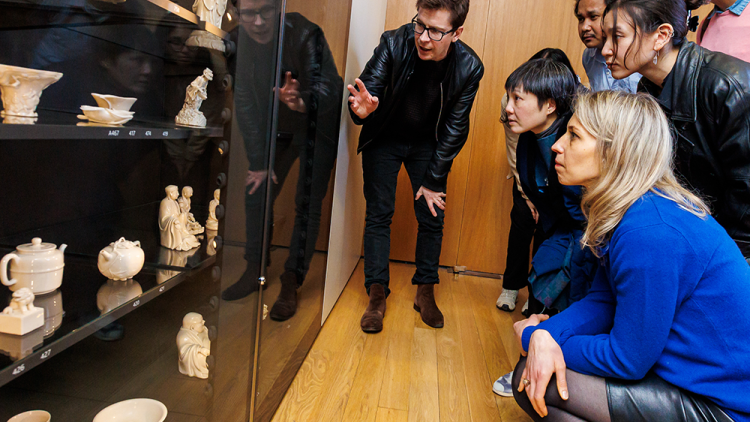
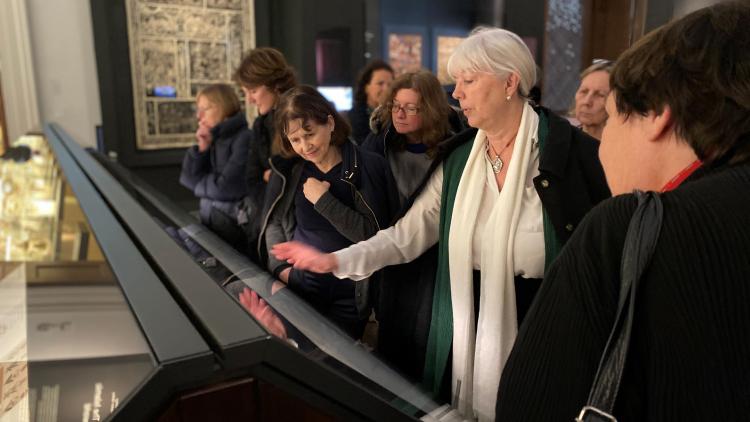
Teaching consists of a combination of lectures and seminars. Classes are normally between two and three hours per week for each course. Teaching methods include lectures with discussion, seminars (at which students present papers) and museum visits. Students at all levels are expected to take an active part in class presentations. A particularly important element is the training of the student's visual memory.
In addition to their studies on the MA programme, students at SOAS can participate in a wide range of research seminars, lectures and conferences that regularly take place in the School and in the University of London.
Contact hours
All Masters programmes consist of 180 credits, made up of taught modules of 30 or 15 credits, taught over 10 or 20 weeks, and a dissertation of 60 credits. The programme structure shows which modules are compulsory and which optional.
As a rough guide, 1 credit equals approximately 10 hours of work. Most of this will be independent study, including reading and research, preparing coursework, revising for examinations and so on. It will also include class time, which may include lectures, seminars and other classes. Some subjects, such as learning a language, have more class time than others. At SOAS, most postgraduate modules have a one hour lecture and a one hour seminar every week, but this does vary.
Assessment
For each of the taught modules, assessment is primarily by course work and a range of assessment methods are employed. These usually consist of short essays, reports, presentations, annotated bibliographies, journal entries or a combination thereof. Some modules will also be assessed by unseen examination in the form of a slide test. For details on how modules are assessed, consult the individual module page on the SOAS website.
Additionally, for each HAA degree pathway, 60 credits (of 180) are assigned to a dissertation which consists of three assessed components: one 300-word summary of the research project (worth 5%), one 700-word annotated bibliography (worth 9%) and a dissertation of 9,000-10,000 words (worth 86%).
SOAS Library
SOAS Library is one of the world's most important academic libraries for the study of Africa, Asia and the Middle East, attracting scholars from all over the world. The Library houses over 1.2 million volumes, together with significant archival holdings, special collections and a growing network of electronic resources.
Scholarships
Employment
Students in the School of Arts develop a critical and theoretically informed approach to global arts and culture. In addition to an intercultural awareness and practical expertise, graduates gain a wide portfolio of transferable skills which are especially sought after in the creative and cultural industries.
Recent School of Arts graduates have been hired by:
- Christie’s
- Christine Park Gallery
- Crisis
- Design Museum
- Hong Kong Museum Of Art
- India Foundation For The Arts
- Japanese Gallery
- Museum of East Asian Art
- Music in Detention
- National Gallery
- Pan Arts
- People Projects Culture & Change
- Roundhouse Trust
- Somerset House Trust
- Songlines Magazine
- Sotheby's
- South Asian Art UK
- Stratford Circus Arts Centre
- Taiwan Embassy
- The Alliance for Global Education
- The British Embassy
- The National Museum Of Korea
- The Royal Collection
- Victoria and Albert Museum
Find out about our Careers Service.