The debt crisis we don't talk about: Women, credit, and austerity in South Africa


What happens when public austerity meets private debt? In South Africa, women carry the cost - in cash, care, and credit.
It’s 2025, and the world feels on edge. The word “crisis” has become an all-familiar soundtrack. Flattened, normalised, almost mundane. However, while today’s political headlines are loud, alarming and ever-escalating, it is vital that we don’t lose sight of issues that sat at the centre of global policy debates just before certain world leaders have shown us that potentially men are just too emotional to oversee the global order.
First and foremost: The rising threat of numerous countries in the Global South experiencing severe debt distress. And connected the quieter emergencies playing out every day in homes, families, and private household budgets. In the swamp of seemingly static debt restructuring debates, feminist and decolonial thinkers have long asked the sharper questions: Who really owes whom? Who pays when the budget gets cut?
The problem isn’t a lack of feminist and decolonial thinking. It’s that these insights have been sidelined, tokenised, or reduced to advocacy talking points, while policy ploughs on.
These critiques of austerity and global finance, tracing back to the 1980s, haven’t just warned of the harms; they’ve laid out what debt justice should look like. They've shown that today's national debt crises aren’t anomalies, but the product of a global economic system designed to extract, and that debt cancellation - not restructuring or rollover - is the starting point for repair. The aim of this blog is not to rehash these brilliant ideas.
What this blog does do is to apply the feminist tradition of making the personal political, and to apply the sense of urgency for change to the issue of household debt. In a moment shaped by fiscal tightening and debt ceilings, it asks: How must we think about the connections between public and private debt from a feminist lens?
The case of South Africa very clearly shows that the burden of public debt does not simply ‘trickle down’; it reinforces structural inequalities that trap women, particularly those facing intersecting inequalities, in cycles of financial dependency and emotional distress.
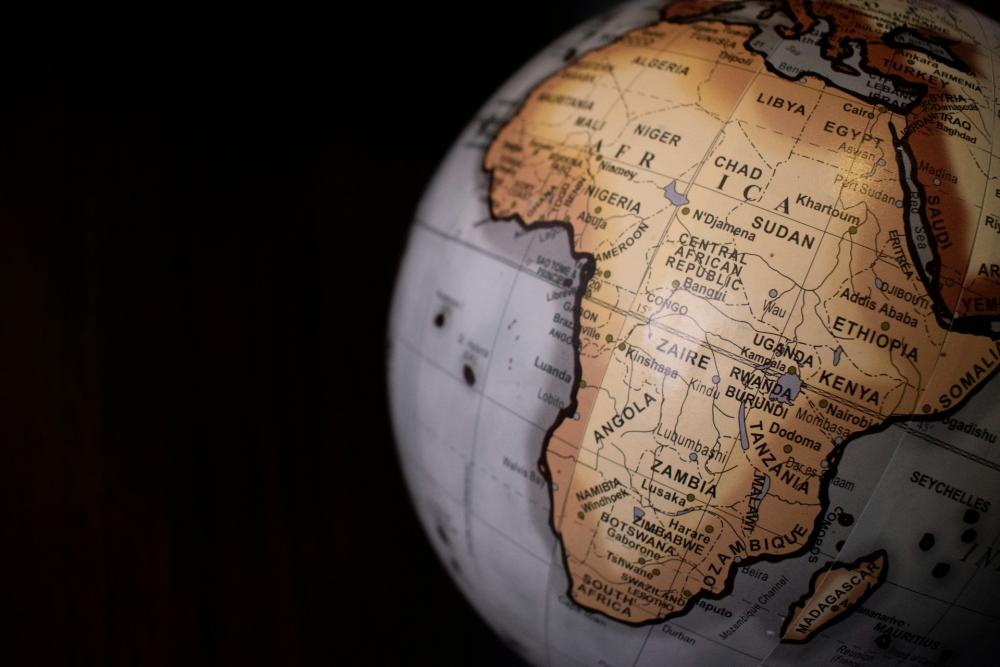
Drawing from my ongoing PhD research on gendered patterns and experiences of indebtedness in South Africa I argue that public and private debts, though distinct, are systematically linked, creating a web that entangles the most vulnerable.
Historical backdrop
Colonialism and apartheid shaped a unique debt landscape in South Africa. Under apartheid, Black South Africans were effectively excluded from accessing the formal credit market, resulting in many relying on informal lending.
Post-apartheid, universal credit access was promoted as a tool for equality. But a credit crisis in the early 2000s exposed the dangers of equating formal democratic inclusion with financial liberation. It revealed the limits of a project that sought to substitute public provision with private credit uptake and led to tighter credit regulation.
Today, South Africa’s debt landscape blends formal and informal lending, with credit ambiguously seen as both an enabler of and a threat to financial stability. However, pressure on the private credit sector and South African households alike are mounting. Today, the average South African dedicates over 25% of their take-home pay on debt repayments, with this number rising to almost 50% of take-home pay for upper-middle income segments.

Lines of connection: The debt web
Public and household debt form an interconnected web of economic relations. When the strand of public debt is tightened by austerity measures, the entire web strains, placing added pressure on the most vulnerable, especially marginalised women. Three especially striking linkages highlight these connections:
- Debt for Survival: The Social Grant Trap. Public-private partnerships are often promoted as efficient ways to maximise scarce public resources, but they have been shown to facilitate the financial exploitation of low-income individuals. In 2012, South Africa outsourced its social grant distribution to a private distributer. While the distributor did facilitate swift grant distribution, it also created a lucrative business for itself: The company extended credits to grant recipients, using their guaranteed access to benefits as collateral. This turned social protection into a debt opportunity. Grant recipients, overwhelmingly low-income Black and Coloured women, became ideal borrowers as their grant essentially served as a state-backed repayment guarantee. What began as income support quickly morphed into a credit trap, locking many low income women into cycles of debt and financial distress.
- Debt for (In)Stability: Middle-Class Financial Leverage & Gendered Inequality. If the poor borrow to survive, the middle class borrows to stay afloat. In South Africa, access to most formal credit – mortgages, car loans, personal loans – is conditional on being in employment, making the salaried middle-class individual the prime target for lenders. Most upper middle households use credit to finance assets like homes and vehicles, but here, too, inequality runs deep as gendered gaps in asset and wealth ownership exceed gendered income inequality disparities. What does this mean? For many, home ownership functions as a private pension – a substitute for a crumbling public safety net. Yet mortgages and houses are disproportionately held in men’s names, leaving women at a greater risk for financial precarity in case of separation. Hence as austerity measures further weaken South Africa’s public provisioning system, the pressure to build personal stability through credit grows. But not everyone gets equal access to that fragile form of private security.
- Indebted Care: Reproductive Labour and Unpaid Work. Finally, the justification of austerity as economically rational rests on the assumption that households will simply absorb the increased private care needs that come out of public service cuts. When support for essential services like childcare is reduced, the increased burden of care disproportionately falls on low-income women unable to afford paid alternatives. Furthermore, with the heightened exposure to credit, the ability of household members to practice smart financial management, closely track all payment obligations, interest rate changes and potential consolidation options become a vital new task of taking care of one's family. This additional unpaid and highly gendered task add to the pressures of domestic obligations and women’s mental load. It has been shown that South African women in debt experience greater emotional strain than men, reporting higher levels of worry about making it through the month and meeting debt repayments.

All three outlined dynamics aren’t separate crises. They are parts of the same web, one in which austerity shrinks the state and stretches the household, until the latter hangs by a single thread: a line of credit. Women are asked to absorb the state’s retreat as both caregivers and financial managers, while facing increasing material disadvantages.
The real crisis is that we’ve normalised an economy that runs on their sacrifice – financial, emotional, reproductive – while pretending that public and private debt is gender neutral.
The result is not just financial strain. It’s a form of reproductive debt: the unpaid, unseen costs taken on by those who hold households and communities together when the state steps back and life gets hard. This debt is owed to them, not by them.
It’s time to flip the script, act on demands long voiced by feminist and decolonial thinkers and inscribe into every financial policy we design: Who really owes what to whom?
Header image credit: Zen Summer via Unsplash.
About the author
Lena Gempke is a PhD Student in Development Economics at SOAS University of London.