Energy transitions, social frictions and the need for community inclusion


Sustainability is not only about achieving environmental goals, but also about reaching social outcomes. As the UK moves toward a Net Zero Goal, we must not repeat the errors of previous transitions.
Energy transitions are often presented as technical upgrades: new infrastructure, new fuels, new efficiencies. But history shows they are never merely technical. They reorganise power, reshape communities, and redefine who matters in the economy.
For nearly two centuries, the Durham coalfield workers were the engine of Britain. Miners and workers held immense political and economic power. They could stop industries and, with them, the entire national economy. This power was rooted in their essential role in a system that was geographically fixed and required mass, organised labour, as Tim Mitchell has argued.
The omissions and errors of that transition must not be replicated as the UK and the world race towards a Net Zero Goal.
That all changed in the 1980s. The decision to switch from coal to gas was not only a technical one, but also an economic and political one. The move deliberately diminished the miners’ power and the importance of those communities. The last coal mine in the UK closed in 2023. This marks the end of an era. This legacy is an important reminder: The social and regional challenges of the current energy transition must be taken seriously as the UK and the world work towards a Net Zero Goal.
Technical fantasies of wind energy
Today, wind energy has become the new pillar of the UK’s energy strategy. Wind turbines provide roughly a third of the UK’s domestic energy. Most of this capacity (over 11 GW) is located offshore, kilometres away from cities and communities. This seems like an ideal technical solution. By moving energy generation out of sight, it appears to bypass the messy human uncertainty of onshore politics, as Hanna Appel has argued. It’s a green fantasy that imagines energy as clean not only of fossil fuels but also of people.
It’s a green fantasy that imagines energy as clean not only of fossil fuels but also of people.
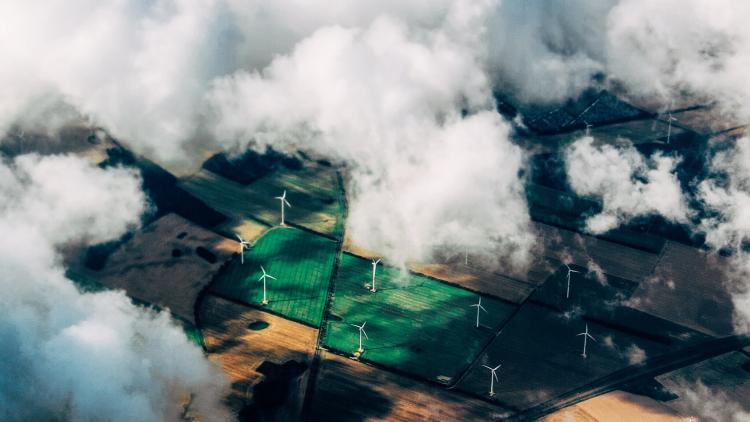
But this “out of sight” solution is a luxury not all countries can afford. Offshore wind farms are expensive, and for most of the world, renewable energy means onshore wind farms. This means turbines in fields and surrounding villages and direct interaction with the communities who live there. This relationship can become problematic when developers see only land and wind, not people.
Wind collides with people’s lives
This friction is evident in Southern Mexico. The Isthmus of Tehuantepec has some of the strongest, most consistent wind currents in the world. From a purely technical perspective, covering the entire region with turbines could generate 44 GW of electricity, nearly half of Mexico’s entire installed capacity.
But this technical fantasy collides with social reality. Local and Indigenous peoples have very different views on these megaprojects. With little actual benefit for the communities that must host them, they argue that “inclusion” is often a facade. This tension has produced exactly what developers hoped to avoid: opposition demonstrations, legal contests, and delays in operations.
Energy doesn’t just move industries. It fuels societies, families, communities, and individuals.
The lack of real community involvement has led to the cancellation of major projects. The Mareña Renovable project in the Zapotec region was shut down in 2012 amid protests and accusations of bribery. In 2022, Électricité de France’s Gunaa Sicarú project was also cancelled due to human rights concerns.
In these cases, community inclusion was reduced to two mechanisms: Free, prior and informed consultation required by international law, to justify a project already agreed upon by corporations; and payments for leasing the land, which often increase local inequality between landholders and the landless.
Regional realities challenge a single path transition
The UK’s experience shows two energy transitions already taken place: from coal to fossil fuels, and now into its path towards renewables. But this is not the global reality. For instance, over 2 billion people worldwide rely on solid biofuels like wood and charcoal for daily cooking and heat.
The issue is not how to get rid of the social frictions of energy. The task is how to accept them and build systems that are just and inclusive of local realities from the start. Sustainability is not only about achieving environmental goals, but also about reaching social outcomes.
Energy doesn’t just move industries. It fuels societies, families, communities, and individuals. Whether the infrastructure is offshore or onshore, we cannot build a green, just future by pretending people and communities don’t matter.
Header image credit: Vedrana Filipović via Unsplash
About the author
Carlos Lucas Mateo is from the Purépecha region in Michoacán, Mexico. He is pursuing an MA in Anthropology of Global Futures and Sustainability (now MA Anthropology of the Environment and Sustainability) at SOAS University of London. In 2024, his research work was awarded by the Mexican Institute of Anthropology and History (INAH). He is a Chevening scholar sponsored by the UK Foreign, Commonwealth & Development Office for the 2025/26 cohort.