Five lessons the UK can learn from Italy’s asylum accommodation crisis


Asylum accommodation is a political battleground: drawing on his research in Italy, Dr Paolo Novak shows how the UK’s case reveals that it is never just about housing, but about power, inequality, and belonging.
The battle over the Bell Hotel in Epping is not just about where asylum seekers sleep. It has become a struggle over who controls local space, whose voices are heard, and what kind of society we want to live in. The High Court ruling to close the hotel – amid protests, planning disputes and far-right mobilisation – shows that asylum accommodation is now a political battleground in the UK.
Italy has been grappling with this dilemma for more than two decades. My research on Italy’s asylum accommodation system shows that where to host migrants is never simply a technical problem. It reflects deeper conflicts about inequality, governance and belonging.
From the Italian case, the UK can learn five lessons.
1. Hotels are a symptom, not a cause
While the debate over asylum seekers’ accommodation is currently framed around the use of hotels and their alternatives, the Italian case shows that hotels are used when reception systems are underfunded or as a punitive measure to discipline migrants. Governments fall back on hotels when public policy fails.
Governments fall back on hotels when public policy fails.
Closing hotels without reforming the system does not solve the problem – it simply displaces it. In Italy, moves away from hotels often produced even larger reception centres, run by private contractors with limited accountability, further diluting and emptying the rights associated with the status of asylum seeker. Tackling the “hotel problem” means asking harder questions about how asylum is organised and resourced.
2. Accommodation exposes tensions over who governs territory
Italy’s experience highlights how asylum reception cuts across different layers of authority. Who decides where centres are located – the national government, regional authorities, or local councils? Should planning laws apply to hotels turned into asylum centres? Who speaks for local communities?
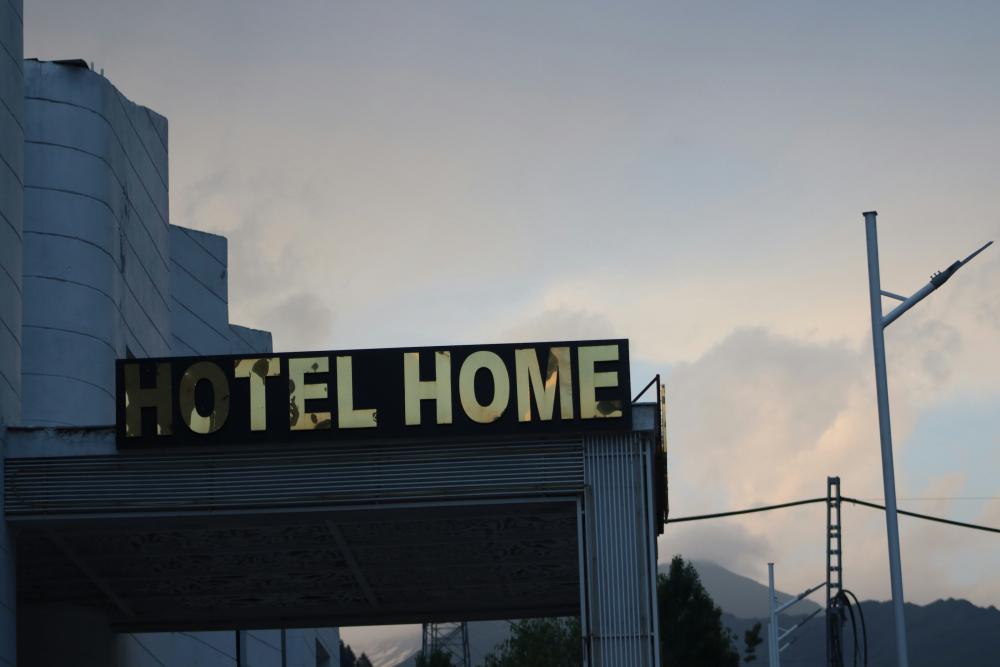
The UK faces similar disputes. In Epping, the local council fought the Home Office in court. Other councils, too, are considering all options to challenge migrant hotel use. These struggles are not just about migration; they are about the organisation of territory and the relationship between central and local power.
3. Every form of accommodation has winners and losers
No single model of asylum housing is free from problems. In Italy, hotels brought income to some landlords and jobs for local staff, but also stoked community tensions. Large reception centres reduced visibility in towns, but often isolated asylum seekers in marginal locations. Smaller community flats fostered better integration but required more investment and political will. Each option benefits some actors and disadvantages others.
The key question UK policy makers face, then, is not which model is “perfect,” but whose standpoint counts when judging costs and benefits – asylum seekers themselves, local communities, landlords, or national institutions.
4. Asylum accommodation reframes “us and them”
Public debate often sets up a simple divide: migrants versus citizens. But Italy’s case shows that asylum accommodation rearranges these boundaries in more complex ways. It creates new lines between those who bear the burden of hosting and those who are shielded from it, between places that profit and those that feel abandoned.
Accommodation reveals deeper inequalities within society. In both Italy and the UK, asylum centres are more likely to be located in poorer areas with fewer resources.
In this sense, accommodation reveals deeper inequalities within society. In both Italy and the UK, asylum centres are more likely to be located in poorer areas with fewer resources, while wealthier districts resist them. The issue is not only about who “they” are, but about how “we” organise space, responsibility and solidarity -and about the various communities and groups that actually have more of a say in these decisions.
5. There is no technical solution – asylum accommodation is political
Ultimately, Italy’s experience demonstrates that asylum accommodation cannot be fixed by better management. Each model – hotels, centres, community flats – reflects choices about how resources are allocated, whose interests are prioritised, and what kind of society we want to build.
The UK debate risks getting stuck on technical fixes – closing hotels, building new sites, relocating people – without addressing the underlying politics. Asylum accommodation is not a temporary glitch but part of the wider landscape of inequality, welfare and belonging.
Asylum accommodation is not a temporary glitch but part of the wider landscape of inequality, welfare and belonging.
Italy’s long experience with asylum accommodation shows what is at stake in the UK today. Hotels are only the surface of a much deeper problem. Behind them lie questions of territorial governance, uneven responsibility, and how we define the boundaries of community. If the UK wants to avoid repeating Italy’s mistakes, it must recognise that asylum accommodation is not just about where people sleep at night. It is a political choice that reshapes the map of society – and it will keep producing crises until we confront it as such.
For those of us committed to social justice, asylum accommodation must be treated as a political battleground – a place where the wider inequalities of our society are exposed, and where struggles for a more equal and solidaristic future can be fought.
Header image credit: Phil Hearing via Unsplash
The views and opinions expressed in SOAS Blogs are solely those of the respective authors and do not necessarily reflect the views of the organisation or act as an endorsement.
About the author
Dr Paolo Novak is a Senior Lecturer in Development Studies at SOAS University of London.