I learnt Filipino to connect with my heritage - and my mum


SOAS Language Centre student Jamie Elrick reflects on his decision to learn Filipino and what he discovered along the way.
Filipino culture was very much a part of my childhood growing up in Australia. From family meals of Tocino, Sinigang or Pancit, to learning how to wrap the perfect Lumpia Shanghai (spring roll) when helping my mum prepare for parties, and the sampaguitas and kalamansi tree in our garden.
But like many half-Filipino kids growing up in English-speaking countries, I reached adulthood not being able to speak or understand Filipino beyond saying ‘thank you’ and a few phrases my mum would say whenever I misbehaved.
Why I chose to learn the language of my heritage
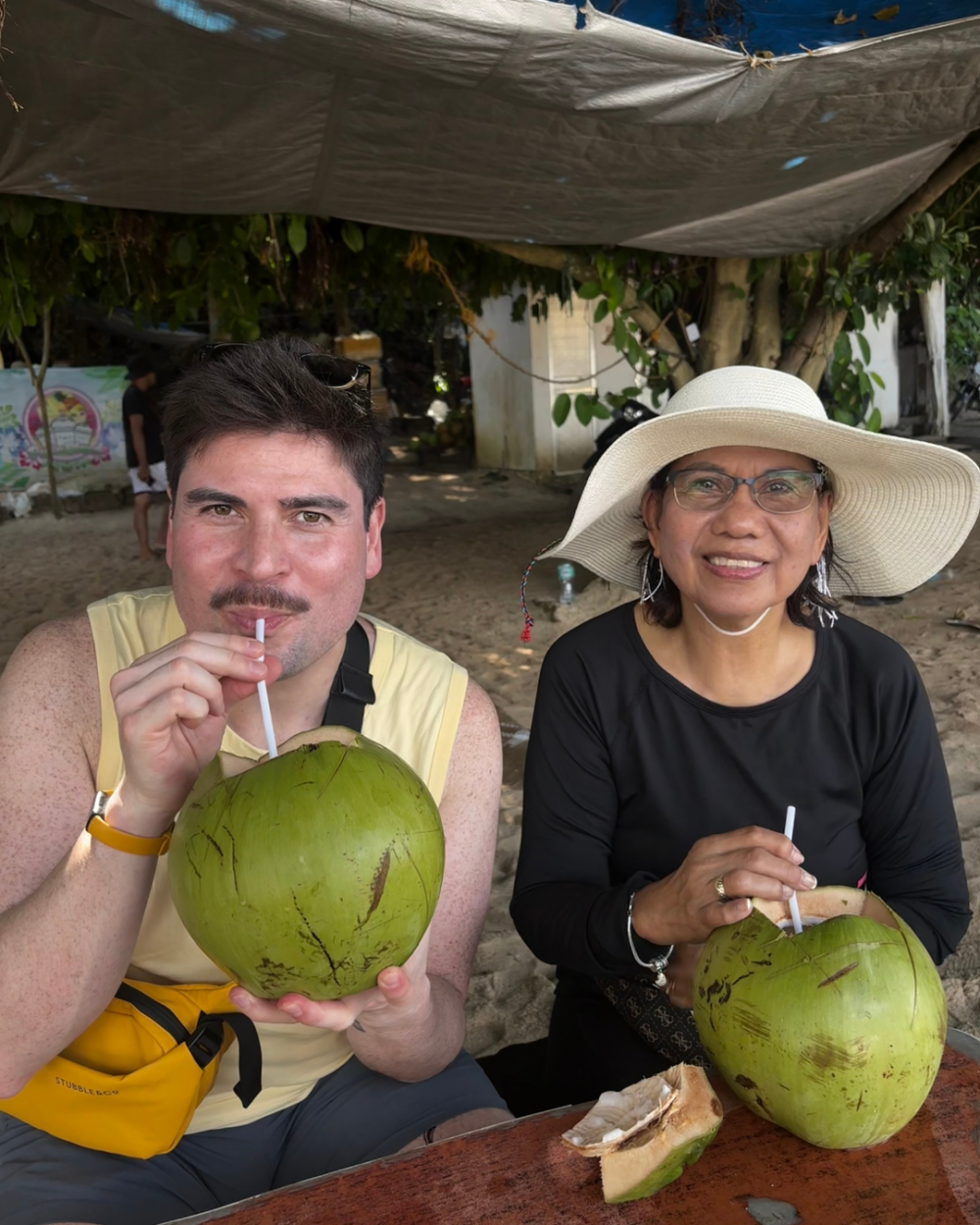
My desire to learn Filipino came many years later during a family vacation cruising the Alaskan panhandle, where, of all the places, my mum, brother, and I encountered many Filipinos during our travels. Our compatriots were the friendly staff on the cruise ship or living in the Alaskan towns we visited.
I realised then that I needed to learn more about my Filipino heritage and should learn our language to become an active participant in conversations.
Our conversations with them would generally start with my brother and me being asked if we could understand Filipino, then punctuated by regular conversational tangents to explain to us any cultural nuances that came up.
The most significant perhaps was when two lovely shop owners in Juneau had to explain to me the significance of the Philippine National Hero, Dr Jose Rizal, and why his bust stood in the city square. I realised then that I needed to learn more about my Filipino heritage and should learn our language to become an active participant in conversations held in Filipino.
I wanted to surprise my mum (but didn't realise how hard it was!)
When I returned to London, I found the Filipino short courses offered through SOAS Language Centre and enrolled in Filipino 1 during the autumn of 2023. My plan was to surprise my mum in one of our calls by casually dropping in some Filipino phrases.
I surprised my mum by sharing my end-of-term presentation, written and delivered in Filipino, with a few slides mentioning our vacation to Alaska. She was so happy and proud!
However, by lesson 3, I realised how challenging it would be for me to become conversationally fluent in Filipino – I constantly butchered the pronunciation of words through my Australian drawl during group speaking practice, or mixed up the 20+ pronouns in my writing exercises – and these mistakes still haunt me to this day as I’ve progressed.
Learning a language beyond the books
But through these challenges, I’ve discovered so much about my heritage and the Filipino culture through the terms, and from spending time with my teacher and classmates. The class materials include links to short films or documentaries, each class ends with listening to popular Filipino songs that feature the vocabulary or grammar we learned during the lesson, and Dr Jose Rizal regularly pops up in our classes.
In my final week of Filipino 1, I surprised my mum by sharing my end-of-term presentation, written and delivered in Filipino, with a few slides mentioning our vacation to Alaska. She was so happy and proud! I still have a way to go before I reach my goal of having a conversation entirely in Filipino with my mum, but she enjoys each time that I try.
I’m very thankful to the SOAS Language Centre and my teacher, Anna-Luisa Crespo, for helping me start this journey. Maraming Salamat!