Love in art and archives from across the world: Exploring SOAS Collections


With Valentine’s season upon us, we invite you to explore the rich and diverse materials in SOAS’s collections that illuminate stories of love, romance, and human connection from around the world.
In honour of Valentine's Day, SOAS Gallery and Special Collections staff have picked out a selection of paintings, prints and letters from their collections.
Man and Two Wives
From a 1965 painting, this is one of Bruce Onobrakpeya’s most famous works. A middle-aged man sitting contentedly with his two wives on either side. They appear to live in harmony, contented and comfortable in their surroundings. The union appears stable, as each wife would have had her own specific responsibilities. The husband, someone with social status, provides the stability and support that creates a happy and successful relationship.
The younger wife, to the viewer’s left, appears proud to have ensured a male lineage within the family; the viewer sees a marriage filled with pride, strength, and resilience.
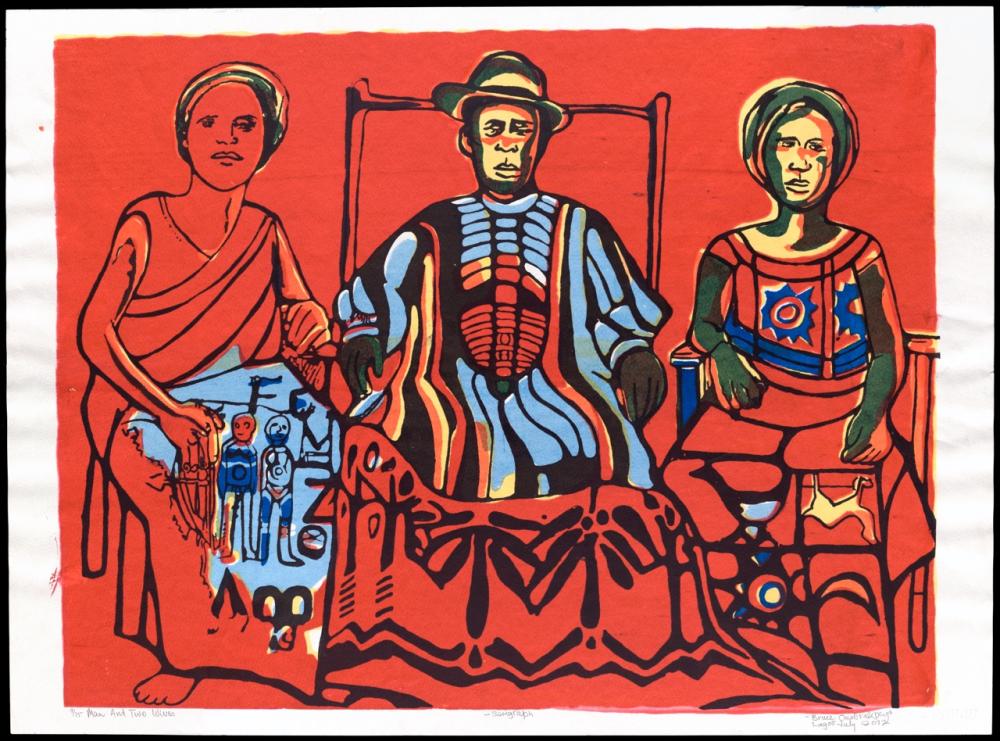
The image was developed from a 1958 photograph of the artist’s parents. The patterns of their clothing (summarising the artist) symbolise the ideals of peace, good health, long life and wealth within the Urhobo people of Southern Nigeria. - Written by Maria Rollo, SOAS Gallery
Shakuntala
This print draws upon a highly celebrated love story of South Asian literary tradition, derived from the Mahabharata and later elaborated in Kalidasa’s Abhijnanashakuntalam. The image depicts the reunion of Shakuntala and King Dushyanta.
Shakuntala, a young woman raised in a forest hermitage, is described in Kalidasa’s play as exceptionally beautiful, gentle, and compassionate. When Dushyanta encounters her during a hunting expedition, he is immediately captivated, lingering near the hermitage and becoming preoccupied with thoughts of her beauty and virtue.
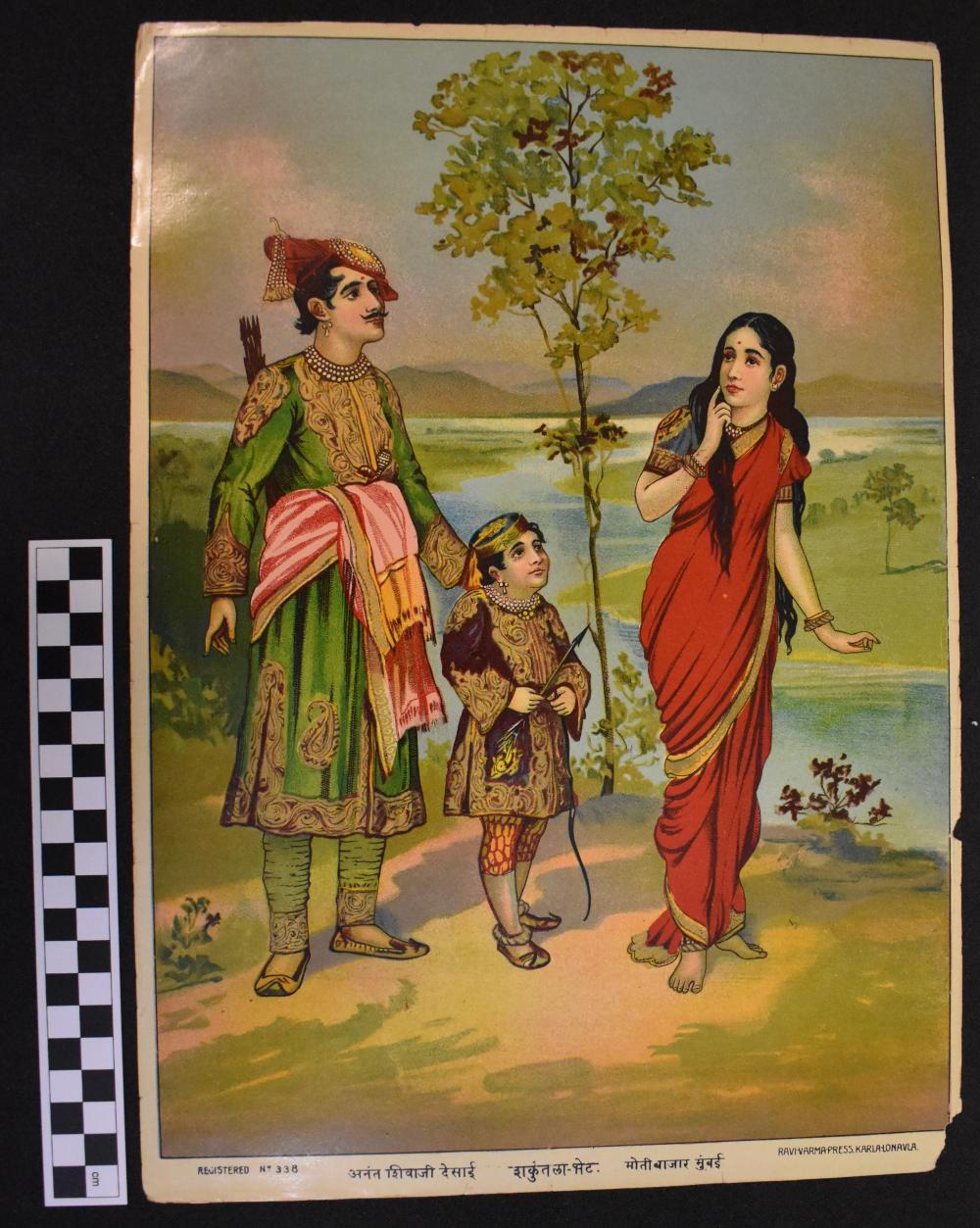
Their union is disrupted when Dushyanta returns to his palace and fails to recognise Shakuntala and their child. In the Mahabharata, Shakuntala confronts him directly until a celestial voice confirms the truth. In Kalidasa’s retelling, the King’s forgetfulness is caused by a curse, which is lifted only when a lost signet ring is recovered.
This colour print was produced by the Ravi Varma Press but was designed by Anant Shivaji Desai rather than adapted from a painting by Raja Ravi Varma himself. While not a direct reproduction, the work draws upon a visual language shaped by Varma’s highly influential depictions of Shakuntala, which helped to establish her as an enduring cultural icon. - Written by Lucy Kauser, SOAS Gallery
Marriage procession in Seoul
In this enchanting scene, a bridal procession unfolds with graceful anticipation. The bride is seated within her closed sedan chair, which is draped by a tiger skin, a symbol of strength, beauty and good fortune. The procession winds its way towards the bridegroom's home, where she will be embraced by his family, marking the beginning of their shared life together. Leading the way is a figure wearing a red hat, carrying a goose, a poignant symbol of fidelity and joy.
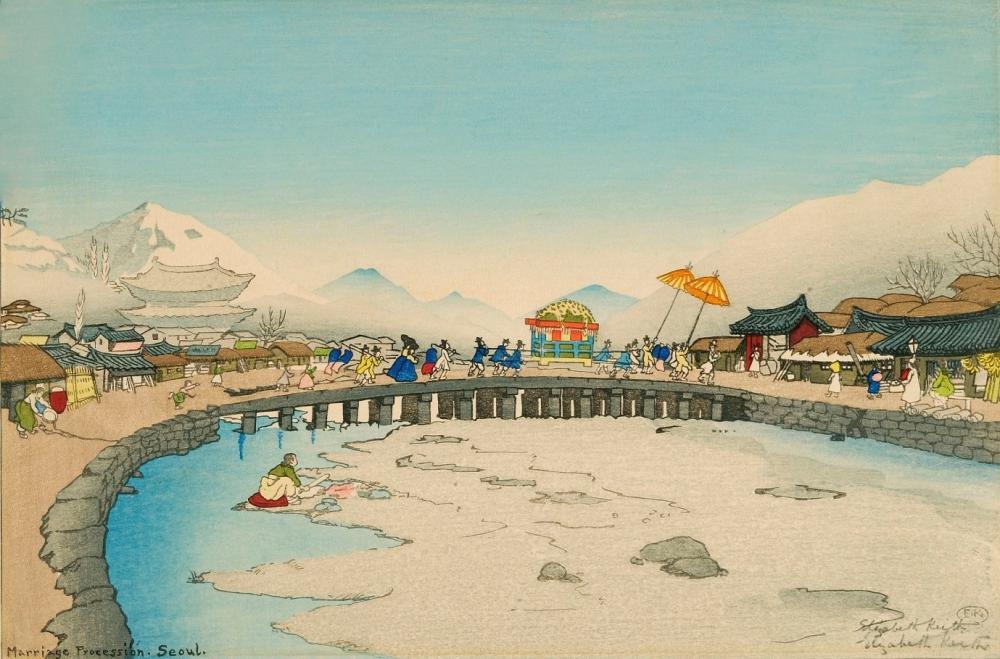
Korean weddings, steeped in centuries of tradition, follow the rhythms of the lunar calendar, believed to bring good fortune, The bridal sedan, or kama, carries the bride through the streets, as eager neighbours gather to witness the moment when the door opens the bride steps out, looking elegant and radiant.
The goose, a symbol of enduring love, heralds a harmonious and loving marriage. - Written by Maria Rollo, SOAS Gallery
Romance in the records of business
Even in the records of business, we can get a snapshot into relationships, good and bad, practical and romantic. The archive of John Swire & Sons contains unusually complete correspondence sets, which reveal as much about society as they do decision-making.
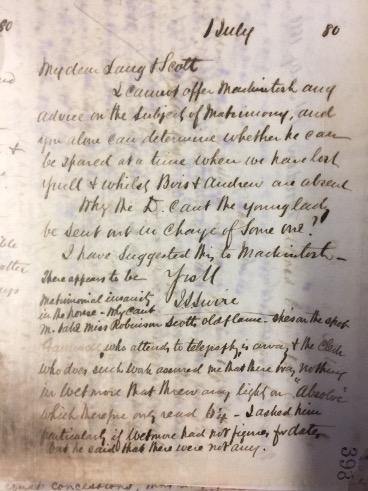
Nothing spells out romance like this letter from John Samuel Swire, ‘The Senior’, to one of his managers. In it, he exclaims, ‘There appears to be Matrimonial insanity in the house – why can’t M[ackintosh] take Miss Robinson, Scott’s old flame? She’s on the spot.’
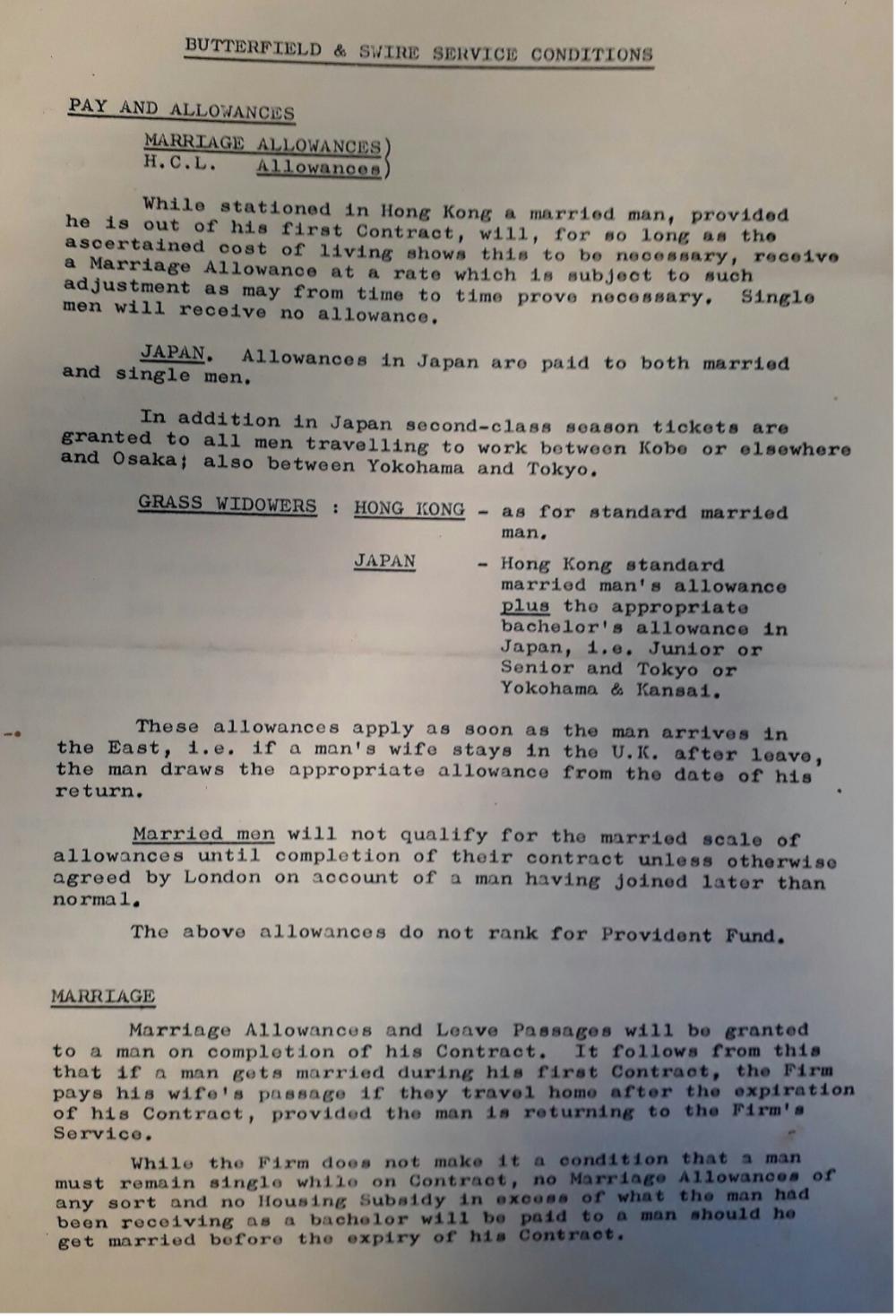
But then the Swires were not known for their sentimentality. Like many other contemporaries, Swire wrote into employee terms of employment that, ‘while the Firm does not make it a condition that a man should remain single, should they choose to get married within their first contract, they would receive no additional allowance’, as other married men would. Quite a strong incentive to remain a bachelor.
A diary entry dedicated to a wife far away
Finally and most genuinely touching is an entry in the diary kept by Frank Hastings Fisher whilst interned at Swire’s sugar refinery in Hong Kong during the Second World War. Each brief entry is penned as if a letter to his wife, who was many miles away in England:
"April 17th 1943
Today we’ve been married 25 years – to have to spend this Anniversary here is not what I would wish… I can remember this day 25 years ago clearly and it’s a lovely remembrance." [JSS/12/1/26]
Happily they were reunited two years later…
Love in the Digital Collections
As we honour romance through global artistic traditions, we are also celebrating the launch of the new SOAS Digital Collections. As of February 2026, you can explore over 46,000 digitised materials online - from manuscripts and prints to rare books and archival treasures.
If you’re inspired by SOAS’s rich collections and would like to discover more, please visit SOAS Digital Collections to continue your journey.
About the author
Hana Imai is the Library Events and Outreach Manager at SOAS University of London.