The new and improved personal statement: what you need to know


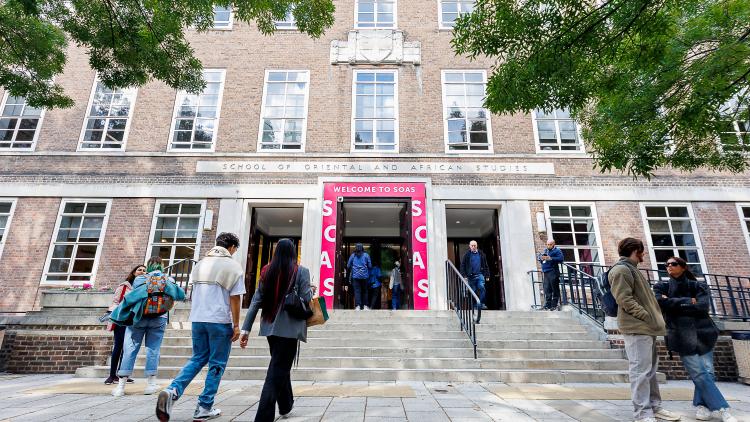
As an Admissions Officer at SOAS, Tristan offers advice on the new personal statement and what you need to know to showcase your personality and passion for your chosen subject.
The Personal Statement is now, thankfully, no longer 4000 characters of blank space to fill in order to summarise your academic and personal journey and captivate your chosen institutions.
What's new?
UCAS has now broken the personal statement down into three insightful questions in order to help you focus your personal statement and ensure that you’re showcasing your inspirations and aspirations for your chosen programme while providing key information that your university choices are looking for.
There is still a 4000-character limit, along with a minimum requirement of 350 characters per question, but now, these questions relate to:
- Why do you want to study this course or subject?
- How have your qualifications helped you to prepare for this course or subject?
- What else have you done to prepare outside of education, and why are these experiences useful?
Let's break down the questions
These may seem like big questions to answer within the strict character limit; however, each heading has a key purpose in displaying your enthusiasm and drive to study your chosen subject at degree level:
Question 1: This is your opportunity to showcase your passion and knowledge of your chosen subject area and to demonstrate to universities and colleges why it’s a good fit for you and your future ambitions.
Each heading has a key purpose in displaying your enthusiasm and drive to study your chosen subject at degree level.
Question 2: This is your chance to shout from the (metaphorical) rooftops about the relevant or transferable skills you’ve gained from your formal education and highlight your understanding of how they will help you succeed in this subject area.
Question 3: This is your opportunity to reach outside of the boundaries of formal education, to discuss any work experience, employment, volunteering or any responsibilities or personal life experiences, such as hobbies, extracurricular or outreach activities that you feel have bolstered your desire to pursue your particular academic pathway.
Remember to make your statement unique to you
Remember, this is a personal statement and, thus, should be unique to your experience. Try to avoid clichés such as “I have always wanted to study […]” and “Ever since I was born I have wanted to” – because if you’re being honest, have you really? Remember, the “how?” is only one part of your academic journey, and providers will be looking more for the “why?”, for the reasons behind your current academic choices and why you feel they have led you to this point.
Similarly, as your personal statement is sent to all five choices, if you have submitted five applications to five universities, then they all see the same personal statement. We highly recommend you avoid naming a specific University in your personal statement – that would be akin to us sending you an offer letter with someone else’s name on it.
However, at SOAS, we do appreciate that sometimes, due to the variety of programmes you have applied for, you may feel your personal statement may not be able to adequately cover the specific programme you have applied with us. So if you do wish to upload a supplementary personal statement for SOAS, you can do so through your Applicant Portal.
We hope that this alleviates any pressure you're feeling about writing your personal statement. The Undergraduate Admissions team look forward to reading about your academic journeys thus far and the goals you hope to achieve. Please don't hesitate to contact our colleagues at study@soas.ac.uk with any further queries. All the best!
About the author
Tristan French is an Undergraduate Admissions Officer at SOAS University of London.