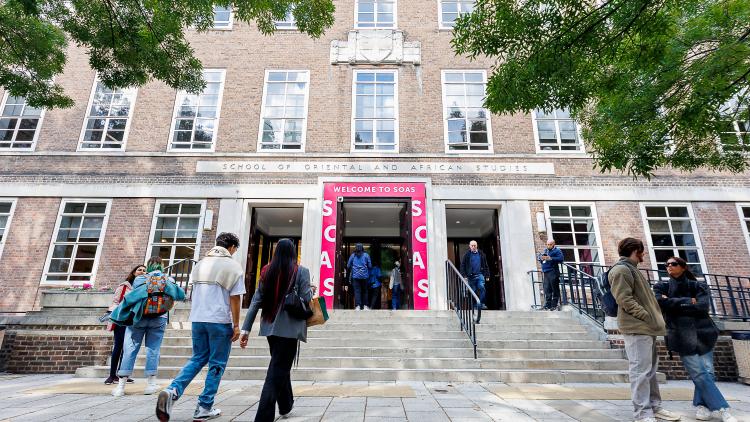
The para-athlete inspired by anime: Ali’s journey to MA Japanese Studies at SOAS


Alumnus and para-athlete Ali Golchin reflects on his experience bridging sport science with an MA in Japanese Studies, all while training for and competing on the world stage in Brazilian Jiu-Jitsu.
We spoke to SOAS alumnus and para-athlete Ali Golchin (MA Japanese Studies and Intensive Language, 2025) to hear how his lifelong love of Japan, sparked by anime and video games, led him from sports science into an MA in Japanese Studies, and how he balanced an intense master’s degree with training and competing on the world stage in Brazilian Jiu-Jitsu.
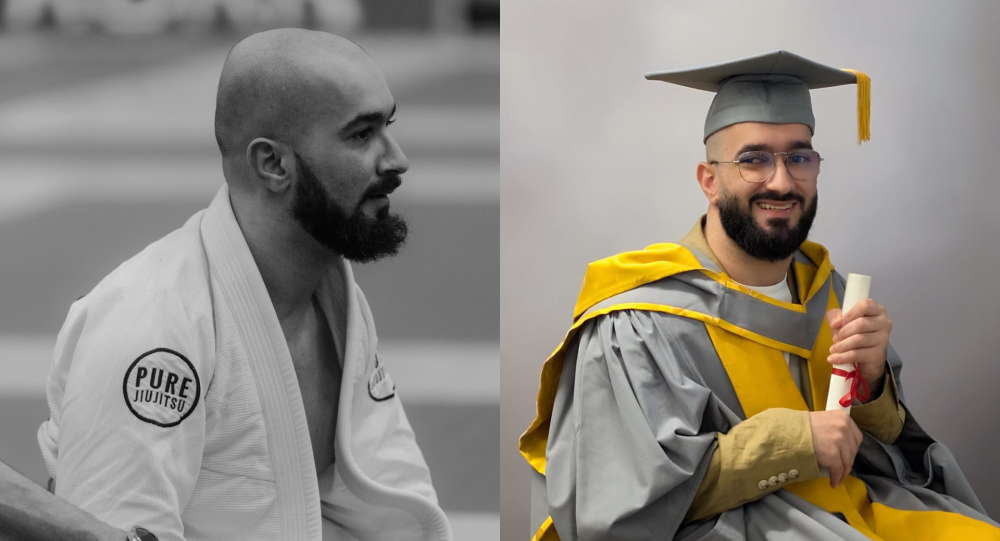
Before arriving at SOAS, Ali studied Sports Science at the University of Kent, a background that would later play a surprising role in his master’s dissertation. “I loved my bachelor’s degree,” he says. “It taught me about the psychological side of sport, and I ended up using that theory to ground my MA thesis. I managed to bring together two worlds that people wouldn’t normally connect - sports science and Japanese studies.”
It all started with Dragon Ball Z
“I’ve always been into Japan since I was a kid,” he says. “My very first exposure to Japanese culture was through Tekken, a fighting game, and then through Dragon Ball Z. It was those things that made me fall in love with the language, the culture, all of it.”
Growing up as a kid with a disability, it wasn’t always easy to fit in. The lessons it taught me helped me fit in the world.
Ali’s connection to Japan ran deeper than entertainment. “Dragon Ball Z taught me lessons that shaped who I am,” he explains. “It showed me that you can push yourself to the next level no matter what’s in front of you. Growing up as a kid with a disability, it wasn’t always easy to fit in. The lessons it taught me helped me fit in the world. There are lots of different characters who all train in their own way. It showed me that it doesn't matter who you are or what your background is, with hard work, you make something of yourself.”
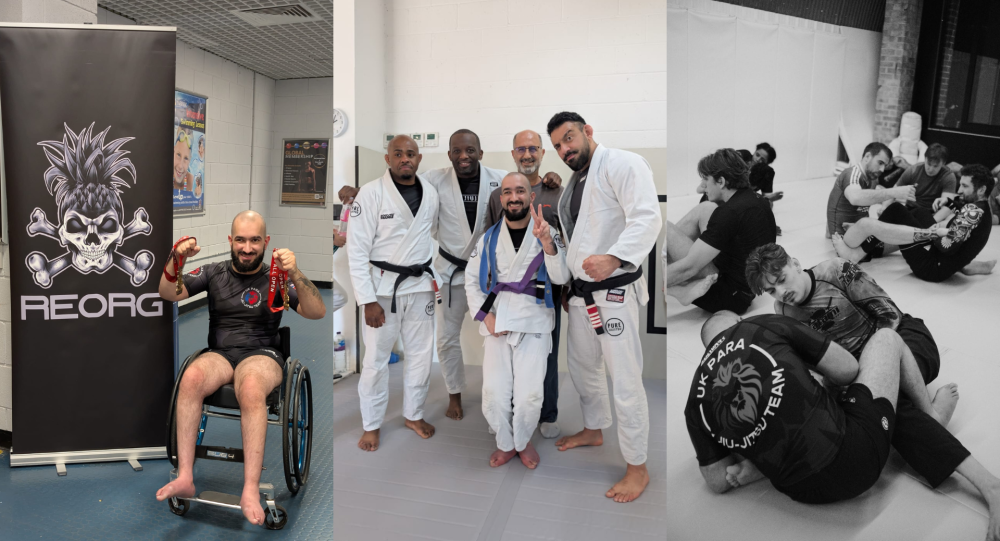
That intersection between sport and culture would become the foundation of his academic work. “My dissertation was titled Anime and Identity within the UK Brazilian Jiu Jitsu Community,” Ali explains. “I argued that anime can actually serve as a source of motivation for martial artists. The lessons people learn from those stories, such as perseverance, teamwork, and pushing through hardship, translate directly into the way they train and how they influence others on the mats.”
Bridging science and the humanities
Making the jump from sports science to Japanese studies was daunting. “I knew SOAS was one of the best universities for East Asian studies,” Ali says. “But I was starting from scratch. I didn’t have a background in the subject, and I was nervous about how I’d manage. What made the difference for me was that SOAS offered the chance to study in Japan - that was the dealbreaker. I thought, if I’m ever going to do this, it has to be now.”
SOAS offered the chance to study in Japan - that was the dealbreaker. I thought, if I’m ever going to do this, it has to be now.
Despite the steep learning curve, Ali threw himself into the challenge. “It wasn’t easy,” he admits. “There were moments where I wanted to give up, especially balancing everything with my disability. But I had incredible people around me like my classmates, my lecturers who kept me going. My supervisor, Filippo, really encouraged me to pursue my unique dissertation idea. Without that support, I don’t think I’d have had the courage to do something so different.”
Sport has connected me to the world
Outside the classroom, Ali was training full-time as a para-athlete in Brazilian Jiu Jitsu - a commitment that required intense discipline. “I train five times a week, which includes three sessions of jiu jitsu and two of weight training,” he says. “And I kept that schedule throughout my entire MA. Even when the workload was so busy, I made sure training never stopped. Most people drop sport when life gets busy, but for me, physical activity is what keeps me grounded.”
Ali’s Brazilian Jiu Jitsu journey began just after the pandemic, when he reached out to a local instructor. “I told him that I have cerebral palsy, and he said, ‘Come down and train.’ It turned out my head instructor is actually a SOAS alumnus! From there, I just never looked back.”
His training community is one of inclusion and strength. “Our team has people with all kinds of disabilities,” Ali says. “We’ve got teammates with cerebral palsy, amputations, spinal cord injuries, and everyone trains together. It’s an amazing environment to be part of.”
I found a Brazilian Jiu-Jitsu dojo there and trained throughout my time in Japan. It was incredible.
Ali’s commitment has taken him across the globe. “During my summer abroad, I studied at Hokkaido University of Education in Sapporo,” he recalls. “I found a Brazilian Jiu-Jitsu dojo there and trained throughout my time in Japan. It was incredible - I made so many friends and really saw how sport can bring people together. Even if you don’t speak the same language, when you’re training, you just connect.”
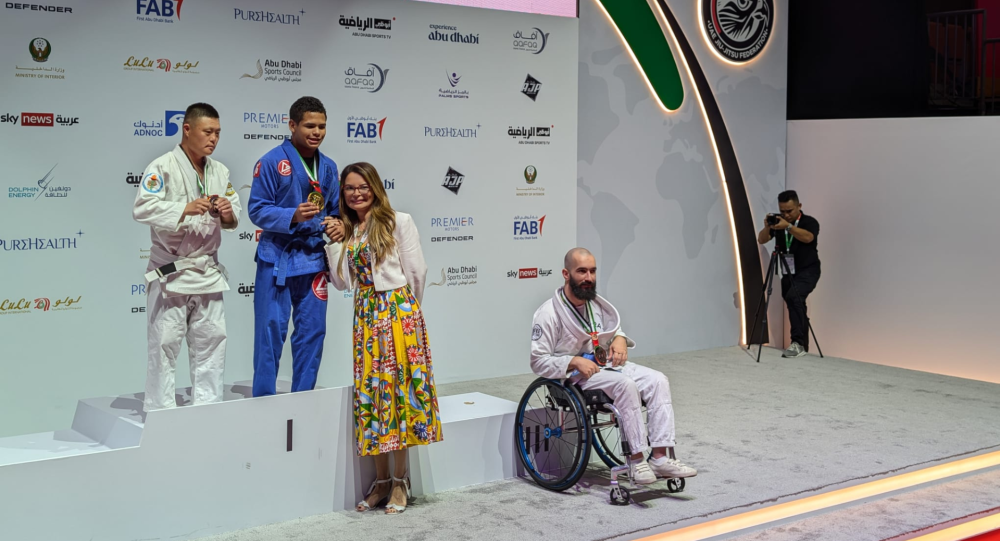
His competitive success speaks for itself. “I’ve won double gold twice at domestic competitions,” he says proudly. “I also competed at the Abu Dhabi World Para Jiu Jitsu Championships and took home bronze. Getting promoted from white to purple belt during my master’s is something I’m really proud of.”
I want to be the example I didn’t have growing up
Ali’s story has already inspired others to step onto the mats. “At my last competition, one of my opponents who was only sixteen told me that I’m the reason he started training,” he recalls. “He said, ‘I’m on the mats because of you.’ His dad came up afterwards and said the same thing. It really touched me.
That’s why I keep going. Life with a disability isn’t always easy, but knowing I can have that kind of impact means everything. I run my own Instagram page where I share my journey, and I’d love to keep using that platform to inspire others."
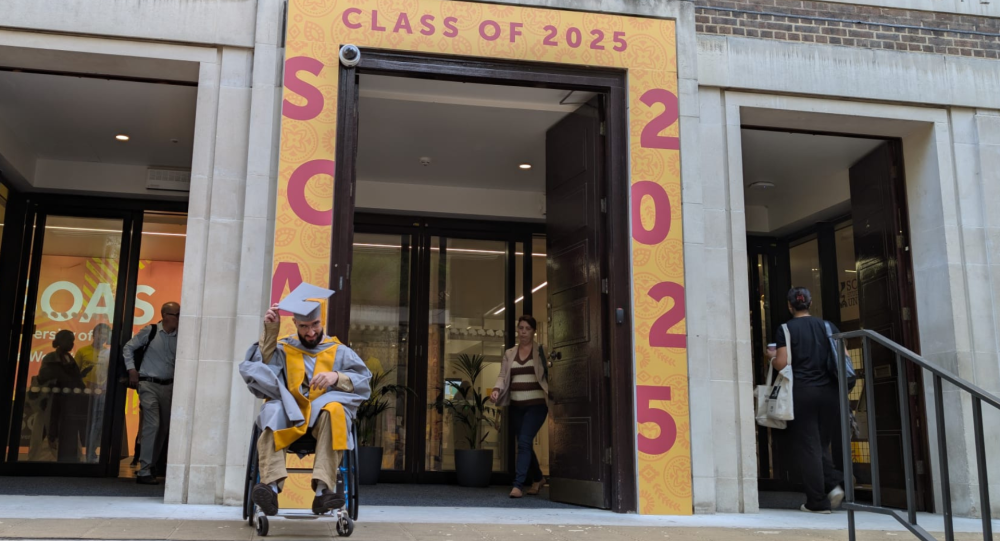
He also uses his experience to advocate for others. “I think if you have a disability, you have a responsibility to carry yourself in a way that opens doors for others,” Ali says. “I tried to make SOAS more accessible while I was there, suggesting updates to deadlines and mitigating circumstances for disabled students. It’s about making things better for those who come after you.”
SOAS helped me become a more well-rounded person. I’ve got experience in both science and the humanities now, and that’s something really unique.
Reflecting on his time at SOAS, Ali says the experience reshaped how he sees himself. “After finishing my master’s, I genuinely believe I can deal with anything,” he says. “I learned so much, not just academically, but about my own strength. SOAS helped me become a more well-rounded person. I’ve got experience in both science and the humanities now, and that’s something really unique.”
For Ali, the message is simple: “If I can get through my MA while training five times a week, competing internationally, and managing cerebral palsy, then honestly: anything is possible.”