‘Voodoo’ and the Eurocentric lens: Why we must rethink African football


After Nigeria’s World Cup exit reignited talk of 'voodoo', Professor Marloes Janson argues that the term’s racist history reveals how colonial stereotypes still shape global perceptions of African football - and why it’s time to rethink the game from an Afrocentric perspective.
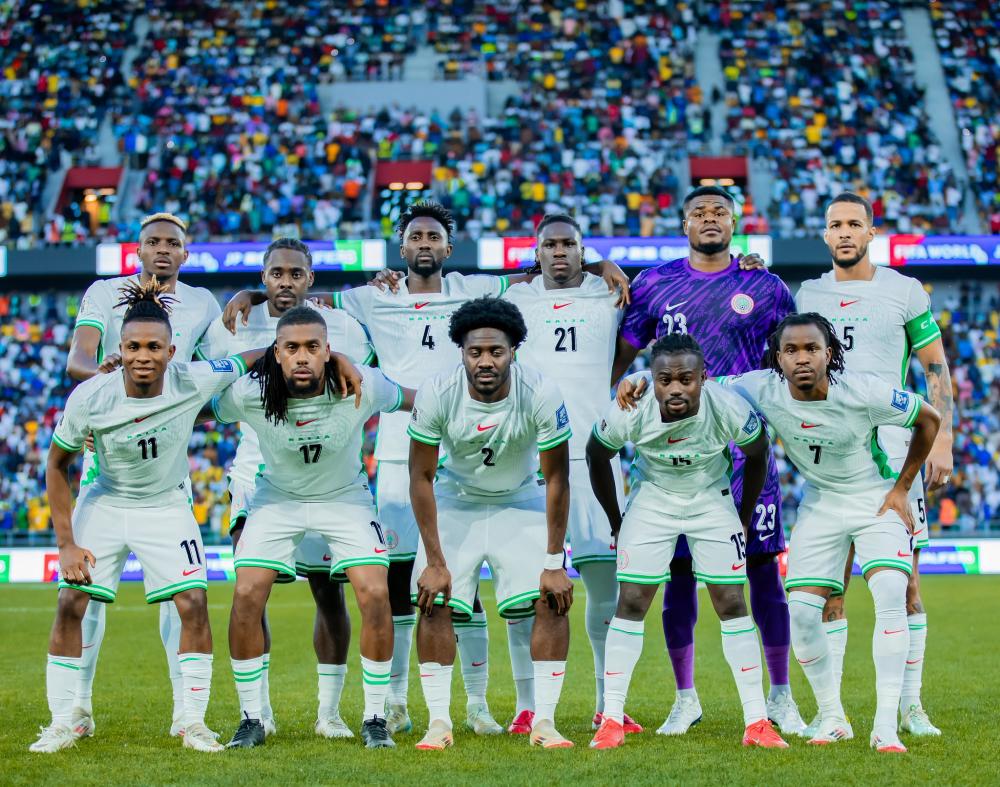
All hopes were placed on the Super Eagles, but the Nigerian team was disqualified from the World Cup after a penalty shoot-out against DR Congo in November 2025. In the aftermath, the Nigerian team’s head coach Éric Chelle angrily accused a Congolese player of using ‘voodoo’ against his team. Much of the international press responded with amusement. But the term 'voodoo' is not funny at all. In fact, it has a deeply racist history.

What is ‘voodoo’?
The term voodoo traces its roots back to vodou: an ancient West African religion that originated in Benin. Vodou rituals are aimed at restoring balance in relationships between people and between people and the spirits inhabiting the unseen world. But the way Chelle used the term ‘voodoo’, and the way the media picked it up, was in the sense of ‘witchcraft’: something sinister, irrational, and ultimately illegitimate.
Accusations of 'voodoo', juju, or witchcraft are nothing new in the world press related to African football. But they are not as harmless as they may seem because they carry racial prejudice.
'Voodoo' presents African and African-diaspora religions as backward, engaged in ‘dark magic’, devil worship, and ritual murder. These stereotypes are reproduced in popular culture and Hollywood films. Accusations of 'voodoo', juju, or witchcraft are nothing new in the world press related to African football. But they are not as harmless as they may seem because they carry racial prejudice.
Football is more than a game
Many African peoples, like believers in the Western world, do not believe that things happen by chance – no, there must be a supernatural power behind it. Since football is seen in many African societies as more than a game, African footballers may visit traditional healers for amulets, concoctions to bathe with, or ritual substances in the hope to increase their chances of success.
Not only traditional healers but also pastors and imams are consulted for prayers and spiritual protection on the pitch. For example, the late Nigerian pastor TB Joshua was closely linked with numerous professional footballers, including Manchester United player Angel Gomes, who visited him for spiritual healing from injuries.
Double standards
Asonzeh Ukah – research collaborator on my ERC-funded project ‘Muscular Faith’ – points out that a South African football coach sprinkling muti or ‘medicine’ on the goalpost is not considered an irrational anomaly but a logical action within African worldviews. However, an African coach sprinkling potions on the goalpost or a player visiting a religious specialist for spiritual healing easily becomes conflated with ‘witchcraft’ in the Western mindset.
Colonial vocabulary and habits of thought continue to influence how the Western world thinks about Africa.
Why are these practices described in terms of voodoo from a Western point of view, while very few would remark upon a Western football player pointing to the sky after a goal or thanking God in a post-match interview? By describing what African footballers do as ‘strange’ or voodoo, and what Western footballers do as ‘normal’ or simply superstition, we exoticize Africa as a continent steeped in tradition and reduce African football players to second-class athletes.
Language matters
Colonial vocabulary and habits of thought continue to influence how the Western world thinks about Africa. According to research conducted by Africa No Filter, negative images of Africa in the global media cost the continent billions of pounds through inflated interest rates and reduced trust. Hence, it’s time to stop using the term voodoo in relation to African football.
Here, I echo the words of the Cameroonian political theorist and philosopher Achille Mbembe, who argues that it is time to ‘rethink’ Africa. By this, he means that we need to write the world from Africa and to write Africa into the world. Rewriting African football from an Afrocentric rather than Eurocentric perspective will reposition Africa from the periphery to the centre of the world football stage.
Header image credit: Paul Kagame via Flickr.
About the author
Marloes Janson is Professor of West African Anthropology in the Department of Anthropology and Sociology at SOAS University of London, and Principal Investigator of the European Research Council-funded project ‘Muscular Faith: The Interplay between Sport and Religion in Africa’.