Where are we at on ‘policy space’ and making trade and investment rules work for developing countries?


I spent four days discussing ‘policy space’ for trade, industrial and investment policies last week. I haven’t really worked on it since the early 2000s, when I lived and breathed these topics in my advocacy work on the WTO, so I felt a bit like a wonkish Rip Van Winkle, waking up after 20 years to discover what had changed/stayed the same.
The event was organized by SOAS’ Development Leadership Dialogue, and chaired by Ha-Joon Chang, who has done more to highlight the issue than almost anyone else, e.g., through his wave-making 2002 book Kicking Away the Ladder. 25 people in the room, from former trade ministers to academics to activists and business-people, all with a shared concern to help developing countries develop through industrial policy. Impossible to compress 4 days of intense exchanges into a few hundred words, but here are some overall impressions.
First, that multilateral system (MLS) we railed against in the early noughties, when we saw the WTO, World Bank and IMF as stormtroopers for neoliberalism, forcing developing countries to prematurely open their markets and destroy local industries, is in real trouble. Thanks to the manifest failures of Washington Consensus policies to deliver development in poor countries and the Trumpian backlash against ‘if it moves, liberalize it’ thinking in the US and elsewhere, plus the work of people like Ha-Joon and campaigners North and South, that extraordinary self-belief and global dominance of the liberalizers and deregulators has given way to something pretty chaotic.
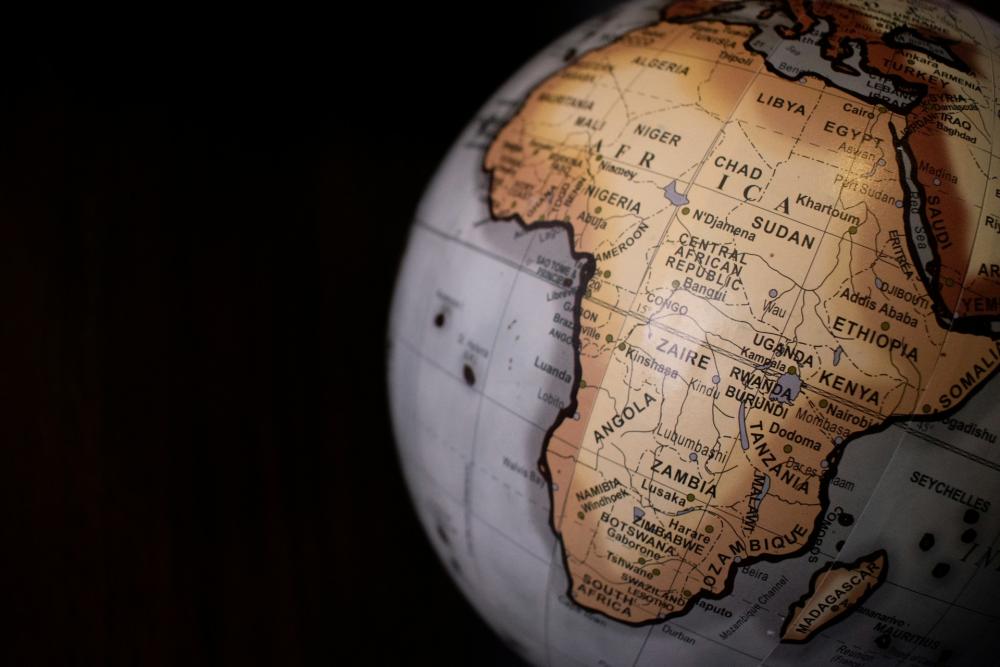
At the moment, it’s hard to see what new system is emerging: nationalist industrial policy is in vogue in the North (Biden and Trump); some of the stronger developing countries are insisting on processing their own critical minerals (Indonesia and nickel) or boosting the industries of the future (EVs, batteries, AI, chips); but elsewhere, the ‘mental cage’ of neoliberalism is proving very hard to shift, whether in governments or the actual behaviours of donors and the big multilaterals, even when their rhetoric has shifted. Try asking the IMF to come and help you design capital controls.
A great quote from Gramsci: ‘the old is dying and the new cannot be born. In this interregnum there arises a great diversity of morbid symptoms’ captures the sense that we are in for a prolonged period of such confusion, including some very nasty elements, before some new coherent system emerges from the rubble.
Second, as the WTO has lost relevance, attention has moved to the vastly more complex world of bilateral and regional trade and investment treaties, which is where the real pressure on developing countries often comes from. One example: the arcane world of Investor State Dispute Settlement (ISDS), which allow corporates to sue governments for interfering with their ability to profit from their investments (by nationalisation, but also by things like environmental and health regulations). Former South African trade minister Rob Davies told us that African countries have faced 182 ISDS cases, 108 of them from European investors. They have already had to cough up ‘compensation’ of $5.6bn, but are on the hook for over $200bn more.
Third, lots of new issues have emerged – clean/climate tech, AI, critical minerals like lithium – but the battle lines look remarkably familiar. How can poor countries access new technology? Can they get more of the value of their commodities by processing/moving up the value chain, or will they just export the new minerals until they are substituted or run out?
Fourth, greater recognition of the importance of domestic power and politics. I was always uncomfortable with the way debates on ‘policy space’ echo simplistic ideas from dependency theory – a greedy North exploiting an impoverished South. Some of the most fervent proponents of liberalization are southern ministers, who have often been ‘more Catholic than the Pope’. Ministers of Finance everywhere seem wedded to austerity and opposed to state intervention, and have become increasingly powerful compared to their cabinet colleagues, due to the growing financialization of economies. Elites ‘hide behind the agreements’, according to veteran Nigerian diplomat and government economic adviser Yemi Dipeolu.
That is reflected in frustration: ‘we have good policies and evidence, so why won’t governments shift?’ Time for the economists in the room to spend more effort on domestic power, politics and issues of class. They can still call it ‘political economy’ if that makes them feel better.
Fifth, a significant number of examples of just how successfully ruling coalitions have done by ignoring the Washington Consensus and maxing out the ‘wiggle room’ (or created more) within the current rules. To the rapid growth of the Asian tigers (South Korea, Taiwan, Hong Kong and Singapore) discussed 20 years ago by Ha-Joon Jonathan Di John pointed out that we can add China, Vietnam, India, Bangladesh and several other countries in the region. Elsewhere, Rwanda and Ethiopia have boomed, as has Eastern Europe, while Isabel Estevez presented some great examples from Ecuador over the last 15 years. None of these followed the whole Washington Consensus recipe that was handed down as ‘common sense’ in the noughties (in fact it’s hard to identify countries that have succeeded by doing so). Liz May at DLD has put together a great series of case studies on ‘The Art of the Possible’ – my favourite is an analysis of the stellar performance of the state-owned Ethiopian Airlines. Taken as a whole, these kinds of stories are a powerful antidote to the defeatism that can arise from ancestral memories of dependency theory – ‘everything is stacked against us; we are minnows against sharks’.
The referenced media source is missing and needs to be re-embedded.
Credit: Liz May
Finally, how to combat the ‘morbid symptoms’ and ensure that whatever system emerges over the next couple of decades is better than what preceded it?
Eternal and thoughtful vigilance: developing countries are under constant pressure from the rich ones to sign away bits of policy space/sovereignty because they aren’t using them right now. But what ones might they need in the future? It’s often not feasible to say no to everything but nor should you say yes. How to pick the right battles?
Finding better narratives: Linked to that, symbolism often matters more than evidence and data, even to decision makers. The subject matter is intimidating: ‘how on earth do I make ISDS intelligible to MPs, let alone the public’ lamented former Chilean foreign minister José Miguel Ahumada. Ha-Joon’s secret sauce is partly a fantastic line of analogies that illuminate the inequities in the global system, from KATL onwards. Others of us not so much.
It feels like a problem that so many NGOs have stopped working on this – NGOs can be great at making technical issues intelligible, think Jubilee 2000 on debt. Those that remain often are as wonky as the academics. It might be timely for some of the bigger ones to make connections between industrial policy/economic transformation and the structural campaigns they are running eg Oxfam’s inequality work or Christian Aid’s debt work or everyone’s work on climate justice, as they are so inter-related with the policy space issue.
Header image credti: James Wiseman via Unsplash.
About the author
Duncan Green is a Co-Director (with Tom Kirk) of the LSE's Activism, Change and Influence programme and website.
He is a Professor in Practice in the LSE's International Development department. He can be reached at d.j.green@lse.ac.uk, or on @duncangreenlse.bsky.social.