Why I rejected Oxford for SOAS


BA History and World Philosophies student Amr shares how he found his way to SOAS by choosing a path that felt authentic to him, rather than the one he was expected to follow.
I remember the morning I received my offer to study at Oxford. I stepped out of the shower, half-dressed and dripping water onto the floor, and opened my emails. There it was:
‘I am pleased to offer you a place to study biology at The Queen’s College, University of Oxford.’
I wasn’t particularly shocked. I had prepared so intensely that I had almost convinced myself I genuinely wanted it. The real question, though, wasn’t whether I expected the offer – it was why I felt so little when it arrived. I thought the excitement would come later: the pride, the self-congratulation and, most of all, the warm feeling telling me I had actually found success.
After all, Oxford was the golden ticket: the pinnacle of prestige and status, the promise of future job security in a world where stability is increasingly rare. Yet for reasons that confused everyone – including me – the excitement never arrived. Instead, I found myself wondering why choosing a university felt less like an achievement and more like signing up for someone else’s idea of success.
The lie of prestige
Before explaining why I chose SOAS over Oxford, I need to rewind a few months. I’m clearly not studying biology now – SOAS doesn’t even offer it – so how did that become the degree I pursued so intensely? When I was choosing my UCAS options, the idea of applying for history and world philosophies – what I’m happily studying now – did cross my mind, but I dismissed it almost instantly.
At eighteen, I had absorbed the familiar hierarchy: STEM was ‘serious’, employable and objectively valuable; the humanities were indulgent at best, pointless at worst. Philosophy, despite being the subject I loved most, looked like a luxury I wasn’t entitled to want. And yes, part of that came from the background many children of first-gen immigrants will recognise: degrees are measured by their perceived stability, not by the intellectual life they make possible. Wanting to study anything else felt like squandering the sacrifices of my immigrant parents rather than honouring them, or so I believed. So, in my mind, biology became the obvious choice.
I was simply letting other people’s expectations do my thinking for me...I was just avoiding the discomfort of choosing for myself.
But from the moment I submitted my UCAS application to the moment I opened my Oxford offer, I couldn’t shake the sense that I was short-changing myself. By choosing the ‘sensible’ path, I wasn’t being responsible; I was simply letting other people’s expectations do my thinking for me. In retrospect, it wasn’t maturity at all – it was me parroting what I thought a mature person was meant to do. I told myself it was the ‘adult’ decision, but really, I was just avoiding the discomfort of choosing for myself. Most of the ‘decision’ had already been made by the voices around me; I was simply rubber-stamping it.
Cracks in the façade
Over the weeks after receiving my offer, I found myself slipping into an almost comical anxiety about my academic future. You would have thought I was choosing between moral salvation and ruin, rather than between two universities. On one side was biology at Oxford, supposedly the sensible, prestigious path; on the other was the idea of reapplying to SOAS for a subject I actually cared deeply about. And if you listened to certain people – especially those whose worldviews were shaped entirely by league tables – choosing a non-Russell Group degree was only slightly wiser than throwing away my A-levels altogether.
What unsettled me was how easily I absorbed this logic as a sixth-form student. The craving for ‘success’ – high salaries, polished job titles, and name-brand institutions – didn’t feel like a personal desire so much as a script handed to me. It came from school, parents, well-meaning adults, and an endless churn of social-media advice about employability.
I had heard people joke that school trains you to be a worker, but it wasn’t until then that I realised how quickly you can internalise other people’s definitions of achievement. Prestige starts to feel objective, even natural, when you never pause to ask who benefits from that belief. Yet the more I examined it, the more obvious it became that the hierarchy itself was shaky: valuing consultants over philosophers simply because of income tells you more about a society’s anxieties than about the intrinsic worth of either path.
Stepping off the script
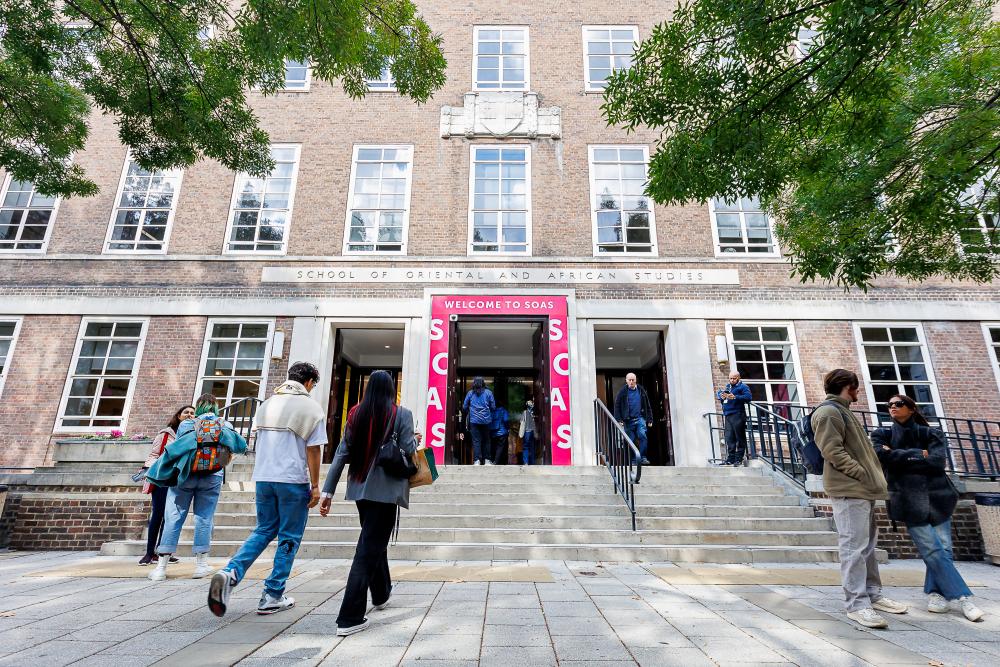
When I finally stepped back from the noise, the choice made itself. Oxford would have meant committing to a subject I didn’t truly want, and the thought of spending years performing a version of myself I no longer recognised felt impossible. I didn’t want prestige; I wanted an education that let me think about the world in more than one key. SOAS offered exactly that: global philosophies taught on their own terms, languages that open doors into entirely different intellectual universes, and a community that treats curiosity as a serious method rather than a hobby. It gave me the space to ask questions I didn’t even know how to frame at eighteen.
I wanted an education that let me think about the world in more than one key. SOAS offered exactly that.
And if you’re the student being nudged into a degree that isn’t yours – the classicist pushed toward medicine, the budding Arabic student steered into engineering – this part is for you. Prestige won’t live your life for you. Later in life, people don’t remember league tables; they remember whether the life they led felt like their own. Oxford wasn’t the wrong path, and SOAS isn’t perfect, but choosing the education that actually matched the thinker I wanted to become was the first decision that felt honest. Choose the path that belongs to you. You already know which it is.
About the author
Amr Barakat is a SOAS Student Content Creator and a first-year BA History and World Philosophies student. His interests include philosophy, films, and procrastination. Amr claims to have solved the hard problem of consciousness but refuses to tell anyone the answer.