Oral Literature, Adaptation, and Resistance in the Zoroastrian Community

Key information
- Date
- Time
-
6:00 pm to 8:00 pm
- Venue
- SOAS University of London
- Room
- Khalili Lecture Theatre (KLT)
About this event
In the context of Zoroastrian heritage, oral literature preserved in both Zoroastrian Dari (Behdini) and Persian in Iran and Parsi Gujarati in India—has often been overlooked in comparison with written texts.
Oral literature encompasses oral art that is passed down primarily or entirely through speaking and performing. It constitutes a broad field that includes storytelling, myths, epics, songs, prayers, proverbs, riddles, laments, curses, etc. Oral literature differs from written literature because it is transmitted through repetition and improvisation through generations rather than seeking fixity in a single authoritative text.
However, it is unique to understand how communities endure by sustaining identity and memory. Women, often confined to marginalised social roles, played a central part in preserving oral traditions, especially when these came under social and institutional pressure.
This lecture introduces the project Persisting Through Change: A Study of Oral Literature and Cultural Interaction within the Zoroastrian community funded by the British Academy. The project is documenting and analysing oral traditions in Iran. Based on recent fieldwork in Iran, it aims to examine oral traditions linguistically, literarily, and anthropologically. It explores how Zoroastrians engage with surrounding majority culture—at times adopting elements through convergence, and at other times preserving distinct Zoroastrian identity through divergence. Sometimes, change itself became a strategy of resilience, so that they were able to preserve their identity precisely by adapting their traditions to new cultural environments.
Register
To register for this event please go to the link under the page heading.
About the speaker
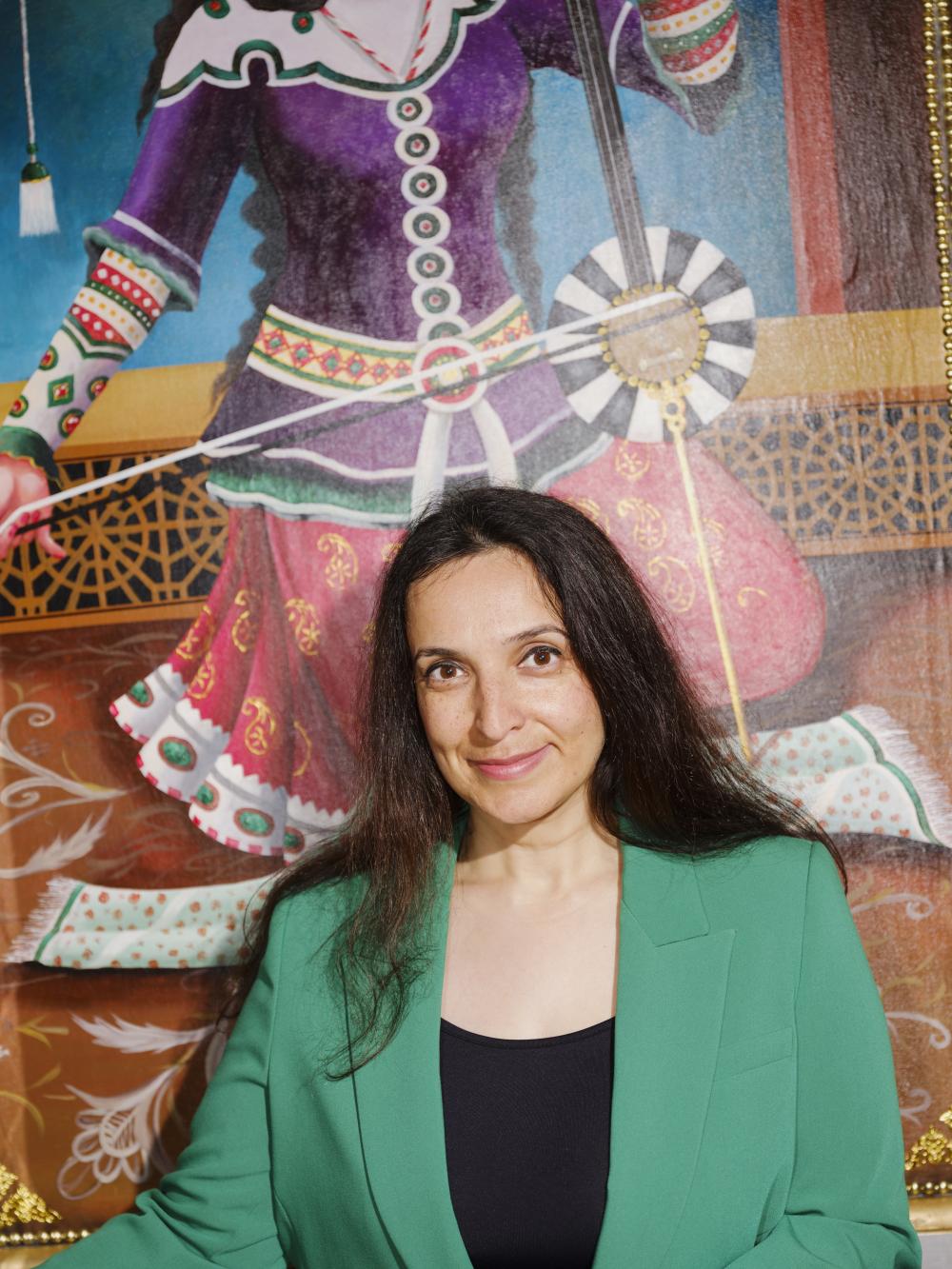
Professor Saloumeh Gholami is British Academy Global Professor in the field of Zoroastrian Studies at the Faculty of Asian and Middle Eastern Studies, University of Cambridge.
In this role, she leads the major research project “Persisting Through Change: A Study of Oral Literature and Cultural Interaction in the Zoroastrian Community.” She earned her PhD in Iranian Studies from Georg-August-Universität Göttingen in Germany, with a doctoral thesis entitled “Selected Features of Bactrian Grammar.” Over the years, Professor Gholami has gained international recognition for her pioneering work in the documentation, preservation, and revitalisation of endangered languages. A central focus of her work lies in the cultural preservation of Zoroastrian community in Iran. Her recent monograph, The Afterlife of Avestan Manuscripts: Colophons and Marginal Notes (Wiesbaden: Reichert), presents a detailed analysis of colophons and marginalia in Zoroastrian manuscripts, offering new insights into Zoroastrian scribal practices and manuscript culture. Professor Gholami has published extensively on Avestan manuscripts.
Image credit: ©Mehrabanpouladmuseum