Quantum Governance: From Representation to Responsibility in the Museum of the Future

Key information
- Date
- Time
-
6:00 pm
- Venue
- SOAS University of London
- Room
- Khalili Lecture Theatre (KLT), Main Building
About this event
Abstract
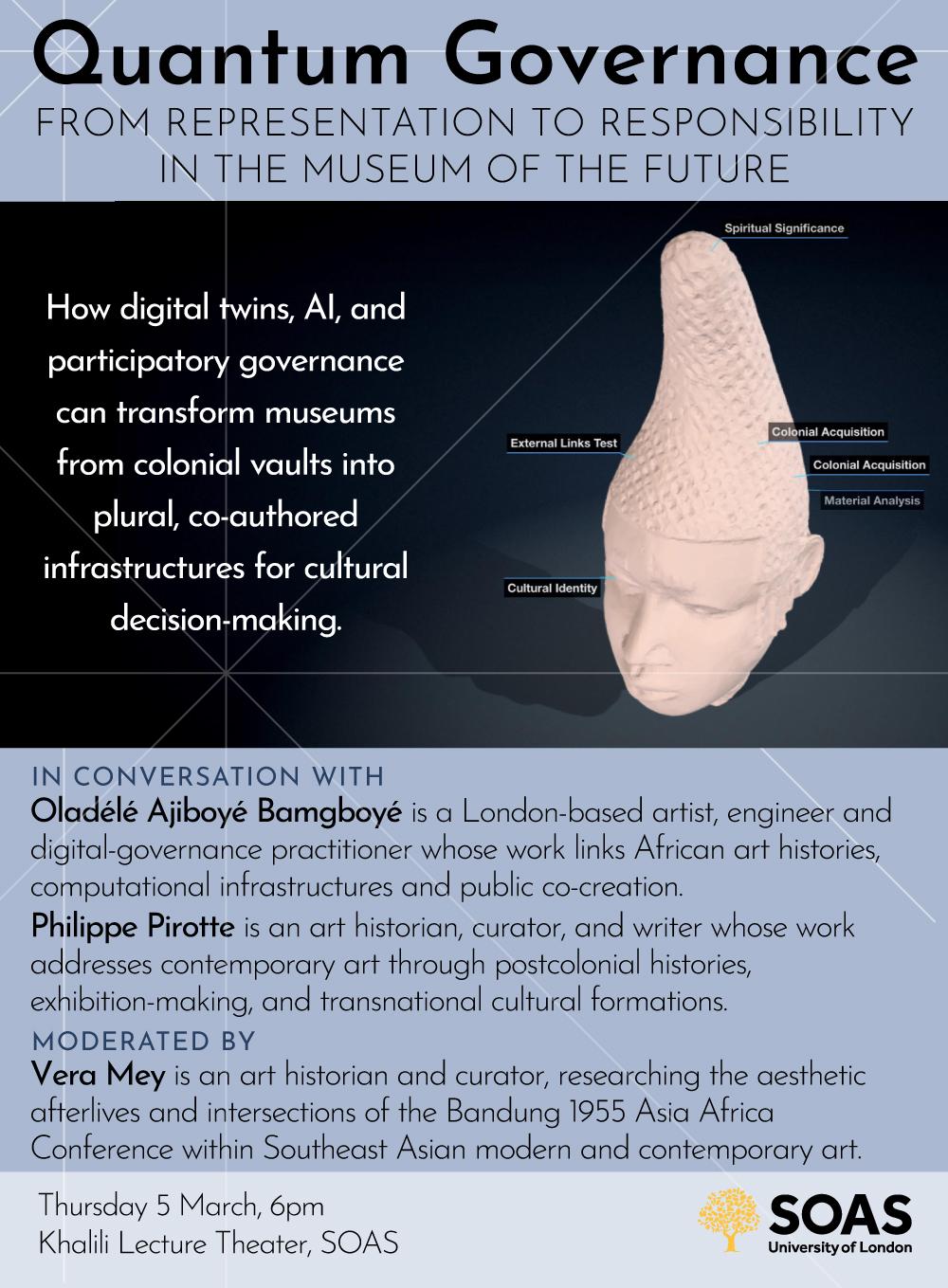
As museums confront intensifying debates around restitution, digital transformation and contested heritage, their underlying governance models often remain unchanged—hierarchical, extractive and rooted in colonial‑era taxonomies. In this joint presentation, curator Philippe Pirotte and artist, engineer and digital‑governance practitioner Oladélé Ajiboyé Bamgboyé, with Dr Vera Mey guiding the discussion, explore how artistic practice, curatorial thought and technological systems can jointly reimagine the museum for a pluralistic digital future.
Beginning with Bamgboyé’s early analogue photographic work, which challenged ethnographic and anthropological representations of Black bodies, the conversation traces a critical transition through his landmark Unmasking projects of the late 1990s and early 2000s. These works made explicit the constructed nature of representation by foregrounding scanning, datafication and the possibility of user manipulation, creating an equivalence between museum artefacts and personal objects and, crucially, proposing an interactive African art museum in which users could navigate multiple digital states of the same work. This marks Bamgboyé’s shift from critiquing images to interrogating representational and institutional systems themselves.
Pirotte situates this progression within broader debates on institutional critique, co‑authorship and the politics of display, extending earlier conversations from “Unmasking Series – Towards Public Co‑creation” at Städelschule into the present. At the same time, Bamgboyé connects Unmasking 3 – A Framework for the Interactive African Art Museum directly to his current Museums 3.0/UQUANTUM work on Quantum Governance: a framework in which branching mesh states, AI reasoning models and participatory democracy platforms become core museum infrastructure rather than peripheral tools.
Central to the presentation is the long‑term case study of the Queen Mother Head looted from Benin City and now in Liverpool, through which the speakers explore how digital twins, AI and participatory platforms can enable multiple, coexisting, and accountable interpretations of cultural objects. Rather than framing restitution as a binary question of ownership, Quantum Governance proposes digital repatriation as an ongoing, visible relationship—one that redistributes authority over classification, repair, narration and meaning to originating and diasporic communities, without erasing disagreement or conflict.
Moderated by Dr Vera Mey, the session brings curatorial reflection, artistic imagination and technological practice into dialogue, and positions the museum not as a neutral authority but as a Museum 3.0 platform for cultural negotiation. The speakers argue that museums face an urgent choice: to build open, participatory infrastructures for cultural governance now, or risk allowing AI‑driven systems to permanently encode colonial hierarchies into the digital future. The tools and precedents—from Unmasking to contemporary governance platforms—are already available; what remains in question is institutional willingness to relinquish control and embrace shared authorship.
Speakers
Oladélé Ajiboyé Bamgboyé is a London‑based artist, engineer and digital‑governance practitioner whose work links African art histories, computational infrastructures and public co‑creation. Internationally recognised since Documenta X, his practice moved from early photographic interrogations of the Black body and ethnographic display into the long‑running Unmasking series, which spans exhibitions in New York, Rotterdam and the Yokohama Triennale. In Unmasking 3 – A Framework for the Interactive African Art Museum, developed around the 3D‑scanned Benin Queen Mother Head in Liverpool, he proposed an interactive African art museum in which a looted object exists in plural, user‑driven digital states rather than as a fixed representation.
Recent work, developed through Philippe Pirotte’s invitation to deliver the lecture “Unmasking Series – Towards Public Co‑creation” at Städelschule, extends this lineage into questions of restitution and shared authorship, informing Bamgboyé’s current Museums 3.0/UQUANTUM framework for quantum‑inspired cultural governance, which combines branching mesh states, AI reasoning models and participatory democracy platforms with experience from leading large‑scale digital programmes in the UK public sector.
Philippe Pirotte is an art historian, curator, and writer whose work addresses contemporary art through postcolonial histories, exhibition-making, and transnational cultural formations. He is Professor of Art History and Curatorial Studies at the Städelschule Frankfurt and served on the Documenta Commission (2019–22). His curatorial practice spans major biennales and research-led exhibitions in Europe, Asia, Africa, and the Americas.
Pirotte has worked extensively with artists engaging colonial archives, diasporic histories, and institutional critique, including Leo Asemota and Oladélé Ajiboyé Bamgboyé, and has edited and authored numerous publications on global contemporary art.
Vera Mey is an art historian and curator. She was awarded her PhD in History of Art & Archaeology from SOAS, University of London (2024). Her PhD researched the aesthetic afterlives and intersections of the Bandung 1955 Asia Africa Conference within Southeast Asian modern and contemporary art. Along with Philippe Pirotte, they were Co-Artistic Directors of the 2024 Busan Biennale called ‘Seeing in the Dark’. She is currently Tutor (Research), Curating Contemporary Art at the Royal College of Art and Curatorial Research Fellow at the Manchester School of Art, Manchester Metropolitan University.
Image (poster): UQUANTUM Ltd
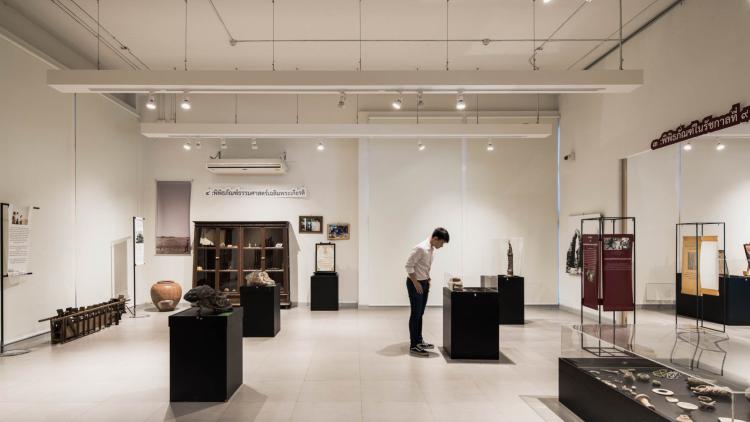
Image (banner): Kevin Laminto, Unsplash
Event poster (© 2026 UQUANTUM Ltd)