Race and the Question of Palestine

Key information
- Date
- Time
-
5:00 pm to 7:00 pm
- Venue
- Main Building, SOAS
- Room
- Khalili Lecture Theatre (KLT)
- Event type
- Seminar
About this event
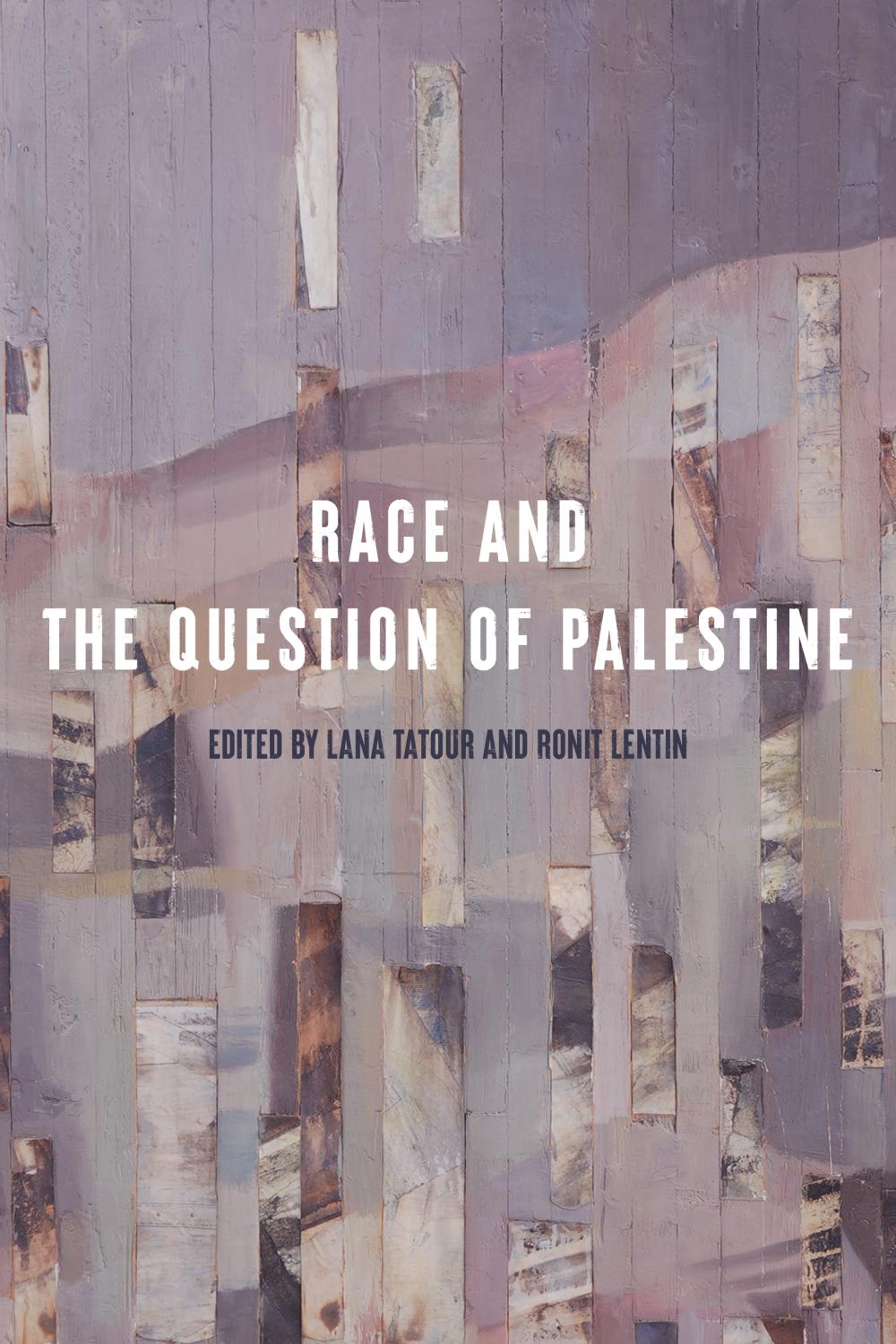
Join us for an in-depth conversation with Lana Tatour about her co-edited collection, Race and the Question of Palestine.
This book develops from the position that the colonisation of Palestine—like other imperial and settler colonial projects—cannot be understood outside the grammar of race. Race and the Question of Palestine (Stanford University Press, 2025) explores how race operates as a technology of power and colonial rule, a political and economic structure, a set of legal and discursive practices, and a classificatory system.
Offering a wide-ranging set of essays by historians, legal scholars, political scientists, sociologists, literary scholars, and race critical theorists, this collection illuminates how race should be understood in terms of its political work, and not as an identity category interchangeable with ethnicity, culture, or nationalism.
Essays build on a long-standing tradition of theorising race in Palestine studies and speak to four interconnected themes—the politics of racialisation and regimes of race, racism and antiracism, race and capital accumulation, and Black–Palestinian solidarity. These engagements challenge the exceptionalism of the Palestinian case, and stress the importance of locating Palestine within global histories and present politics of imperialism, settler colonialism, capitalism, and heteropatriarchy.
Registration
This event is free to attend, but registration is required. Seating is on a first-come, first-served basis.
About the speakers
Lana Tatour is a Senior Lecturer in Global Development at the University of New South Wales, and an Associate at the Australian Human Rights Institute. She is a scholar of settler colonialism, indigeneity, race, and citizenship, with a focus on Palestine. Her coedited book, Race and the Question of Palestine was published in 2025 with Stanford University Press. She is currently completing her monograph, Colonized Citizens: Liberalism, Settler Colonialism, and Palestinian Resistance. Lana is also a public commentator. She has appeared on ABC News, the BBC, and TRT World, and her publications have appeared in The Guardian, Al-Jazeera, Mondoweiss, Middle East Eye, The Age, Overland, and more.
Discussants
Sophie Chamas is Senior Lecturer in Gender Studies at SOAS. Their work explores the life, death, and afterlife of the radical political imagination in the Middle East and its diaspora. They have written, among other things, about the evolving nature of queerphobia as a means of authorising state power in the Middle East, and queer Arab re-imaginings of both queerness and Arabness and the potentiality of their dialectical relationship.
John Narayan is the Chair of The Institute of Race Relations and a member of the Race & Class Editorial Working Committee. He is also a Senior Lecturer in European and International Studies at King’s College London and an anti-racist scholar of globalisation and inequality. His current research centres on anti-racism, abolitionism, and the political economy of the influential anti-racist scholar, A. Sivanandan.
Rida Fathima is a postgraduate student of development studies at SOAS. Her ongoing research builds on violence, borders and migration in Egypt and the Middle East. Her work as a journalist in India revolved around questions of Hindu majoritarian politics, Muslim ghettoisation and the politics of food in South Asia. Her other areas of interest include third-world historiography, urban spatial politics and feminist political economy.
Chair
The chair for this event will be Nathaniel George (SOAS).
Image credit: Ilya Varlamov / CC BY-SA 3.0
Book cover