Socially Necessary Green Development in India

Key information
- Date
- Time
-
5:00 pm
- Venue
- Online
- Room
- Zoom
- Event type
- Seminar
About this event
This event is part of the SOAS Economics Seminar Series 2025/26.
Inequality and climate change are intricately linked to each other. This is both in terms of the cause and the effect of climate change. Since inequality in emissions goes hand in hand with rising socio-economic inequality, it gives the impression that it is a straightforward positive relationship.
One would assume that a mere redistribution of income in favour of the poor and disadvantaged will reverse the climate crisis, but this article shows that this may be an erroneous position to take in the Indian context. A redistribution of income in favour of those at the lower end of the population may actually lead to higher emissions per capita, which we call the carbon inequality paradox.
Does that mean we need to choose between emissions and equality? Not really. While energy may be required for an egalitarian development, that source of energy need not be dirty. So, a green energy transition becomes an absolute necessity for any progressive fight against the twin problem of rising emissions and inequality.
We propose a detailed green development programme, where, apart from this energy transition, socially necessary consumption is encouraged through State-led expenditure programmes while socially unnecessary expenses of the elite are reigned in through aggressive direct and indirect taxes.
Streaming details
- Meeting ID: 933 8666 3297
- Passcode: P4TL8f4sq3
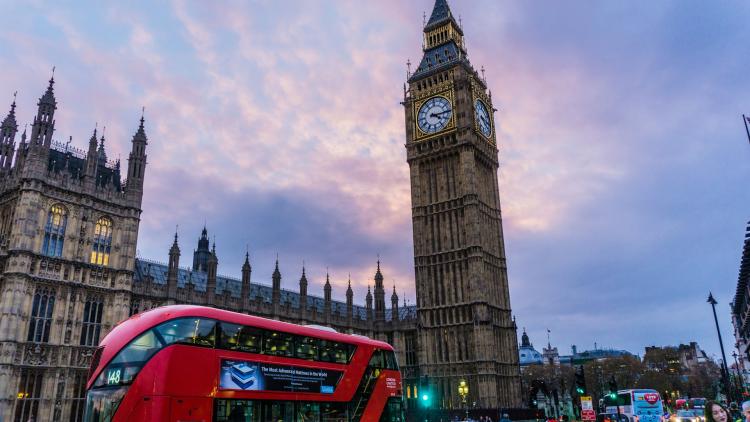
Image credit: Julian Yu via Unsplash.
About the speaker
Rohit Azad teaches at Centre for Economic Studies and Planning, Jawaharlal Nehru University, Delhi.
He is the author of It's Not Over: Structural Drivers of the Global Economic Crisis, OUP (2013) and has co-edited A Quantum Leap in the Wrong Direction, Orient BlackSwan (2019). His areas of interest are macroeconomics, growth and development, climate change, political economy, monetary theory and policy.
He has twice been a Fulbright scholar at University of Massachusetts, Amherst and the New School of Social Research, New York respectively.