Department of Politics and International Studies
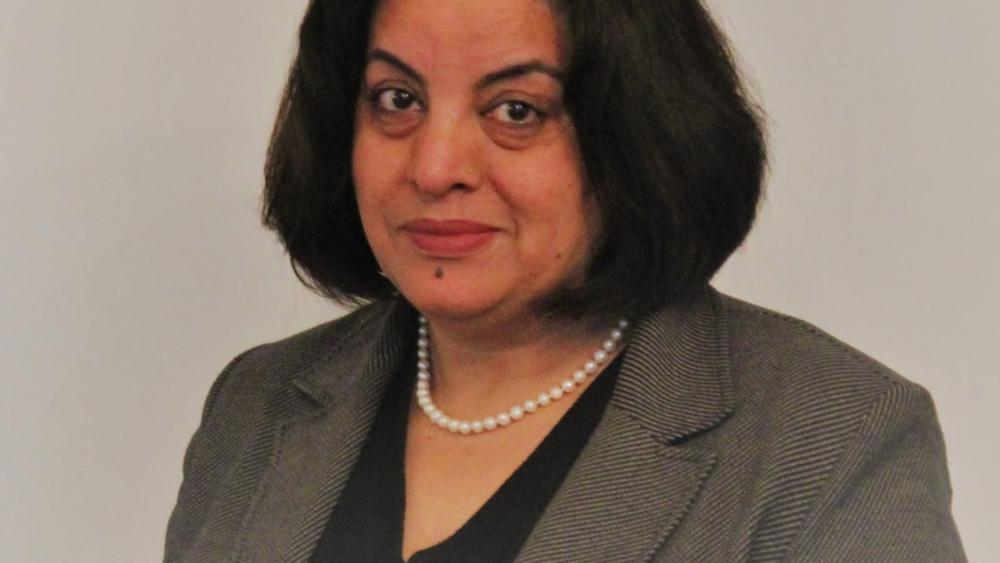
Azra Syed
You are viewing:
Key information

Key information
- Qualifications
-
MA Creative Writing, University of Hertfordshire
MA Journalism & Political Science
CIW Diploma in Web Technologies (2010) - Email address
- 734615@soas.ac.uk
- Thesis title
- Misogyny as Political Radicalisation: A Transnational Study of Online Hate and Honour-Based Violence
- Internal Supervisors
- Dr Yenn Lee, Professor Matthew J Nelson & Dr Nicholas Rush Smith
Biography
Azra Syed is a PhD researcher in the Department of Politics and International Studies at SOAS, University of London.
Her research examines misogyny as a process of political radicalisation, analysing how digital misogyny, online hate ecosystems, and transnational grievance cultures contribute to gender-based violence. Her core research focuses comparatively on Pakistan and the United Kingdom, exploring the intersections between online discourse, ideological formation, and offline harm.
In addition to these primary case studies, her research engages with comparative reference cases, including Brazil as a shadow case and Sweden as a contrast case, to explore how different political, cultural, and institutional contexts shape the manifestation and regulation of misogynistic discourse and violence.
Azra’s research sits at the intersection of gender, politics, and digital culture, drawing on feminist political theory, radicalisation studies, and qualitative research methods. Her broader interests include political masculinities, honour-based violence, online communities, and the role of media and technology in shaping social norms and political behaviour.
She is supervised by Dr Yenn Lee, Prof. Matthew J. Nelson, and Prof. Nicholas Rush Smith.
Alongside her doctoral research, Azra is actively engaged in the SOAS research community. She serves as a Research Students’ Association (RSA) Representative and Politics and International Studies, Program and Department Representative, and is a member of the Research & Knowledge Exchange Committee (RKEC) and the Equality, Diversity and Inclusion (EDI) Committee.
Azra has contributed to academic and professional discourse through conference participation and leadership. She served as a Conference Ambassador at the Political Studies Association Annual Conference (PSA 2026) at the University of Oxford, where she also chaired the panel “Women and Politics – Political Violence and the Politics of Shame.”
In addition to her academic work, Azra has a long-standing background in journalism and writing. She has worked as an investigative journalist focusing on human rights, women’s rights, and social justice across the UK and South Asia, and is the author of four books, including ETHICAL INTELLIGENCE: Balancing Innovation and Responsibility in AI (available via Amazon: https://amzn.eu/d/0akPjOzr). She also contributes to academic peer review and has reviewed submissions for SJPRJ.
Her work bridges academic research and public engagement, including initiatives such as Inner Light Tales, a storytelling-based approach to emotional wellbeing. Her broader aim is to contribute to research, policy, and public understanding of gender, power, and digital transformation.
Key publications
Books:
• Ethical Intelligence
• Think, Automate and Grow Rich
• WFH During the Pandemic and Beyond
• The Power of Acceptance
Selected Journalism:
• “Edhi Homes: Homes to Muffled Cries”
• Contributions to Sapan News
Research interests
• Digital misogyny and online hate ecosystems
• Misogyny as political radicalisation
• Political masculinities and gendered grievance cultures
• Honour-based violence and transnational gender regimes
• Feminist political theory
• Online communities and digital discourse
• Comparative politics (Pakistan, UK, Brazil, Sweden)
• Media, technology, and ideological formation
• Gender, power, and social regulation
Personal links
Publications
Contact Azra
- Social media