Epstein files: We need to talk about the girls and young women, not powerful men


Professor Awino Okech examines how the Epstein files expose a global architecture of elite power, revealing how influence is brokered through systemic sexual exploitation, and why keeping girls and young women at the centre of the story is essential to accountability.
Scroll your feed. You will find a parade of powerful men, their names, their networks, their ties to Russian oligarchs, Israeli intelligence, Ivy League institutions. The Epstein files have become a geopolitical story revealing how power is organised and negotiated globally. Yet, the people who were central to how those connections were built, maintained and sustained - girls and young women - are being quietly sidelined.
It is worth restating that Jeffrey Epstein was charged with sex trafficking of minors (girls). Globally, 38% of girls are trafficked for sexual exploitation in comparison to boys who are exploited for forced labour and forced criminality. There is also a global pattern to human trafficking for sexual exploitation with the Americas, Europe and Middle East as hubs.
Power built on the exploitation of girls and women
My work over decades has examined how unequal power between men and women shapes how our societies organise labour, politics and socio-cultural relations. The Epstein case is not an exception. The files reveal the global scale in which sexual abuse and trafficking of girls and young women - and the dismisal of women and their worth - is at the heart of how influence is peddled amongst the powerful elite who determine the fate of our economies, politics and knowledge systems.

The girls targeted in Epstein’s trafficking ring were not random. Many were under 18 years of age and were groomed through promises of safety, money or opportunity. Anti-trafficking researchers and activists link factors such as age, economic needs and gender as important to the grooming process.
The Global Slavery Index reveals a number of connected factors that inform vulnerabilities to sexual exploitation. The first is the erosion of civil and political rights in countries and regions. Second, entrenched biases, racism, homophobia, and xenophobia, which deepens social isolation that generates vulnerability to trafficking.
38% of girls are trafficked globally for sexual exploitation in comparison to young boys who are trafficked for labour
We cannot disconnect the conditions that create these vulnerabilities from the capitalist system that fuels structural exploitation, where poverty and gender meet in the Epstein case. When obscene wealth is concentrated in the hands of a few, conditions are created where some people face an impossible question: do you want to survive, or do you want to live with dignity? In the end, that is not a choice. It is a decision made for you, depending on where you sit in the continuum economic exploitation.
Who matters
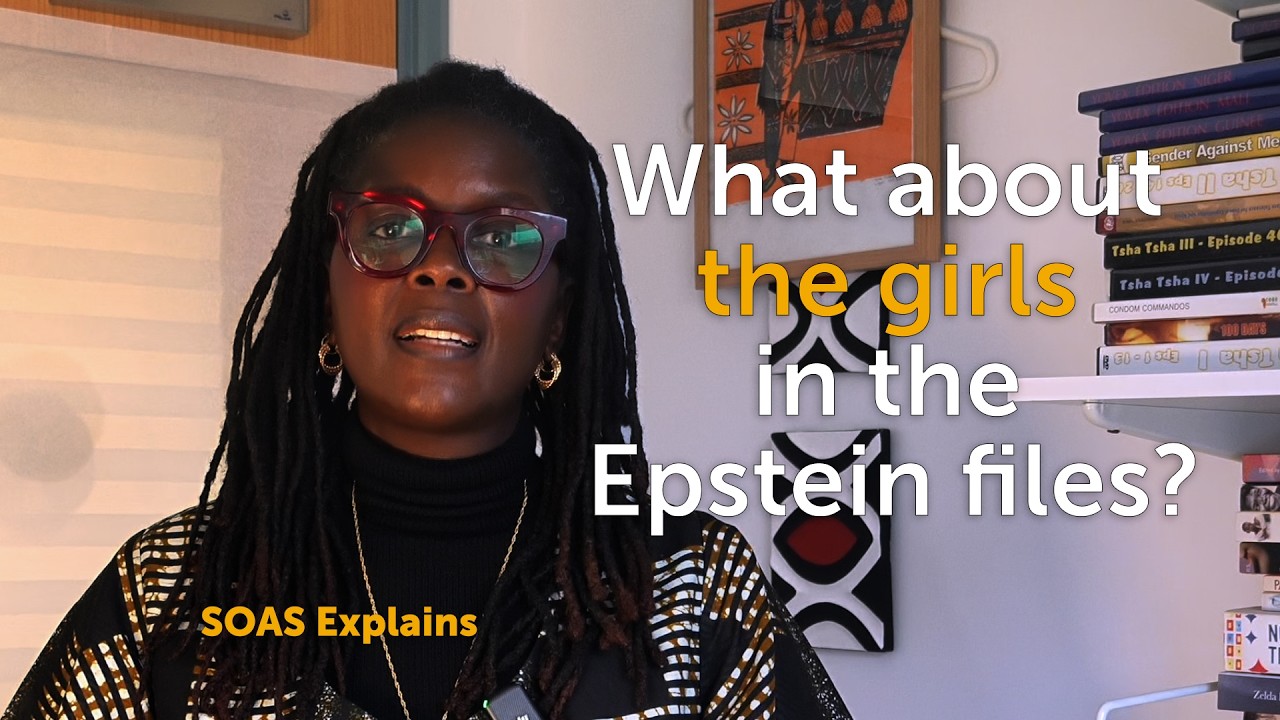
The Epstein files are an invitation to examine how violence against women and girls gets minimised, and how global inequality feeds sexual exploitation and abuse. As investigations begin in England focused on breaches to national security against Andrew Mountbatten-Windsor and Peter Mandelson, we see accountability for the crimes committed against the girls and young women disappearing from focus.
Yet it is sex trafficking of girls and young women that unveiled Epstein’s powerful transnational network of abuse. The focus of national security to the detriment of gender violence tells us whose dehumanisation we are collectively willing to look past to get to what we consider more important – national security. Keeping the girls and young women at the centre of this story is the beginning of accountability.
About the author
Dr Awino Okech is Professor of Feminist and Security Studies at SOAS University of London and founding Director of the Feminist Centre for Racial Justice. Okech’s teaching, and research sits at the nexus of gender, sexuality, conflict, and security studies.