Why I made a video about Minecraft and colonial coding: Reflections from a historian


Following her SOAS Explains video on Minecraft and colonial coding, Dr Marie Rodet shares why she chose to explore the topic and why it's essential we examine which stories we encode into our digital worlds and why.
As a historian of African slavery and the Research & Narrative Lead for three impact-driven games - Usawa, Usawa AI, and Umoja - my work sits at the intersection of history, narrative, and digital culture. One of its central questions is: how do we gamify difficult histories and harness digital pop culture to change the way we think about the past? That question informs my academic research, shapes my design practice, and ultimately inspired me to make a short critical video about Minecraft as part of the SOAS Explains series.
Why I focused on Minecraft
At first glance, Minecraft appears an unlikely subject for historical critique. Bright, blocky, and boundlessly creative, it is widely praised for encouraging curiosity, collaboration, and problem-solving. To many, it is precisely the sort of digital environment we want young people to be in. And yet it is this very sense of neutrality and innocence that makes Minecraft such a rich object of analysis. Cultural artefacts that do not announce themselves as political often carry the deepest assumptions.
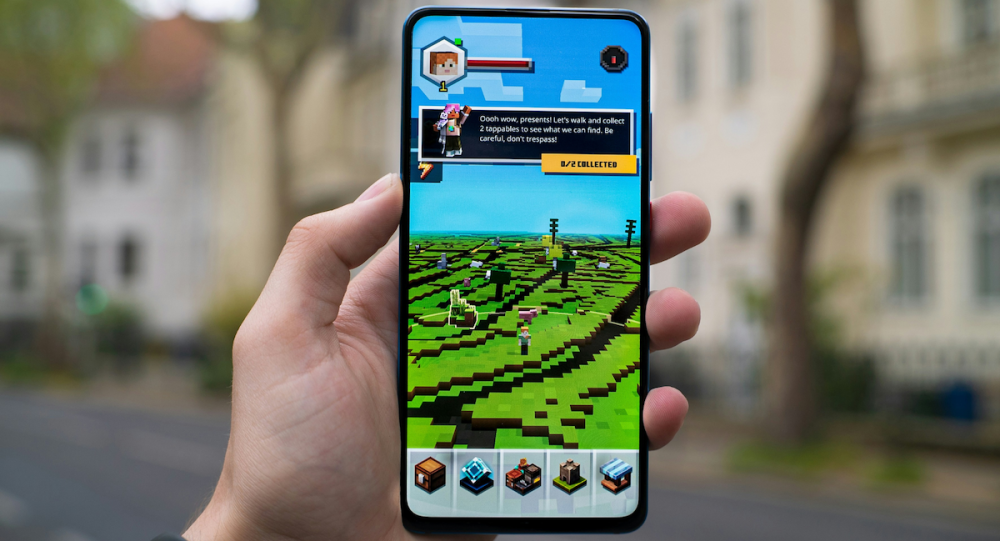
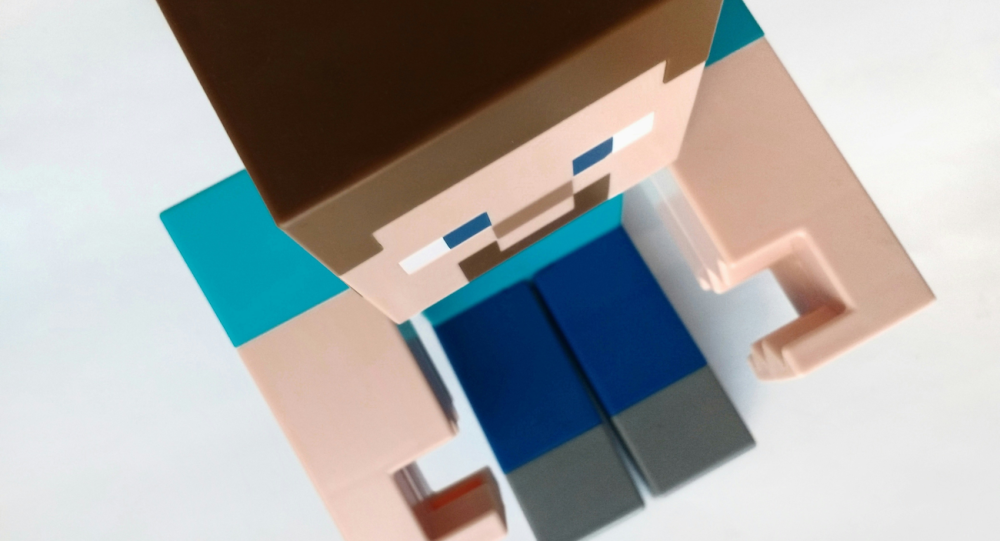
Minecraft begins with the player, represented by the implicitly white, implicitly male avatar Steve, dropped into a world already inhabited by villagers. These villagers predate the player’s arrival, yet the game centres the player as the rightful agent of progress. The landscape becomes something to be harvested and reshaped; forests are felled, mountains mined, and villagers traded, exploited, or conscripted into automated labour systems. Even players who avoid violence often find themselves relying on the game’s core logic: gather, optimise, expand.
Cultural artefacts that do not announce themselves as political often carry the deepest assumptions.
My aim in the video was not to indict Minecraft or shame those who enjoy it. Rather, it was to illuminate the historical and ideological logics embedded in a game often perceived as apolitical. From a historian’s perspective, Minecraft quietly reproduces colonial imaginaries: notions of entitlement to land, assumptions of resource abundance, and the framing of indigenous inhabitants as either obstacles or labour. None of this is intentional, but all of it is culturally revealing.
Games are powerful mirrors of historical thought
Games matter because they are participatory systems. They don’t merely tell stories - they model them. Players inhabit the logic of the world, learning through action what the game rewards and punishes. This is why games are such powerful mirrors of historical thought.
In the context of the histories I study - African slavery, colonial violence, and their afterlives - these default assumptions deserve interrogation. They reveal the values we consider natural: mastery, expansion, conquest, and optimisation.
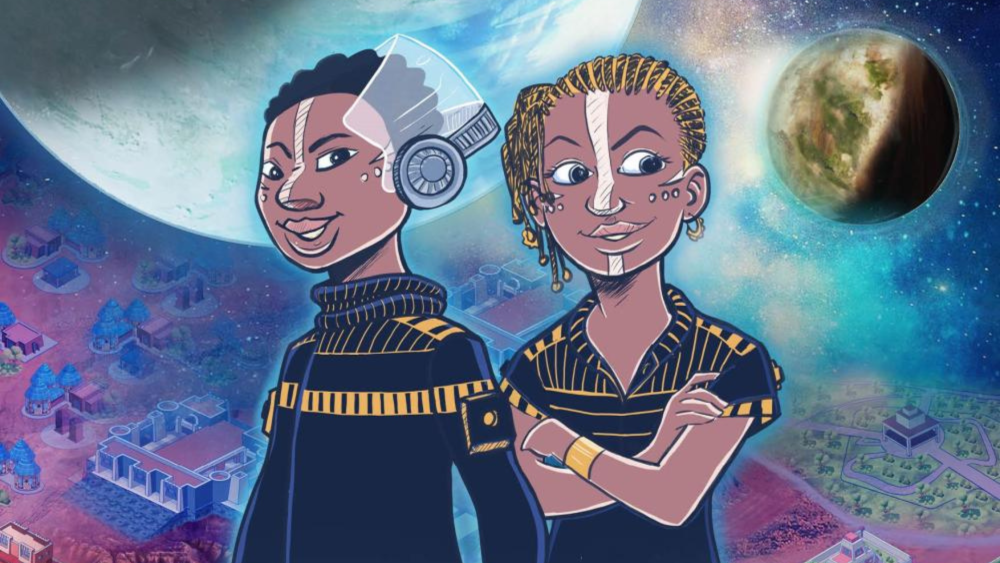
My work on Usawa, Usawa AI, and Umoja emerges directly from this tension. These projects draw on my research into African slavery, but they also grow out of a desire to explore how interactive media can disrupt inherited narratives rather than reproduce them.
We often talk about “gamification” as a way to make learning engaging, but my work pushes this further: How do we gamify difficult histories in ways that honour complexity, acknowledge harm, and centre ethical (re)presentation, ensuring that the past is neither simplified nor exploited in the process? And how might digital pop culture help us challenge the ways in which many games flatten, dilute, or distort the past?
The dominant stories in gaming - exploration, accumulation, domination - mirror the conceptual frameworks that underpinned empire. To offer viable alternatives, we need more than new protagonists or new aesthetics. We need new systems.
This challenge is not only technical or artistic: it is ethical. Popular digital culture profoundly shapes how people imagine history, especially histories that are distant, painful, or systematically misrepresented. The dominant stories in gaming - exploration, accumulation, domination - mirror the conceptual frameworks that underpinned empire. To offer viable alternatives, we need more than new protagonists or new aesthetics. We need new systems.
Expanding the worldview of gaming
This is where the histories I study become generative. Histories of resistance to slavery in Africa offer just that: they show us centuries-old forms of cooperation, resilience, and mutual care forged under conditions of structural violence.
We need game systems that reward interdependence rather than extraction, collective resilience rather than individual supremacy, and ethical reflection rather than violence reenactment. Grounding game design in these histories does not restrict creativity; it expands it, opening possibilities that mainstream gaming has not yet embraced.
The Minecraft video, then, was not an isolated critique. It was part of a broader effort to spark public conversation about the cultural work games perform. Minecraft is not unique; it is emblematic. Its mechanics echo worldviews that continue to shape global inequality. But acknowledging this does not diminish the joy of the game. Instead, it invites us to recognise that joy itself is shaped by history and that we can design new forms of joy rooted in justice, empathy, and community.
For me, this work is ultimately hopeful. When we learn to spot the colonial coding beneath familiar games, we gain the ability to imagine alternatives.
For me, this work is ultimately hopeful. When we learn to spot the colonial coding beneath familiar games, we gain the ability to imagine alternatives. When developers, educators, and players understand the stories embedded in digital spaces, they are better equipped to consider what those spaces might teach instead. Impact-driven games like Usawa and Umoja show how interactive media can engage histories of violence and resistance in ways that are community-attuned, ethically grounded, and genuinely transformative.
Games are part of our historical imagination. They shape the mental worlds through which young people interpret history, power, and place. If we want a future in which historical understanding is more equitable and deeply informed, then we must take seriously the stories we encode into our digital worlds. And we must keep imagining, and building, new worlds that offer something better.
The views and opinions expressed in SOAS Blogs are solely those of the respective authors and do not necessarily reflect the views of the organisation or act as an endorsement.
Image header credit: Addy Spartacus via Unsplash.
About the author
Dr Marie Rodet is a Reader in the History of Africa at SOAS University of London.