Growth models and regime stability: the divergent paths of Malaysia and Turkey in the global financial system

Key information
- Date
- Time
-
5:00 pm to 7:00 pm
- Venue
- Russell Square: College Buildings
- Room
- Djam Lecture Theatre (DLT)
- Event type
- Seminar
About this event
The global diffusion of financial liberalization reforms has exposed many governments to new market risks, especially in the developing world, with important political implications, most notably after the 2008 Global Financial Crisis (GFC).
Departing from this observation, this presentation examines why some regimes have become more repressive following the GFC, while others have not. Based on a comparison of Turkey and Malaysia, the presentation argues that the growth model priorities pursued by these governments play a critical role in why some regimes become repressive or choose democratic opening. In countries like Turkey where domestic consumption and production rely heavily on foreign borrowing, crises that disrupt access to cheap credit often lead to economic upheaval, paving the way to political repression and social inequality. This happened when the ruling coalition sought to control political divisions that threatened their survival, by selectively alleviating economic grievances and thereby maintaining power in the aftermath of a major economic crisis. In contrast, regimes that can shield their economies from global financial shocks—often under a more hybrid growth model thanks to commodity exports or sustained foreign investment—are less prone to political upheaval when consumers and investors have access to affordable loans. In cases like Malaysia where economic growth has been driven by commodity exports and domestic consumption, the government could rely on the surplus to temporarily alleviate economic instability, allowing the ruling coalition to renegotiate growth policy priorities via democratic opening and without resorting to excessive repression.
Registration
This event is free to attend, but registration is required - please email Dr Mehmet Kerem Coban (mc135@soas.ac.uk)
This event is taking place on campus and will not be recorded or live-streamed.
About the speaker
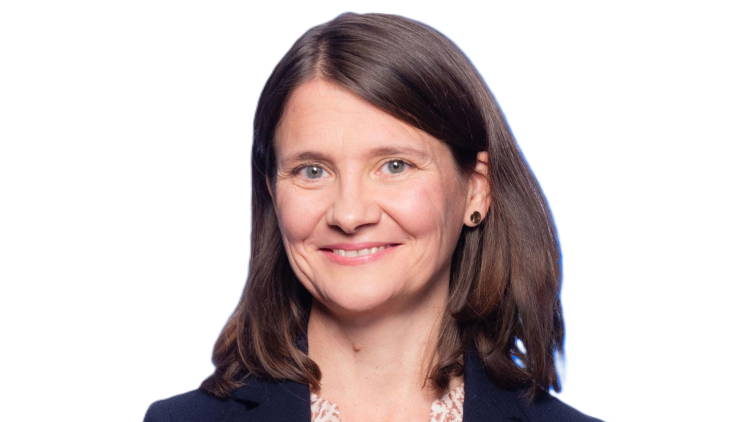
Dr. Fulya Apaydin is an Associate Professor at Institut Barcelona d’Estudis Internacionals (IBEI). Her work is situated at the intersection of comparative politics and international studies with a particular emphasis on the political economy of development. Broadly, she is interested in how investment policies across emerging economies are transformed in face of global pressures, and how political actors respond to these challenges at the local and national levels. She is currently focused on two interrelated lines of research: a first project unpacks the rise of private debt regimes in the Global South, explaining cross-national variations in the governance of credit allocation. A second project examines the causes and consequences of the new space race as part of industrial policy in the 21st century. Fulya holds a PhD from Brown University. Previously, she was a visiting researcher at the Princeton Institute for International and Regional Studies and the Max Planck Institute for the Study of Societies. Her work has been published in scholarly journals such as World Development, Regulation and Governance, Socio-economic Review, Review of International Political Economy, and Competition & Change, among others. She is the author of Technology, Institutions and Labor: Manufacturing Automobiles in Argentina and Turkey (Palgrave, 2018)
About the discussant
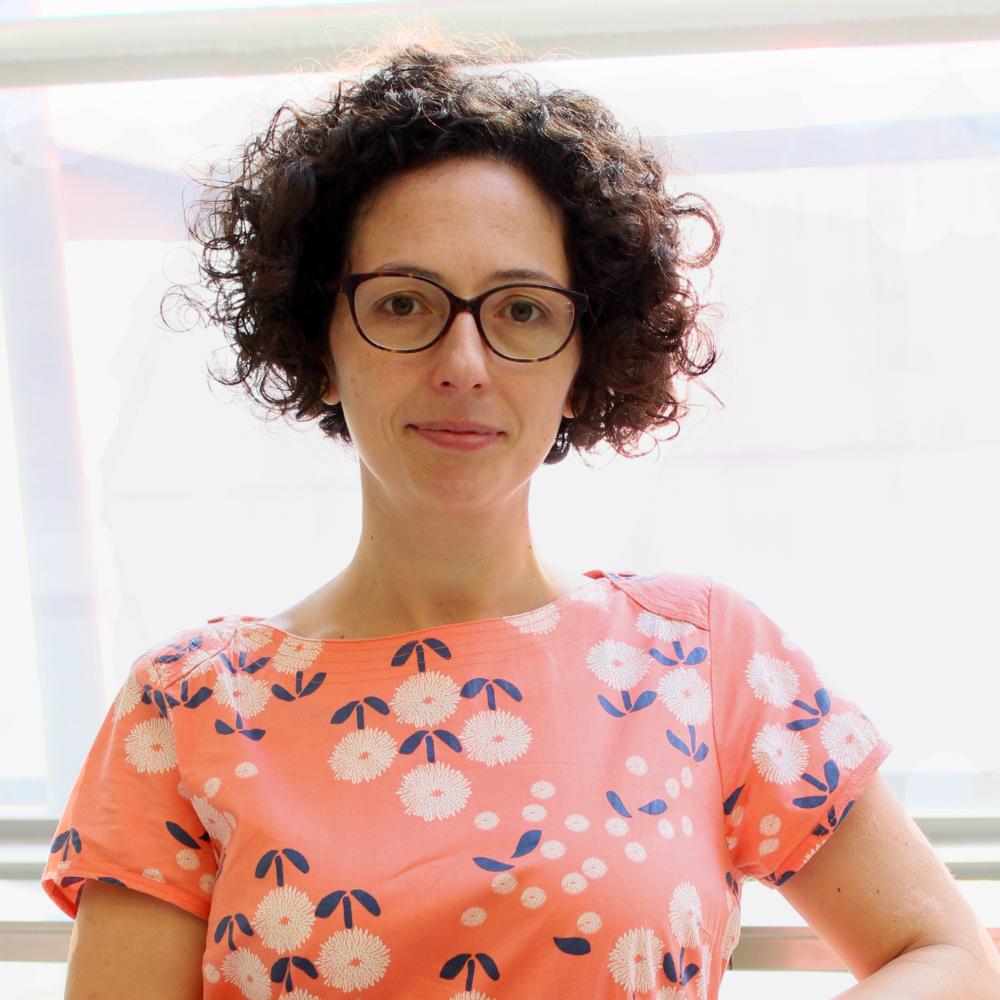
Dr. Ali Burak Guven is a Senior Lecturer in International Relations and International Political Economy in the School of Social Sciences at Birkbeck College, University of London. He joined Birkbeck in 2012. His work lies at the intersection of comparative and international political economy, focusing primarily on development policy and practice. Much of his recent research examines how an increasingly multipolar global economy impacts the parameters of development cooperation, with particular reference to international organisations such as the IMF and the World Bank. Policy and institutional trajectories in emerging countries constitute another substantive research interest. Ali has published in journals including Development and Change, Development Policy Review, Global Governance, International Affairs, New Political Economy, Review of International Political Economy, Studies in Comparative International Development, and Turkish Studies. He co-edited a collection on globalisation and has been working on a monograph on Turkey. He was awarded the 2017 Ronald Tress Prize in Research Excellence in the Social Sciences category and held a British Academy research grant in 2017-18.