The Manor House and Other Homes of William Adams: The English Samurai in Japan

Key information
- Date
- Time
-
5:00 pm to 7:00 pm
- Venue
- Russell Square: College Buildings
- Room
- Djam Lecture Theatre (DLT)
About this event
This presentation explores the variety of environments where William Adams lived during his life in Japan, from 1600-20. Following a chronological approach from his arrival at Usuki (Oita Prefecture) this talk briefly traces his early years in Japan during which he was incarcerated for a day or two in a wooden cage in the courtyard of Osaka castle. Moved with the rest of the surviving crew of the Liefde to Uraga (Kanagawa Prefecture) they all enjoyed relative freedom of movement while Adams spent time in Edo, vainly attempting to get permission for their ship to leave Japan. At the end of two years all that Adams could show for his efforts was the acquisition of a Japanese wife and child and news that none of the crew would be allowed to leave.
Adams and his Dutch shipmates were each given a small annual retainer and could seek permanent accommodation for themselves. Adams and his young family chose to remain in Uraga, during which time Tokugawa Ieyasu initiated his grand scheme to rebuild the castle and castle town of Edo. Ieyasu still maintained Fushimi (Kyoto Prefecture) as his main residence but made annual trips to Edo to inspect building progress. It was during these visits that he would summon Adams to seek advice on foreign affairs and other matters. A rare double earthquake and tsunami, in February 1605, caused severe disruption to the supply of stone and so halted construction at Edo. It was in this context that Ieyasu made the sudden request for Adams to construct a western style ship (suitable for the transport of large stone blocks), the successful completion of which was met with a substantial increase in Adams’ annual retainer.
The next year was spent building a second vessel, larger than the first and with ocean-going capability. Adams was able to test these ships, on Ieyasu’s instruction, to seek out the northernmost extent of Japan and Ezo’s (Hokkaido) shores. It was also during 1607-8 that Adams began to assume a more diplomatic role in the foreign affairs of the Tokugawa regime and become Ieyasu’s personal interpreter/advisor. His reward was the grant of a newly-built town house on the former stone-yards near Nihonbashi in Edo, at the appropriately named Anjin-chō. The location meant that, from now on, Adams could attend to any summons from Ieyasu at a moment’s notice. Following two successful diplomatic interactions, first with the Dutch, in 1608, and then with the former governor of Spanish Luzon (Philippines) in 1609, Adams was appointed hatamoto to Ieyasu, probably in early 1610. His new status meant that Adams was now entitled to carry the two swords of a high ranking samurai, and that he was further rewarded with his own manorial estate at a rural place called Hemi, not far from Uraga, in modern Kanagawa Prefecture.
The focus of this presentation is to give a detailed account of Adams’ new residences at Hemi and Anjin-chō, and of their functions and the role they played in Adams’ life in Japan. Also mentioned, however, are his other two primary residences during the last 10 years of his life, at Uraga and Hirado (Nagasaki Prefecture). The former became somewhat infamous for the fact that Adams hosted three Spanish friar/ambassadors there during a time of intense Christian persecution. His home in Hirado was a rented property, and the place where he died in the early summer of 1620.
Recording
About the speaker
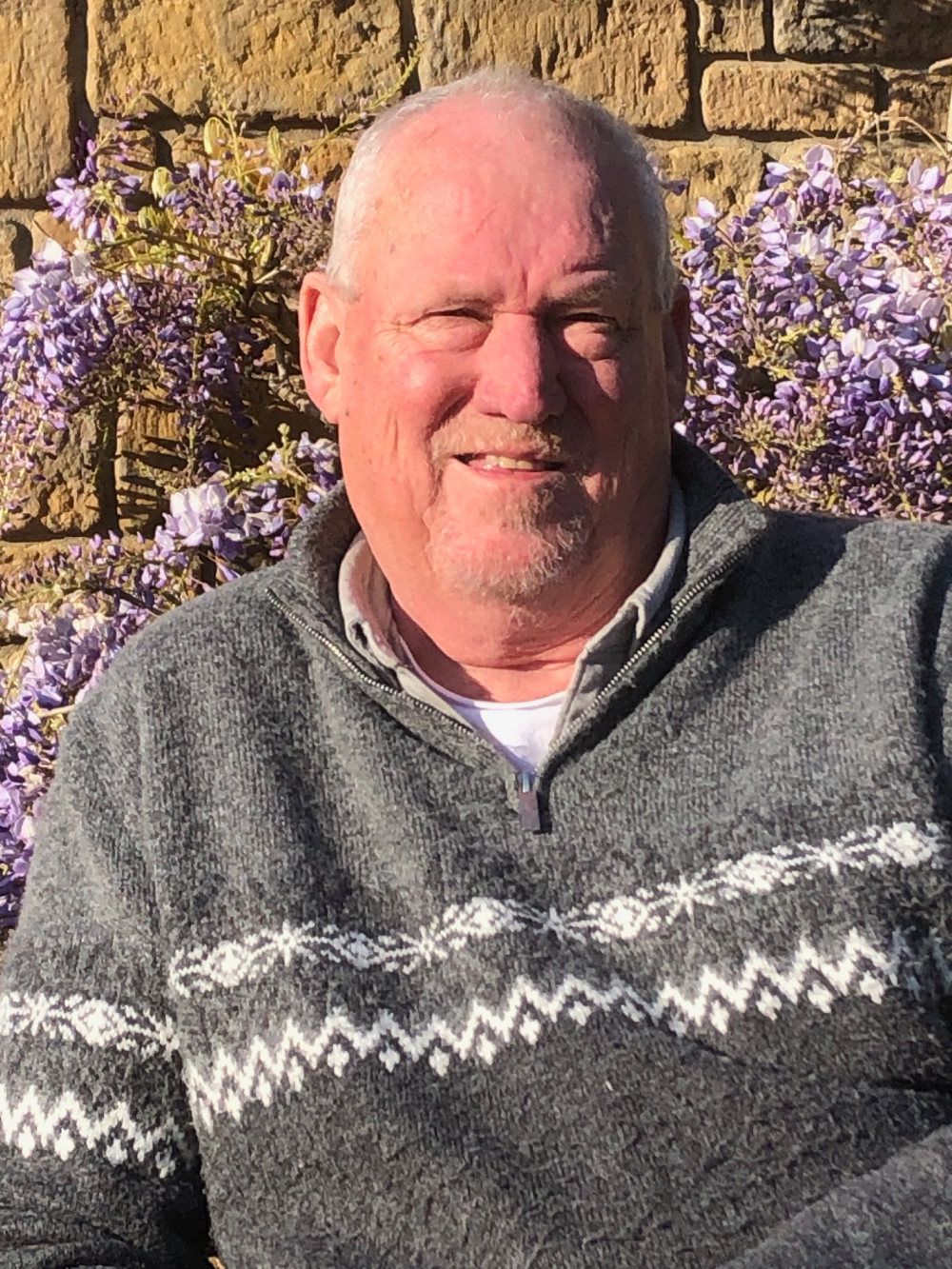
Richard Irving graduated from Sheffield University in 1976 with an honours degree in Geography and Japanese Studies and then spent a year at Kyoto University researching rural depopulation. This study became the backbone for his PhD, which he also completed at Sheffield. He then worked for a while for the museums service at Kirklees in West Yorkshire, initiating various local heritage projects, before heading to the Far East once more, in 1985.
Richard spent ten years teaching in the Department of Geography and Geology at the University of Hong Kong, where his research focused on the changing landscape of the north-west New Territories there. In 1995 he became Professor at the School of Policy Studies, Kwansei Gakuin University, in Hyogo Prefecture teaching courses on population problems, rural issues, and the geography of Japan. Richard retired in 2019 and has returned home to Combe Down, near Bath, where he is President of the local Heritage Society.
During the 25 years Richard spent in Japan he often wondered about the type of landscape William Adams saw when the English adventurer first arrived in the country, over 400 years ago. Dick’s travels around rural Japan regularly covered the same ground as Adams, from old Edo to Hirado, and his research has revealed fascinating new detail about the life of the English Samurai. He was directly involved in the excavation of Adams’ grave in 2017 and has subsequently published five volumes on the life and times of William Adams. This series is currently being translated into Japanese.
In 1992 Richard co-founded the walking-tour company called Walk Japan. Exploring the historic byways of remote parts of rural Japan, Walk Japan has introduced thousands of people from around the world to the pleasures of the places he has spent so long studying.
This event is free, open to the public, and held in person and online.
- Organiser: SOAS Japan Research Centre
- Contact email: centres@soas.ac.uk
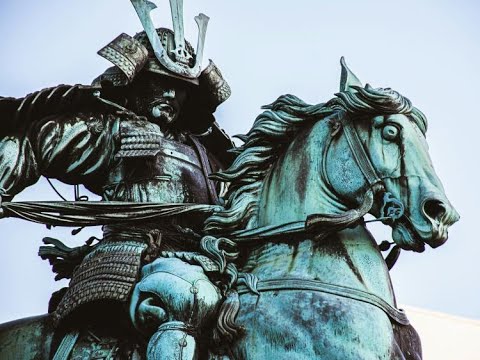
Header image credit: Ryunosuke Kikuno via Unsplash
Image gallery