States of anxiety: China bordering India

Key information
- Date
- Time
-
5:00 pm to 6:30 pm
- Venue
- SOAS Main Building
- Room
- RB01
- Event type
- Seminar
About this event
This talk will historicise the anxieties that nation-states encode in their body politic.
Specifically, it will delineate the nervousness of a post-revolution China and a postcolonial India that share a Himalayan border stretching over 2,167 miles. A war over this border in 1962 ending with a standoff continues to this day.
The focus of the talk derives from the book, Through the India-China Border: Kalimpong in the Himalayas. The publication mobilises rarely-used documentary material from British, Chinese and Indian archives to shed new light on our understanding of the 'Tibet Question' in China-India relations. The Himalayan border town of Kalimpong from the 1920s to 1962 is crucial to this story as it unearths a history of espionage and political intrigue that challenges the way that remote peripheries are seen from the 'centres' of nations.
The use of postcolonial and transcultural theory demonstrates how a multidisciplinary framework augments our reading of imperial histories, postwar politics, decolonisation and frontier cultures. The border town of Kalimpong emerges from this analysis as a key node in Himalayan history and in the mid-century fashioning of India-China relations.
Registration
This event is free to attend, but registration is required. Seating is on a first-come, first-served basis. This event is taking place on campus and will not be recorded or live-streamed.
Organiser
About the speaker
Prem Poddar is Distinguished Fellow at The Max Weber Centre for Advanced Cultural and Social Studies (University of Erfurt). He is also Senior Associate at the Centre for World Environmental History at the University of Sussex.
Poddar was the founding Vice-Chancellor at the Darjeeling Hills University. His most recent publication is Through the India-China Border: Kalimpong in the Himalayas (Cambridge University Press, 2024) and his earlier output is in the fields of colonial, decolonial, postcolonial studies. His current work continues his interest in environmental studies as well as the politics of the passport.
Chair
This event will be chaired by Professor Steve Tsang, Director, SOAS China Institute
Contact
Email: sci@soas.ac.uk.
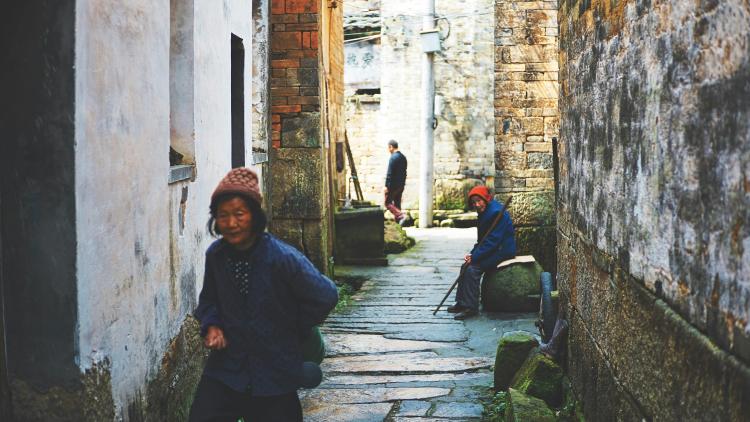
Image credit: Arnab De on Unsplash