Wael Al-Dahdouh speaks at SOAS on journalism and survival in Gaza


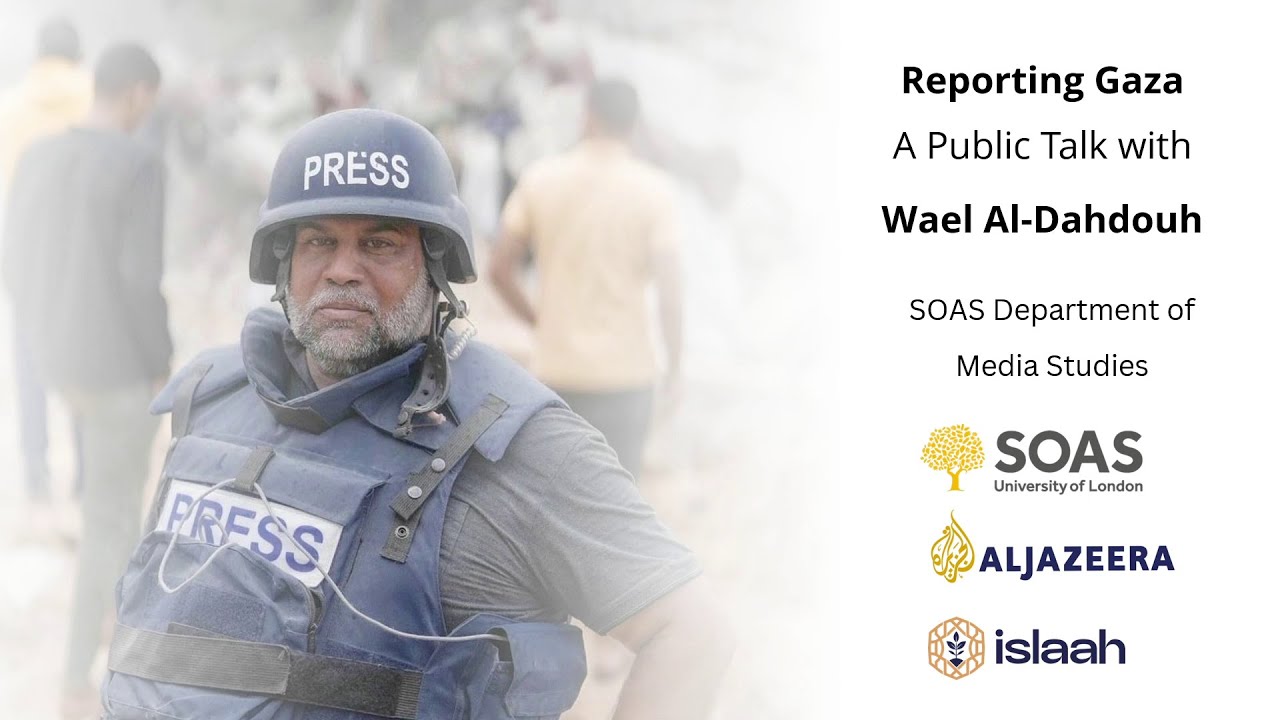
Wael Al-Dahdouh, the Gaza Bureau Chief for Al Jazeera, received a standing ovation at SOAS this week as staff, students, academics and activists gathered to bear witness to his testimony about the genocide in Gaza.
A Palestinian journalist from the Al-Zaytun neighbourhood in Gaza, Wael Al-Dahdouh is a veteran award-winning journalist with more than 27 years of experience covering Gaza and occupied Palestine. He is known by many as the ‘Mountain of Gaza’ for his resilience and determination to keep reporting, even as his work made him and his family a direct target of Israel’s military violence.
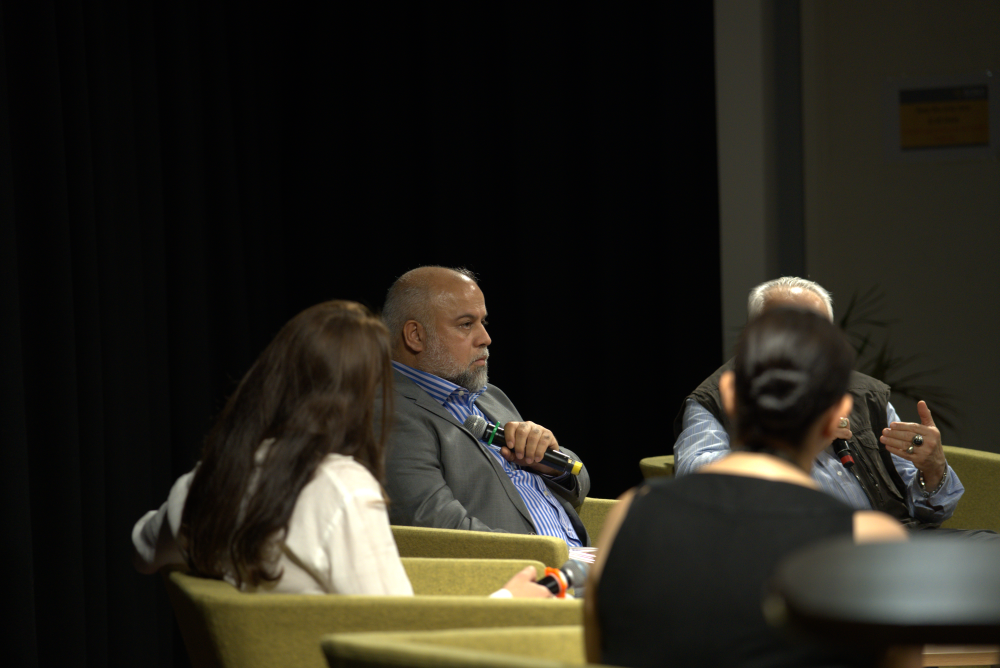
He addressed an audience at the SOAS Gallery on 8 September, reflecting on the demands and challenges of war journalism, and what it means to bear witness to humanitarian crimes.
Al-Dahdouh spoke of the impossible task of balancing his personal grief and journalistic integrity, while continuing to report under constant threat. He described the weight of responsibility he felt, leading his team’s international coverage on the genocide amid immense personal loss and sacrifice:
“I was conscious of the fact that all my colleagues were watching. They were expecting me to present myself as an example, a role model for them. Of course I would not let them down. I would not let down myself, my family, all my loved ones who paid the ultimate price.
"I thought it would be shameful on me now, to give up and to not continue. I realised that what the occupation forces were trying to do, is to kill this message – through me, to send a message to all other journalists. I stood there, realising that this is a job. I’m duty-bound, and it’s incumbent on me to carry on this message.
This is a responsibility, not just to my family, and my colleagues, or to the colleagues of my profession. It’s a responsibility to the world at large.
“We have a commitment towards a message, towards a profession which is based on a code of ethics. On a morality, on a value system. It’s not just a job we are doing - for us it goes much further than that.”
He also shared the sense of betrayal felt by him and his colleagues, at the international community’s silence in the face of this reporting. As the UN reports that over 250 journalists have been killed during this conflict, Al-Dahdouh reminded the audience of its responsibility to act on the testimonies that are reaching them from Gaza.
“If it wasn’t for the sacrifice of me and my colleagues, you wouldn’t be here. You wouldn’t have heard anything – the eyewitness accounts, the statements, the knowledge of what was happening. It wouldn’t have reached the world.
After all that we did and all the effort we put in, we found out that the world is standing idly by.
Watching in silence, indifference, and not doing much for our people and their suffering.
“Thankfully, we managed to do our job and let the world know – if not fully, then partially – what was going on. Despite that, I say with severe regret and pain, that after all that we did and all the effort we put in, we found out that the world is standing idly by. Watching in silence, indifference, and not doing much for our people and their suffering.
“What is the world waiting for, what more do they want to see before starting to act, when faced with a situation like this?”
He called for the upholding of international law in the case of Gaza, and warned against the erosion of legal norms and our shared humanity.
“In order for all of us to live at peace with ourselves, we have to be frank and consult our conscience. First of all, do we believe in the just nature of this cause? If the answer is yes, then why aren’t we doing anything about it?
There has to be accountability... This is a duty we all feel. Not for our sakes, in our part of the world, but for human standards in general.
“Because these kinds of crimes should not go unpunished. There has to be accountability. These crimes are well established under international law and humanitarian law, and all the norms that the world has been accustomed to respecting. We all have to do something so that there’s accountability.
“This is a duty we all feel. Not for our sakes, in our part of the world, but for human standards in general.”
This event was organised by the SOAS Department of Media Studies, in collaboration with Al Jazeera and the Islaah Collective, a SOAS student society.
Imagery: Islaah Collective