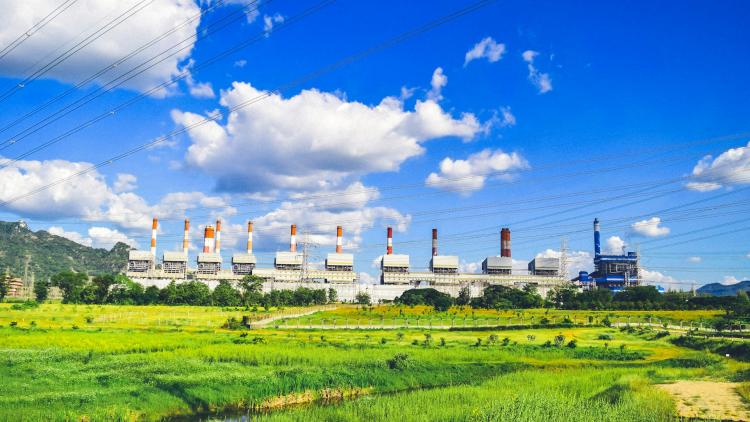
Future Leaders Programme 14: Industrial Policy for Structural Transformation in the Global South


Future Leaders Programme 14
Development Leadership Dialogue (DLD) at SOAS University of London, co-directed by Ha-Joon Chang, Christopher Cramer, and Jonathan Di John, announces its 14th Future Leaders Programme (FLP) on ‘Industrial Policy for Structural Transformation in the Global South’.
- When: 22–26 June 2026
- Where: London
- Deadline: 20 April 2026

About
About the Future Leaders Programme (FLP)
DLD promotes dialogue and mutual learning between the key actors that drive economic and social development – governments, private firms, civil society organizations, international organizations, trade unions, academia, and others – and that often operate in separate spheres, understanding each other poorly, even seeing each other as adversaries.
The FLP is one of the key programmes of DLD, bringing together a small number of people who will be in leadership positions in the next five to ten years in different sectors of the development community for a workshop of lectures, discussion sessions, and debates, led by speakers with a wealth of senior experience in government, international organizations, and academia.
Industrial Policy for Structural Transformation in the Global South
The countries in the Global South are facing unprecedented challenges. First of all, decades of neo-liberal policy has led to premature de-industrialisation in many countries, with highly negative consequences. On the one hand, deindustrialisation has led to increasing dependence on primary commodity exports, which exacerbates macroeconomic instability in the short run while slowing down productivity growth. On the other hand, deindustrialisation has increased people’s reliance on unstable, poorly paid service sector jobs for livelihoods, which in turn has fuelled political instability. Unless they transform their economic structures and get into higher-productivity sectors and ultimately acquire the capabilities to generate their own technologies, countries in the Global South are not going to be able to provide a decent standard of living to their people in a sustainable way.
The challenges of structural transformation are made more difficult by the relentless progress of climate change and other ecological disasters, such as reduction in biodiversity, acidification and plastic pollutions of oceans, and water and air pollutions. High and often rising primary commodity dependence exacerbates the ecological crisis, by leading to deforestation, destruction of biodiversity, and increased pollutions from mining activities. Even though climate change should not be used as an excuse to slow down economic development in Global South countries, those countries should try to develop their economies in the least fossil-fuel-dependent way possible (a prospect that is more than feasible, given the huge reduction in the price of renewable energy, especially solar energy, which is now the cheapest form of energy). Moreover, climate change and other ecological crises do not only create challenges but also opportunities for countries in the Global South, given their renewable energy potentials and ‘critical’ mineral deposits. Needless to say, these opportunities pose challenges at another level, as Global South countries will not break away from their dependent positions in the global economy unless these opportunities are leveraged for structural transformation.
Even while we should not get over-excited by the ‘presentist’ rhetoric describing our age as unique in terms of technological changes, it is true that there are many areas where new technologies are rapidly emerging (e.g., renewable energy, non-fossil-fuel dependent production of materials like steel and cement, renewable-energy vehicles, digitalisation, artificial intelligence, robotics, quantum computing, and biotechnology) and being fused with each other (‘electronification’ of motor vehicles being one obvious example). In this context, if they are not going to fall further behind technologically, countries in the Global South need to increase their technological efforts by investing more (in new machines, R&D, and worker training), implementing policies that promote technology transfer and spill-overs from the rich countries (e.g., local contents requirement), collaborating with each other in expensive R&D projects and higher education, and campaigning for the revision of the global intellectual property rights system so that technological learning and adaptation by the Global South countries are made easier.
Last but not least, the shifting balance of economic power in the global economy is posing new challenges and opportunities to the Global South. In the last decade or so, the rise of China – and some other Global South economies (e.g., Brazil, India, Turkey) – and the increasing interactions among countries in the Global South (e.g., increase in South-South trade, rise of South-based international financial institutions, and the African Continental Free Trade Agreement) have prompted the rich countries, especially but not exclusively the US, to abandon the neo-liberal global governance system that they had forced upon the Global South since the 1980s and thus bring the world closer to the ‘law of the jungle’ that had prevailed before the Second World War. In the short run, many countries in the Global South are losing out, as market access is reduced, foreign aid is cut while being made more transactional and the global economic environment becomes more uncertain. In the longer run, however, this geopolitical shift can create new opportunities for the Global South countries by expanding their ‘policy space’ (e.g., weakening of the WTO, delegitimising of free trade ideology) while alerting countries to possibilities of greater South-South cooperation.
History tells us that, in order to achieve structural transformation in the context of complex sets of challenges and opportunities outlined above, countries in the Global South need to implement intelligent and effective industrial policy. In this workshop, we will explore the whole gamut of issues involved in the design and the implementation of such policy.
The 14th Future Leaders Programme, ‘Industrial Policy for Structural Transformation in the Global South’, will explore a comprehensive range of issues related to industrial policy in the Global South. We will discuss how industrial policy, once a taboo, has in the last decade or so come to be practised openly by the rich countries (even though they have practised it behind the scenes all the time) and to be contemplated by many countries in the Global South. After discussing the history and the theories behind industrial policy, we will think about practical challenges for industrial policy – policy design, institutional set-up, coalition building, implementation, and policy learning (through monitoring and evaluation). We will also explore the implications of the changing global policy environment (including South-South cooperation), new policy tools, and alignment with other related policies. We will examine the issues of sustainability, digitalisation, and restructuring of global value chains (GVCs).
Confirmed speakers include (in the alphabetical order of their surnames): Antonio Andreoni (SOAS), José Miguel Ahumada (University of Chile; former Deputy Foreign Minister in charge of trade negotiations, Chile), Andres Arauz (former Minister of Knowledge and Human Talent, Ecuador), Yemi Dipeolu (former economic advisor to the President, Nigeria), Isabel Estevez (i-3T [Industry, Infrastructure, and Innovation for Strategic Transformation], Mexico), Jostein Hauge (University of Cambridge), Verena Hitner (Ministry of Science, Technology, and Innovation, Brazil), Amir Lebdioui (University of Oxford), Pamela Mondliwa (Industrial Development Corporation, South Africa), Richard Kozul-Wright (SOAS; former chief economist, UNCTAD), João Silva (University of Lisbon), and Yin Shao Loong (Khazanah Research Institute, Malaysia).
Application process
Applications are welcome from people from different sectors – governments, the corporate sector, civil society, international organizations, academia, trade unions, etc. Applicants need to complete the on-line application form, explaining, in their own words, their views on the challenges for industrial policy in the Global South as well as their work experiences in the relevant areas.
Applicants are normally expected to have at least ten years’ experience in their fields. If they are from academia, they should provide evidence that they have worked with development practitioners – in national governments, international organisations, the private sector, or CSOs. The deadline for application is Monday 20 April, 2026.
The fee for the programme is GBP 3,000. Participants are also expected to cover their costs of attending, travel, accommodation, and subsistence in London. However, there are some full or partial scholarships available, and applicants who want to be considered for them should explain their financial circumstances and state clearly how much financial support they are seeking in their covering letters.
Header image credit: Alex Bagirov via Unsplash.