Beyond objects: Reflections on care and collaboration at the Museum Rietberg


MA History of Art and Archaeology student Lingnan Zeng finds her internship at the Museum Rietberg in Zurich a transformative experience.
Standing inside the Museum Rietberg, surrounded by Himalayan bronzes I had previously encountered only in books, I found myself reflecting on an unexpected journey. Only nine months earlier, I had no clear idea what changing careers into the museum sector would entail. To me, museums are perhaps the closest thing to time travel – places where history, human stories, triumph and tragedy, creativity and wonder are quietly condensed under one roof. After many conversations with friends working in the museum sector, I eventually decided to pursue an MA in History of Art and Archaeology at SOAS.
The five-week internship at the Museum Rietberg was an exceptional opportunity. I left with a much broader understanding of museums – not simply as places that preserve and display objects, but as institutions built upon care, collaboration, and a commitment to serving people.
The immersive experience inside the museum proved transformative.
I was fortunate to work on the Berti Aschmann Collection, an outstanding collection of Himalayan and Chinese bronzes. Before arriving in Zurich, I had sought advice from Dr Christian Luczanits, whose years of experience as both a curator and scholar guided my reading and prepared me for the internship ahead. Yet it was the immersive experience inside the museum that proved transformative.
Breaking stereotypes
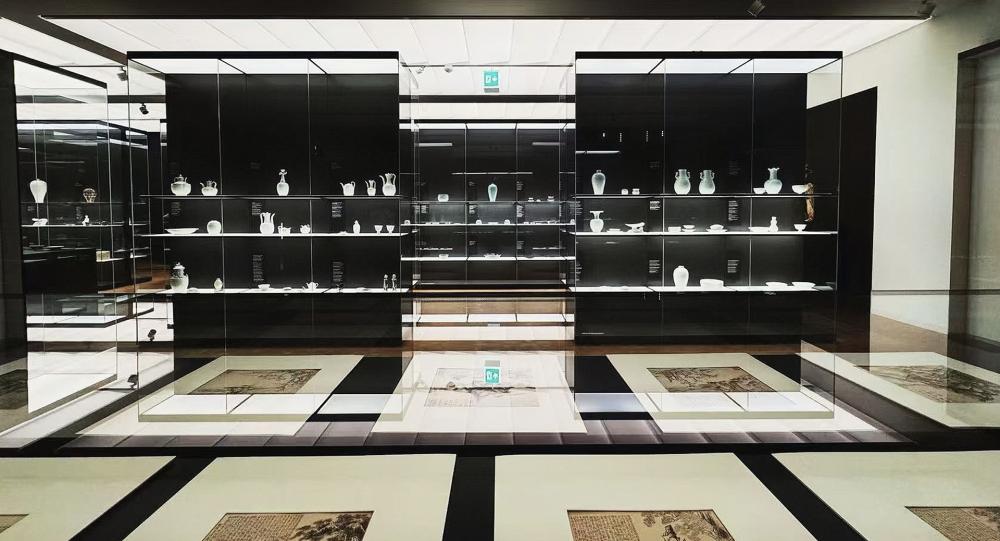
On our first day, Deputy Director Dr Johannes Beltz personally welcomed us and guided us through the museum. He led us into the open storage, where cabinet after cabinet revealed jade carvings, ritual bronzes, masks and Buddhist sculptures. As one cabinet after another was opened, it felt like being invited into a secret treasury. The museum team happened to be updating labels in several cabinets, giving us the rare opportunity to examine the objects up close. As we moved through the collection, Dr Beltz explained the importance of provenance research, how ritual objects once functioned in their original cultural contexts, and why careful interpretation matters.
I was particularly struck to learn how even a seemingly minor change in wording could subtly shift what visitors notice, focus on and ultimately understand about an object.
Collaboration, art education and public engagement
As the internship progressed, I became aware that museums are, above all, about people.
Behind every breathtaking exhibition lies a silent symphony of collaboration.
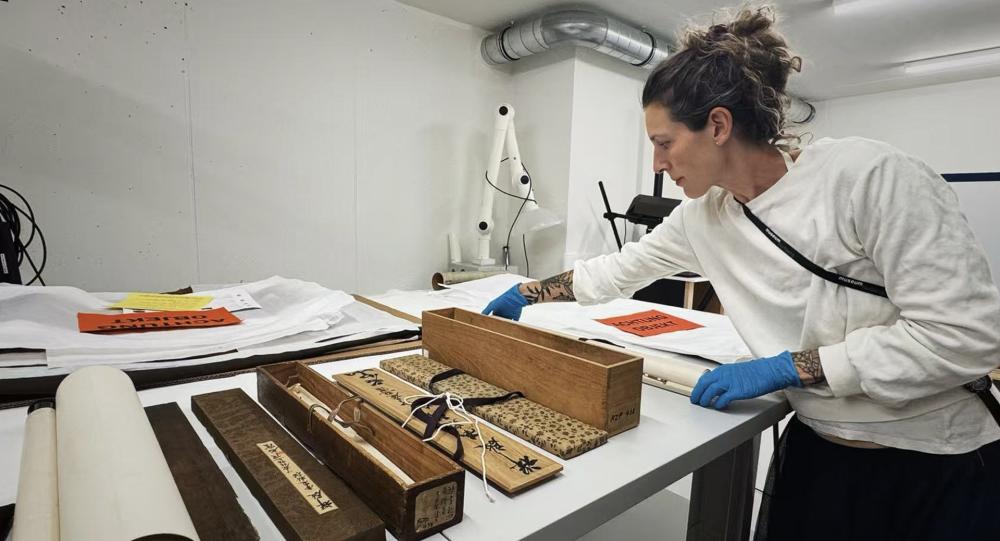
Like an orchestra, every department contributes its own expertise. Curators develop ideas, conservators prepare collections for display, exhibition designers transform curatorial concepts into physical spaces, while publication teams carefully craft every word in the catalogue. Even the café menu is thoughtfully designed to complement the exhibition. Through observation, discussion and practice, I came to realise that curating begins with understanding the objects and building a relationship with the collection itself.
From this experience, I learned that museum work is not about creating the most spectacular exhibition to fulfil personal ambition, but about creating an inspiring and inclusive cultural environment that offers something meaningful for everyone.
I also had the opportunity to participate in an educational workshop. What stayed with me most was how the education team translated complex ideas into activities that schoolchildren could engage with immediately. Equally inspiring was learning about the museum’s creative workshops for people living with dementia. One educator explained to us:
'We intentionally design activities that are very hands-on. Sometimes they forget the craft they made last week, but that is alright. In that moment, they are happy, and they are enjoying the space.'
Presenting my own research at the Museum Rietberg
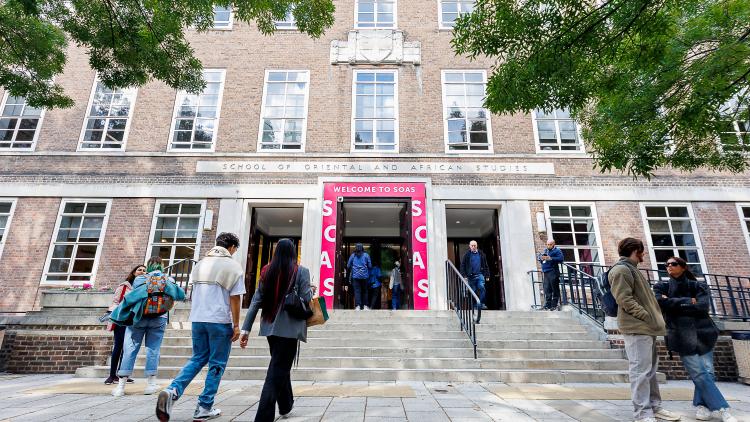
Throughout my studies, SOAS provided me with rigorous academic support, while its strong professional connections created opportunities that extended beyond the classroom. I was pleased to discover that Museum Rietberg’s Director, Dr Annette Bhagwati, is herself a SOAS alumna. She kindly shared memories of her own time at SOAS with us, adding a warm and personal dimension to the experience.
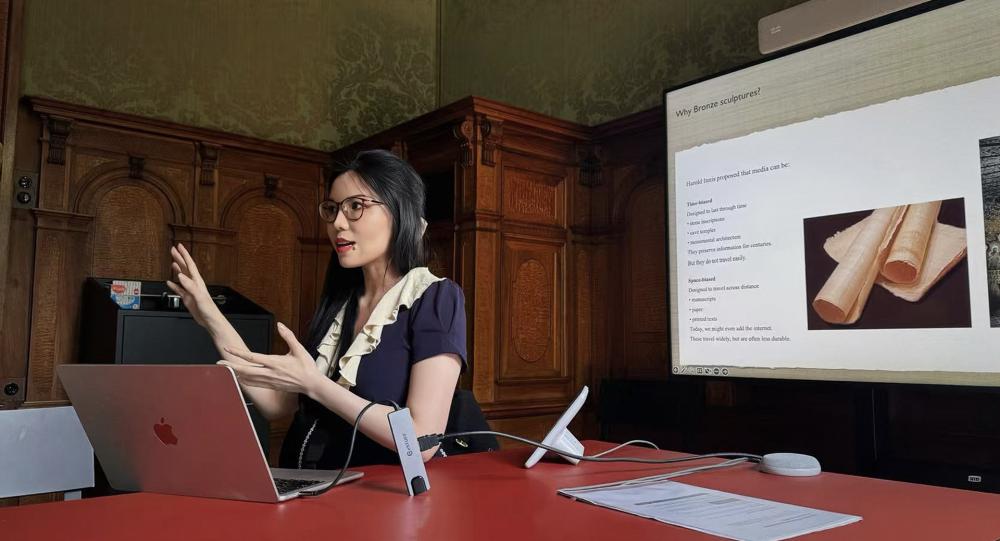
Looking back, the internship gave me far more than a dissertation topic or an opportunity to study remarkable objects at close range. It changed how I understand the museum itself: not simply as a home for objects, but as a place where research, care, collaboration and public engagement come together. That is perhaps the most valuable lesson I hope to carry into my own future practice.
About the author
Lingnan Zeng is an MA History of Art and Archaeology student at SOAS. She recently took part in the SOAS internship collaboration programme with the Museum Rietberg in Zurich.