Hands-on with history: Curating Vietnamese blue-and-white ceramics at SOAS Gallery

SOAS-Alphawood Postgraduate Diploma of Asian Art student, Yee Wai Than, puts theory into practice when she curates an exhibition of Vietnamese blue-and-white ceramics.
When I began my internship at the SOAS Gallery, I didn't really know what I was getting into. I thought museum work was mostly about putting objects in cases and writing labels. But I soon discovered there's so much more behind the scenes.
My task was straightforward but fascinating: to work with five Vietnamese ceramic objects – three bowls, a plate, and a pot – all dating from sometime between 1500 and 1900. They had been gifted to SOAS by Professor Elizabeth Moore in 2013. Before they could go on display, I had to get to know them intimately through handling, observation, documentation, and eventually curating their display.
Behind the scenes: from storage to showcase
Before anything could be set up in the gallery, I had to do my research. I'd learned about writing museum labels in my Postgraduate Diploma course, but this was my first time putting that knowledge into practice. I had to write the label text for these objects – carefully choosing what information to include and how to make it engaging for visitors.
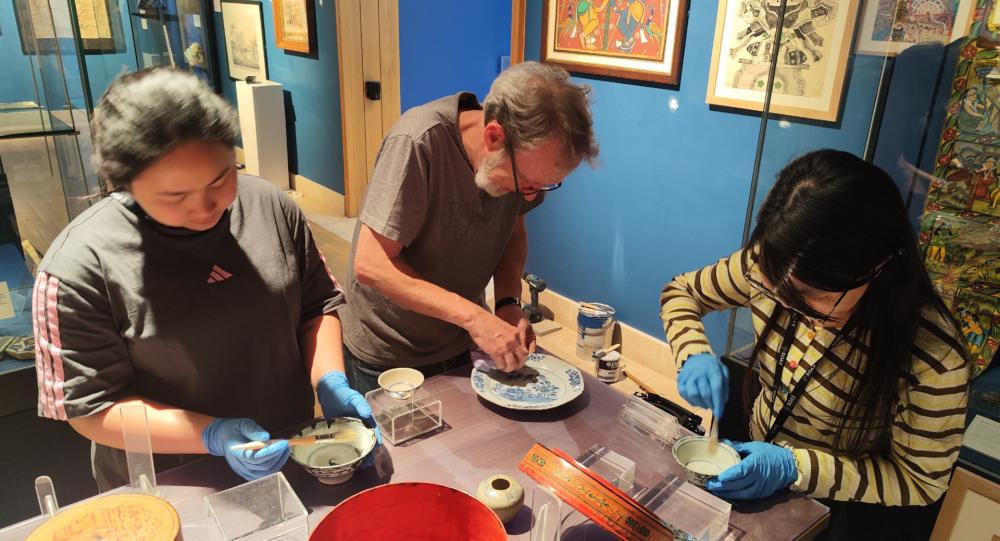
Then came the hands-on work. Over the course of a week, my team and I set up the entire display. We chose the right stands for each bowl, making sure they sat securely and at the right height. We adjusted the lighting to show off the blue-and-white decoration without damaging the glaze. We positioned everything so that visitors could see the ceramics from the best angles.
It was fun to learn all these behind-the-scenes processes. I'd never realised how much thought goes into choosing a stand or setting the lighting. Every detail matters – the angle, the height, the colour of the light – all of it affects how visitors see and experience the objects.
Getting my hands on history
The first thing I learned was how to handle ceramics the right way. Always support the base. Never lift by the rim. You don't usually need gloves for ceramics– your bare hands give you a much better feel for the surface. But there are exceptions. Some glazes contain toxic stuff like lead or cadmium and, if they're flaking, you definitely want gloves on.
When you're holding something that's over a hundred years old, you become very aware of what's in your hands.
The bowls themselves are small and light. But when you're holding something that's over 100 years old, you become very aware of what's in your hands. I spent hours with them, turning them over, feeling their weight, running my fingers along the glaze. I noticed things you just can't see in photos, such as the tiny chips along the rims, the hairline cracks, the subtle texture of the surface.
Connecting my studies to practical work
One of the greatest things about this internship was how it connected directly to my academic studies. I'm currently writing an essay for my Postgraduate Diploma on the differences between Vietnamese and Chinese ceramics. And here I was, working with actual Vietnamese ceramics in a gallery setting.
This wasn't just about handling and observing objects, though that was a big part of it. I was also learning about curatorial work: how to research objects, write labels, and present them in a way that tells a story. My object study sessions and my assignment on Vietnamese ceramics suddenly became much more meaningful. I could compare what I'd read in books with what I could see and feel in my hands. And I could apply that understanding to a real display that people would actually come and see.
What makes these objects special?
I don't want to go overboard with history, but there is one thing I found really interesting that visitors can look for: the creamy white body. Most of the Vietnamese ceramics are stoneware, not porcelain. The body has this soft, creamy colour, nothing like the crisp, bright white of Chinese porcelain. They weren't trying to copy the Chinese. They had their own taste, their own aesthetic, something warmer and more natural. When you see them in person, you can really tell the difference.
What I'll take away
This internship has taught me that museum work is about so much more than objects. It's about the people who made them, the people who used them, and the people who preserved them over time.
Museum work is about so much more than objects.
It's also shown me how closely my academic studies and practical work can complement each other. The essays I write help me understand the objects better, and working with the objects makes my studies more meaningful.
Come and see for yourself
If you want to see the difference for yourself, and see all the effort that went into this display, come and visit the SOAS Foyle Gallery.
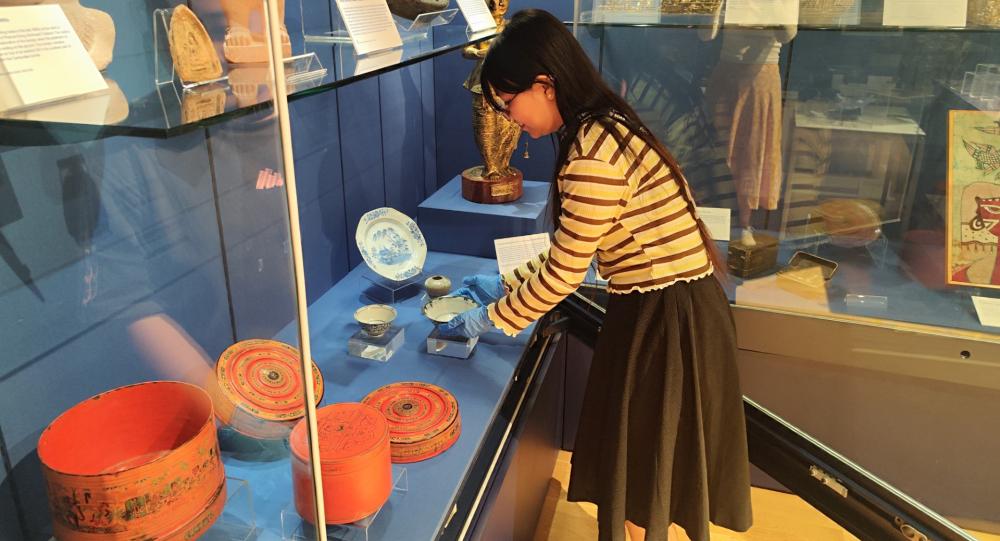
There are many new objects and paintings recently on display in the Southeast Asian section, as well as pieces from all around the world. By looking closely at these objects, it is possible to trace the history of their time and experience the tastes of a different era. It's fascinating to see how each piece carries its own story.
I hope you'll find something that catches your eye when you visit.
About the author
Yee Wai Than is a SOAS Gallery intern and a student on the Postgraduate Diploma in Asian Art course.