How AI and disinformation are changing war reporting


As access to conflict zones tightens and AI-driven disinformation proliferates, war reporting is undergoing a profound and perilous transformation, writes Dr Iain Overton.
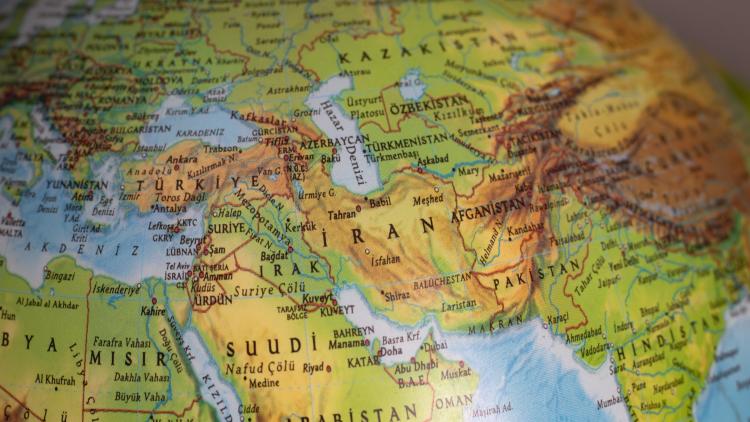
As a conflict journalist, I’m not allowed into Gaza. I can’t go to Iran. My ability to report from many countries is limited, and that gets to the heart of what is changing in war reporting today.
For the last two decades, I’ve reported from around 25 war zones around the world. Over that time, I’ve seen a growing distance between war reporters, the public and the true face of war. At the same time, AI and disinformation are making that gap even harder to bridge.
In WWII and Vietnam, reporters were exposing the real impact of war on civilians through intimate and direct reporting.
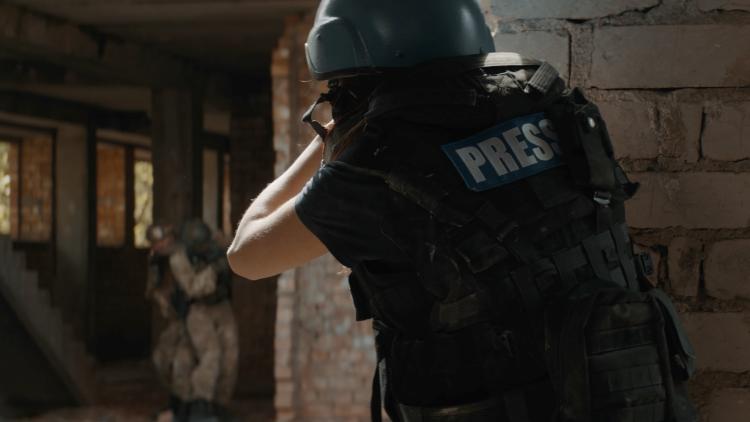
War reporting was once more direct. Early war reporters were often the first draft of history. They could get to battlefields and describe what they saw. Sometimes they were propagandists too, but they still helped create a language of war reporting. In the Second World War and Vietnam, reporters such as Martha Gellhorn or Michael Herr were exposing the real impact of war on civilians through intimate and direct reporting.
Restricted access is reshaping war reporting
Then access started to tighten. In the first Gulf War, press pools emerged. In Iraq, many Western journalists had to go through the relative safety of military embeds just to reach the conflict’s frontline. For instance, I remember being in Basra at the height of fighting and being told by a British military commander that I could go out and film, but if I was attacked, no soldier would come and rescue me. This is not only about governments controlling their narratives.
Reporting war seemed to have become more personally dangerous, more restricted and more shaped by the powers fighting it.
It was a fact that in the war on terror, reporters increasingly became targets themselves. We saw journalists beheaded by ISIS. I was chased out of villages on the Syrian border. Reporting war seemed to have become more personally dangerous, more restricted and more shaped by the powers fighting it.
AI and disinformation are changing what we see
Now we are witnessing another shift. The recording of war seems to be more ubiquitous than ever because anyone with a phone can document atrocities as they happen. In this way, since the smartphone’s arrival, citizen journalism has changed what can be captured, shared and seen. But at the same time, AI is introducing a new layer of confusion. We are now living in an age of fake imagery, fake video and what I would call AI-generated slop: conflict content that is often propaganda, always fake and deeply confusing to the viewer.
We are now living in an age of AI-generated slop: conflict content that is often propaganda, always fake and deeply confusing to the viewer.
This deluge changes everything. When anyone can publish from a war zone, but anyone can also generate convincing falsehoods, it becomes harder to know what is real. Add that to the fact that many accredited reporters are blocked from places like Gaza, cannot easily enter countries like Iran, and face threats, bans or restrictions elsewhere, and you end up with a serious challenge: how do you report war in a credible, independent and verifiable way?
Why credible reporting from Gaza to Iran still matters
For me, the answer is not to give up on reporting. It is to become more critical and to root our reporting in the most human of traits: empathy. At SOAS, part of what I teach is how to question what we see, how to use current tools to assess whether something may be AI-generated, and how to prepare for reporting in war zones ethically and responsibly.
But I also think something else is coming. As AI becomes more sophisticated, the need for trusted reporters on the ground is likely to grow rather than diminish. Audiences will increasingly look for journalism they can recognise as genuine reporting, not propaganda, anonymous manipulation, or fabricated accounts.
If AI and disinformation are already reshaping war reporting from Ukraine to Sudan, Gaza, and Iran, then the value of a trusted human presence either in conflict zones or verifying from outside what conflict content is being captured only increases.
In this age, credibility, independence, and humanity become not incidental but essential.
Header image credit: Egor Myznik via Unsplash.
About the author
Dr Iain Overton is an Associate Professor at Department of Media Studies and an award-winning author and current affairs producer formerly at the BBC and founding editor of the Bureau of Investigative Journalism.
He is the founder and director of the UK charity Action on Armed Violence, which investigates the global arms trade.