How I became a Head of Corporate Banking: Nader Souri on the skills we need in the age of AI


Nader Souri charts his journey from studying at SOAS to becoming the Head of Corporate Banking at BNY and offers his career advice for the age of AI.
Nader Souri (MA Economic Development, 2007) progressed from an entry-level role to Head of Corporate Banking at BNY. During his visit to SOAS this year, we asked him how his education helped him develop the skills and perspective needed to succeed in modern finance.
How I became a Head of Corporate Banking
Watch the interview or read it below.
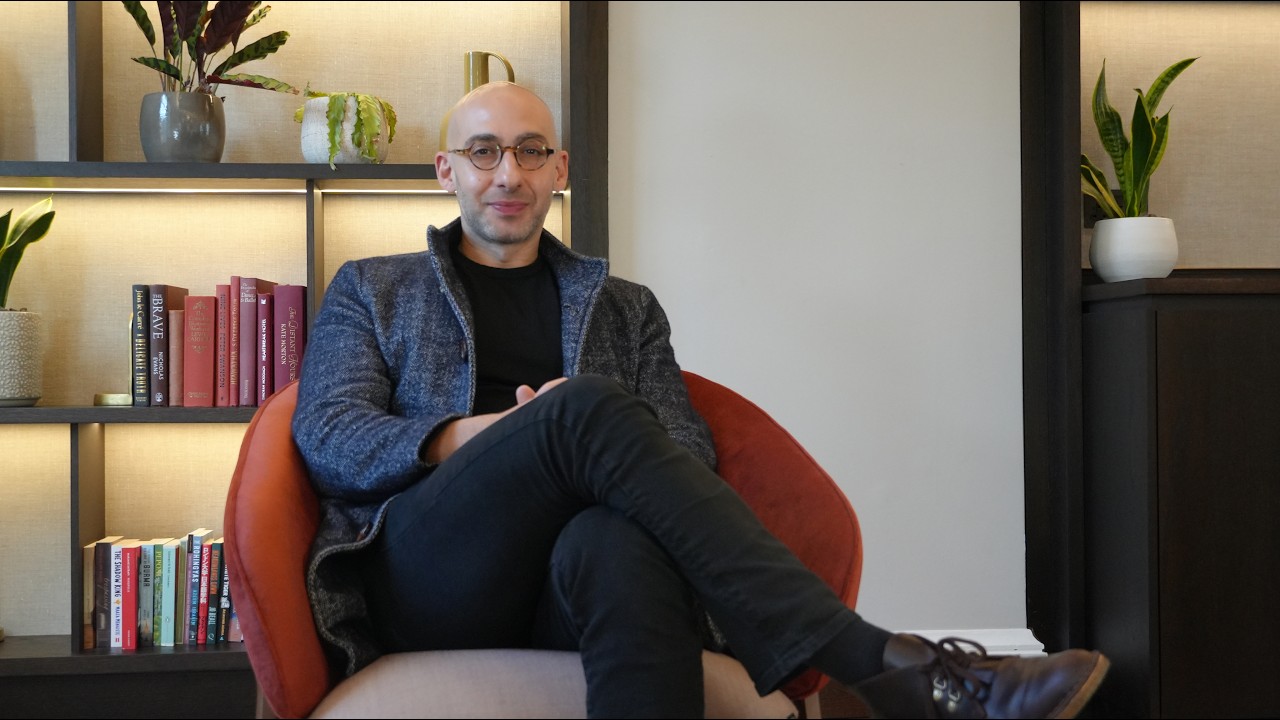
Nader: My name is Nader Souri. I graduated from SOAS in 2007 with a Master's in Economic Development.
SOAS team: Could you give us a brief overview of your current role and what you do on a day-to-day basis?
Nader: Currently, I'm the Head of Corporate Banking at Bank of New York. For those who don't know, it is the oldest financial institution in the United States, started by Alexander Hamilton. So basically, I run a team that manages relationships for the bank across a variety of different industries. Anything from, you know, utilities to tech and beyond.
SOAS team: How did you get to this role?
Nader: Right after I graduated from SOAS in 2007, I decided to go into finance. It was a really interesting time to go into finance with the global financial crisis. But I was lucky enough to land a job at BNY right after school in the States, and really worked my way up from an analyst to associate all the way to managing my first book and then eventually leading the team there.
SOAS team: Why did you choose to study at SOAS?
Nader: I had multiple different interests that SOAS actually fulfilled for me. Number one, it's honing my Arabic skills, which was my first language. Number two is honing my quantitative skills. And the courses that I took in economic development helped me do that. And then number three is my deep interest in history, politics and international relations, for which I can't think of a better school to go to fulfil those needs.
SOAS team: How do you feel that your studies at SOAS helped you to prepare for your current role?
Nader: It really is a global school. And in my role, you have to deal with clients, institutions that are not just US-centric, that are not just UK-centric, but that truly are global institutions themselves. So the skills gathered at SOAS, whether it be a focus on international relations, diplomacy, languages, or the arts, are all really, really essential to having well-rounded individuals and professionals and being in a role like mine, that becomes really a differentiator.
SOAS team: What values and perspectives are you, as a SOAS graduate, bringing to the private sector and specifically banking?
Nader: I think there's a perception that you have to go into a field like business or business administration or finance to be successful in finance. I think that it is increasingly becoming not so true. And the reason is, in this current day and age, particularly with the advent of AI, I think actually having well-rounded soft skills and a clear understanding of what's happening on the global stage is actually much more important than being able to understand financial models. SOAS has a really amazing reputation, obviously, for being a leading institution in the arts, the humanities and languages, and these all become incredibly important as we learn to navigate a world where humans and AI are working together, both in the public and private sectors.
SOAS team: Do you think working in banking looks different when you have studied development alongside finance?
Nader: You're no longer just thinking with a very myopic view of a certain industry or a certain company. You can take multiple different inputs from what you've learned. You have a very good sense of how macroeconomic trends and geopolitical trends affect, you know, your clients or the industry that you cover, and it just makes you a bit smarter, a bit more empathetic, and have a bit more EQ than the next person.
SOAS team: What piece of advice would you give to someone looking to get into your field of work?
Nader: The advice I would give to anyone interested in my field, whether it's banking or finance, is to really focus on what interests you in your studies. Focus on gaining holistic skills that aren't just analytical. You know, the qualitative is just as important as the quantitative, particularly in this day and age.
Header image credit: Roman Tiraspolsky via AdobeStock.
Blog Series
"How I became a..." is our SOAS Alumni Career Series, where we highlight the diversity and range of jobs SOAS students go on to do around the world, and how they got there.