Who gains from Middle East instability


While some argue that foreign intervention is a pathway to taking agency from governments and people living in the region, Dr Rowena Binti Abdul Razak takes another perspective to try and understand how this Middle East conflict will result in changes that suit the people.
Without doubt, the suppression of the Iranian people should be condemned. Many Iranians have faced difficult and brutal experiences under their government – and many now hope a better future could lie ahead, but what this change entails remain to be seen.
For many years, Iranians have taken to the streets and shown great courage to fight for their rights. From the Green Movement to the Women, Life, Freedom protests, we have seen the resilience and strength of the Iranian people in exercising their voices and bringing vital attention to their causes.
What concerns us here is the US’s current strategy of bombing Iran and what it seeks to achieve.
The record of US intervention: regime change, then instability
As a Lecturer in the History of the Middle East and Africa, the history of the US’s foreign intervention in the region – and the impact this had – is seriously questionable. We all remember the Gulf War, the invasions of Iraq and Afghanistan – and what these interventions left behind.
What concerns us here is the US strategy of bombing Iran and what it seeks to achieve.
On one hand, they saw the end of brutal governments such as the Taliban and Saddam Hussein’s regime. But on the other, this came at the cost of domestic and regional stability, national sovereignty, and political chaos.
As the US and Israel seek regime change, the question being asked is, can Iran seize the moment? Trump's belief is that he can impose change on Iran.
This speaks to the imperialist approach that he has to the Middle East. He believes that he knows what is right. He believes he knows what the Iranian people want without really understanding Iran or Iranians themselves.
This imposition on the Iranian people takes away their agency and is essentially an imposition of what the US wants for the country.
The 1953 coup: a warning from Iran’s own history
We have seen this historically in Iran, for example with the 1953 coup where they remove the nationalist, Prime Minister Mohammad Mossadegh, this led to the authoritarian government of Muhammad Reza Shah, who curbed Iran’s political freedom and aligned himself with the West. Through his secret police SAVAK, opposition was curbed.
US’s backing of authoritarian government was a common tactic, especially during the Cold War and we can see examples of this in Latin America and Africa. For example, the installation of the military dictator Augusto Pinochet after the socialist government of Salvador Allende was removed through US interference; as well as the US-approved assassination of Patrice Lumumba, Prime Minister of the Congo.
Creating instability in the region and ensuring chaos reigns is a strategy involving power dynamics.
Creating instability in the region and ensuring chaos reigns is a strategy involving power dynamics. Disorder and conflict weakens Iran and the Gulf states – and works in the favour of others – in this case the US and Israel.
The strategy is to ensure that their hegemony remains, that they can still conduct affairs – and be the dominant power. Meanwhile many in the west continue to view the Middle East as an unstable region, with war and conflicts, an image also pushed by the media’s Eurocentric focus.
The dilemma: resisting attacks vs ‘opportune moment’
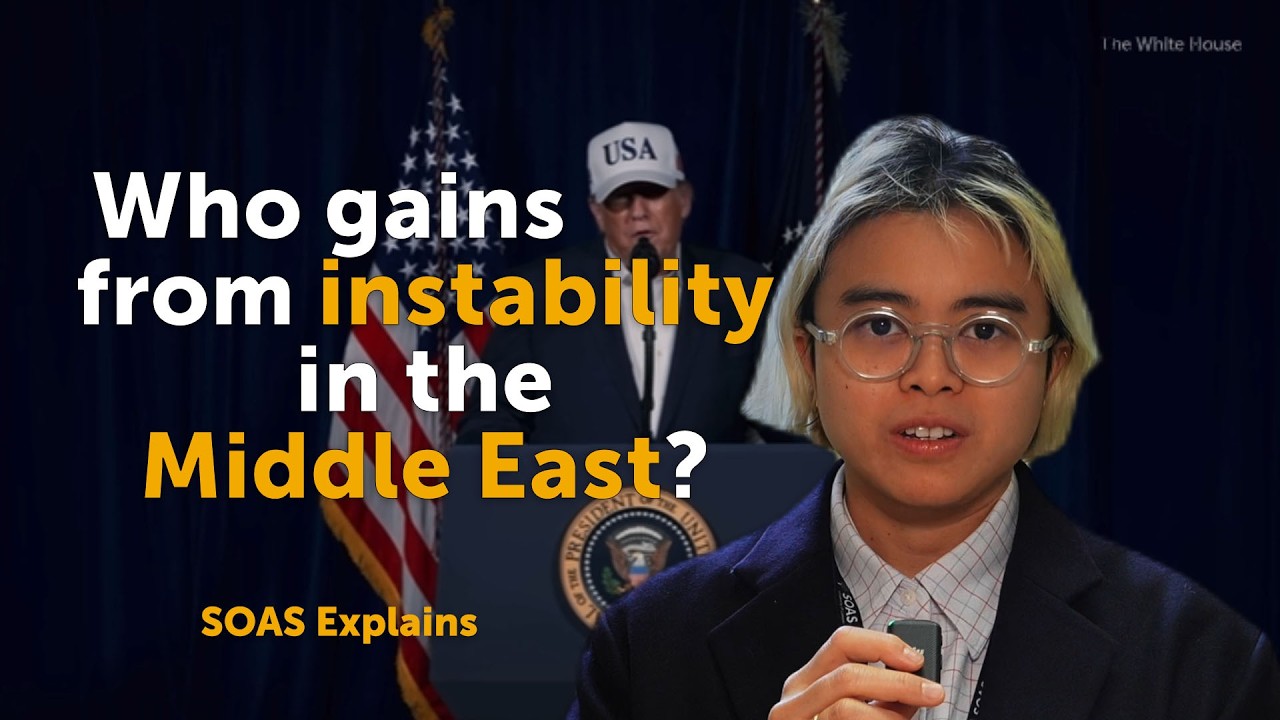
Currently, many are caught between resisting the US attacks on Iran but seeing this as an opportune moment for regime change in Iran.
History has taught us that Iranians are resilient and have the power to bring down brutal regimes before, as seen in the 1979 revolution which saw the toppling of the Pahlavi dynasty and the establishment of a new system under the Islamic Republic.
The US attack serves to destabilize the region and will not necessarily bring the change that Iran deserves.
But true change won’t come with foreign intervention – it will only serve US interests and consolidate the position of the Iranian government as it uses the war to assert their military power in the region and control over the people.
At the end of the day, the US attack serves to destabilize the region and will not necessarily bring the change that Iran deserves. It's important to resist this narrative and to push for dialogue and unity, especially between Iran and the US, and among the Gulf countries.
It will promote a return to a period of peace and stability in the region. The Middle East deserves that stability, which will allow the people living there to be able to find ways to exercise their agency and have their voice without the threat of war or occupation.
The views and opinions expressed in SOAS Blogs are solely those of the respective authors and do not necessarily reflect the views of the organisation or act as an endorsement.
Header image credit: doomu via Adobe Stock.
About the author
Dr Rowena Binti Abdul Razak is Lecturer in the History of the Middle East and Africa. She holds a BA (Hons) in History from SOAS, a MA in Middle East and Mediterranean Studies from Kings College London and a DPhil in Oriental Studies from the University of Oxford. She has written on Iran during the Second World War and Cold War, focusing on the Tudeh Party, and labour politics. She has also written on Arab nationalism in Bahrain and is currently exploring two research interests: one that looks at Iran’s relations with Malaysia and Southeast Asia, and the history of the Middle East during the Second World War.