A new economic model for securing the Strait of Hormuz


The Strait of Hormuz is vital to global energy, but the US-led security model has become costly and uneven. Economists Massoud Karshenas, Hashem Pesaran, and Ron Smith propose a regional, transit-fee-funded security framework as a more sustainable alternative.
The disruption of shipping flows through the Strait of Hormuz has highlighted the structural fragility of the global energy system. With roughly one-quarter of the world’s seaborne oil passing through the narrow waterway, any closure has immediate and far-reaching economic consequences.
While much of the focus has been on reopening the Strait as quickly as possible, there is also a longer-term imperative to redesign the system in such a way that reduces the risk of future disruptions. In a new article, we outline a framework for doing just that.
Why military solutions fail
Recent experience suggests that attempts to resolve such vulnerabilities through large-scale military intervention will be costly and ineffective. The United States spent several trillion dollars on largely unsuccessful efforts to impose a stable political settlement in comparable contexts, such as Iraq and Afghanistan; attempting the same approach in Iran would be a fool’s errand, given the country’s size and complexity.
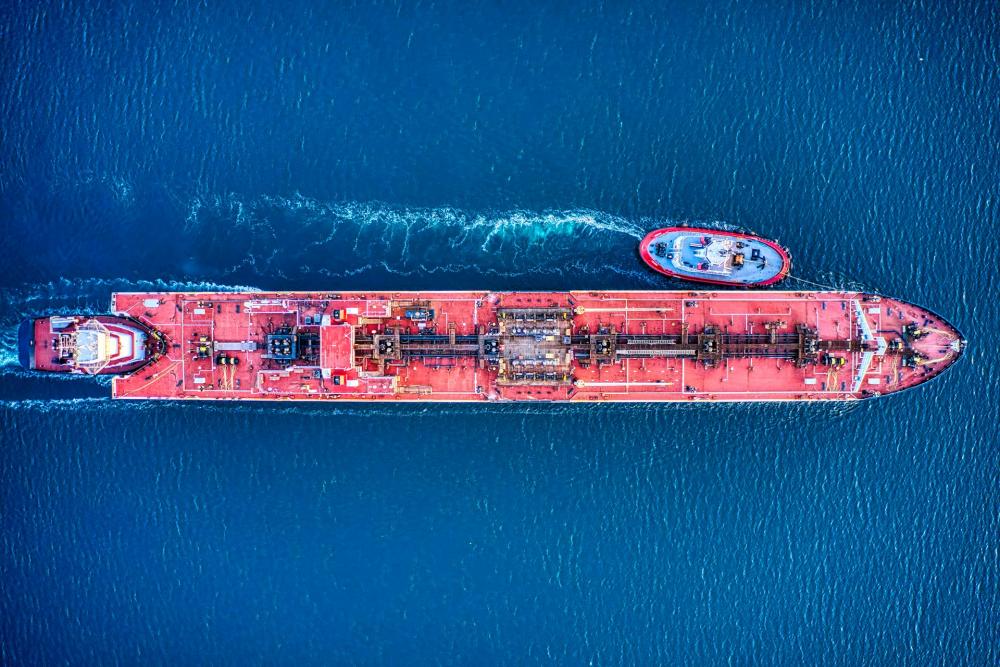
This points to the need for solutions that rely less on coercion and more on aligning economic incentives with America and Iran’s shared interest in keeping the Strait open. That may mean institutionalising today’s emerging arrangement, by which Iran, in coordination with the Gulf states, guarantees safe transit for a fee. Such a system would resemble the agreement under the Montreux Convention that governs passage through the Turkish-controlled Bosphorus and Dardanelles Straits.
Service based transit fees solve the free-rider issues
An Iranian toll based on Turkey’s current transit fee of $5.83 per net ton would be about $0.58 per oil barrel—small enough, relative to the value of the goods, that shipping firms would not baulk at the expense or seek alternative routes. But, using the pre-war daily average of 20 million barrels transiting through the Strait, such a toll would generate $4.3 billion annually, an amount large enough to create significant incentives for Iran to facilitate and ensure safe passage.
The economic case for a service-based toll system is strong. The costs are minimal compared to the huge economic losses associated with any disruption.
The economic case for a service-based toll system is strong. The costs are minimal compared to the huge economic losses associated with any disruption to shipping or the enormous expenditures required to attempt to secure the Strait through sustained military operations.
Such a system could also benefit the US, whose existing security architecture in the Persian Gulf is expensive to maintain. Operational costs alone are estimated at $10–30 billion per year, which comes to $1.4–4.2 per barrel of oil passing through the Strait. The full cost—including the infrastructure required to sustain deployments—is far higher, reaching $60–120 billion annually, equivalent to $8.4–16.8 per barrel.
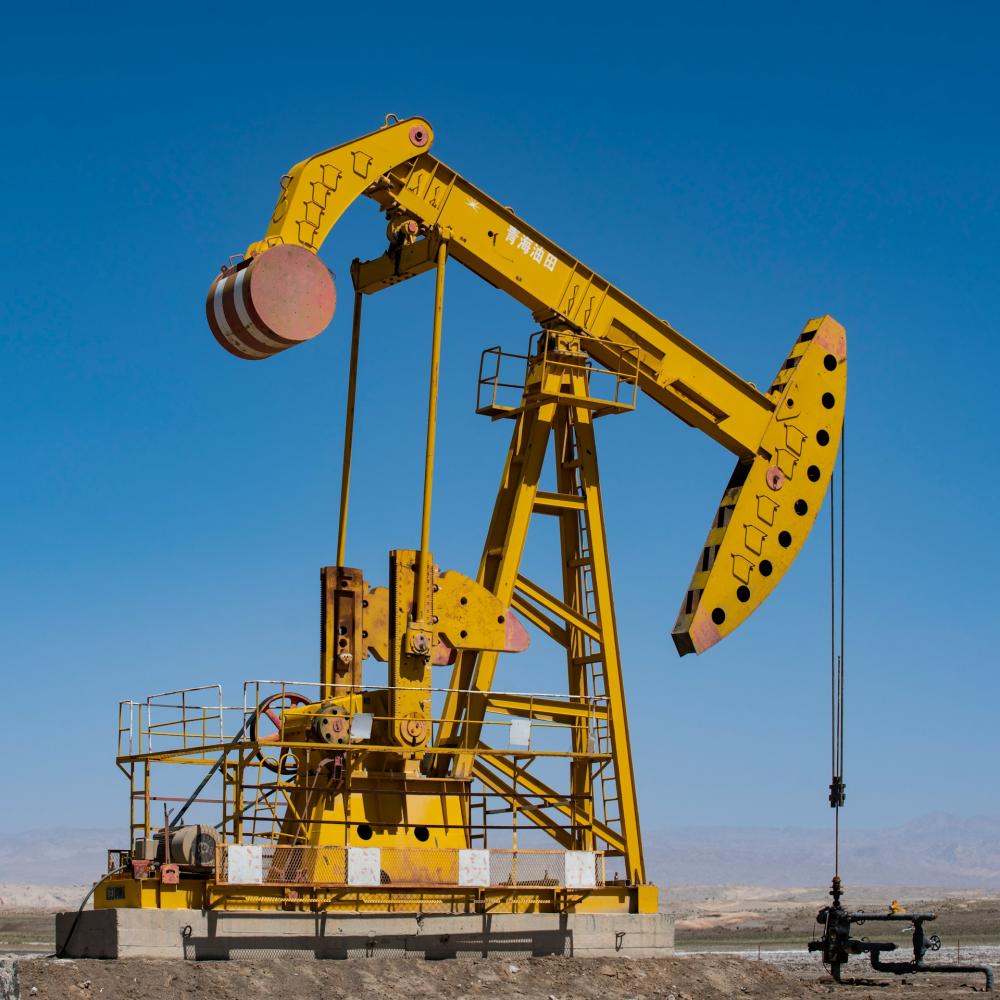
These expenditures are a substantial hidden subsidy for the global economy, courtesy of the US. Oil-importing countries and Persian Gulf producers free-ride on secure transit routes but contribute little to their protection. In an era of shifting geopolitical priorities and mounting fiscal pressures, this imbalance has become harder to justify.
Toward a regional security framework in an increasingly multipolar world
Instead of relying on an external guarantor, all the Gulf’s littoral states should establish a regional framework, supported but not dominated by foreign powers, to coordinate maritime management, joint patrols, and intelligence sharing. The benefits of such a system, which can be financed by toll revenue, are clear: it would reduce costs, distribute responsibilities more evenly, and encourage cooperation among countries with a shared stake in stability. It would also reduce dependence on US military guarantees at a time when American strategic priorities are increasingly focused elsewhere.
Of course, sceptics will point to obvious obstacles like deep political mistrust, institutional weaknesses, and the absence of a comprehensive legal framework. These challenges are real, but they are not insurmountable. Comparable arrangements have emerged in similarly complex environments, often driven by necessity.
With coercion unlikely to succeed, persuasion becomes essential.
None of this implies that external powers should disengage entirely. Rather, their role should evolve from primary enforcer to facilitator and guarantor of a multilateral system. The goal is not to replace one form of dominance with another, but to build a more balanced and resilient security framework.
A new incentive-compatible regional security regime
The Strait of Hormuz is a cornerstone of the global energy system. For many years, the US effectively managed its security; but this arrangement has become economically inefficient and politically asymmetrical in terms of responsibilities and burden-sharing. A cooperative regional security regime funded by transit charges offers a promising alternative that would benefit oil exporters, shippers, and consumers.
With coercion unlikely to succeed, persuasion becomes essential. Iran has both the capacity and the incentive to agree to a regional framework that ensures the safety of shipping in the Strait. Such a framework would align that incentive with America’s interests (and those of the broader international community), while also reducing the region’s external dependency and, perhaps most importantly, enhancing long-term energy stability for everyone else.
Authors: Massoud Karshenas, Hashem Pesaran, and Ron Smith
Header image credit: Planet Volumes via Unsplash.
About the authors
- Massoud Karshenas is Emeritus Professor of Economics at SOAS at the University of London.
- Hashem Pesaran, Emeritus Professor of Economics at the University of Southern California, is Emeritus Professor of Economics and a fellow at Trinity College at the University of Cambridge.
- Ron Smith is Emeritus Professor at the Birkbeck Business School at the University of London.
This article was originally published by Project Syndicate and is reproduced here with the authors’ permission.