From RAF to Anthropology at SOAS: Discover Vix Anderton’s journey powered by a scholarship


SOAS student Vix Anderton (MA Anthropology of Global Futures and Sustainability) shares how a scholarship can help people explore new paths at every life stage.
Her unconventional journey took her from a career in military intelligence and international development to coaching and facilitation work focused on leadership and resilience.
From RAF to SOAS: exploring systemic change
My name is Vix Anderton, I am an MA Anthropology of Global Futures and Sustainability (now MA Anthropology of the Environment and Sustainability) student, Department Representative for Postgraduate Taught students, and a recipient of a SOAS Scholarship.
My scholarship gave me the confidence to come back into higher education after 15 years. It has also made it possible for me to focus fully on my studies this year.
I realised I needed better frameworks to understand how individual experience and systemic transformation connect. That's what led me to anthropology.
My path to SOAS has been pretty unconventional. I started my career as a Royal Air Force (RAF) intelligence officer, analysing global security threats, then moved into international development and worked on Women, Peace and Security. For the past few years, I've been running my own coaching and facilitation practice, supporting people and organisations to develop leadership, resilience, emotional intelligence and communication skills.
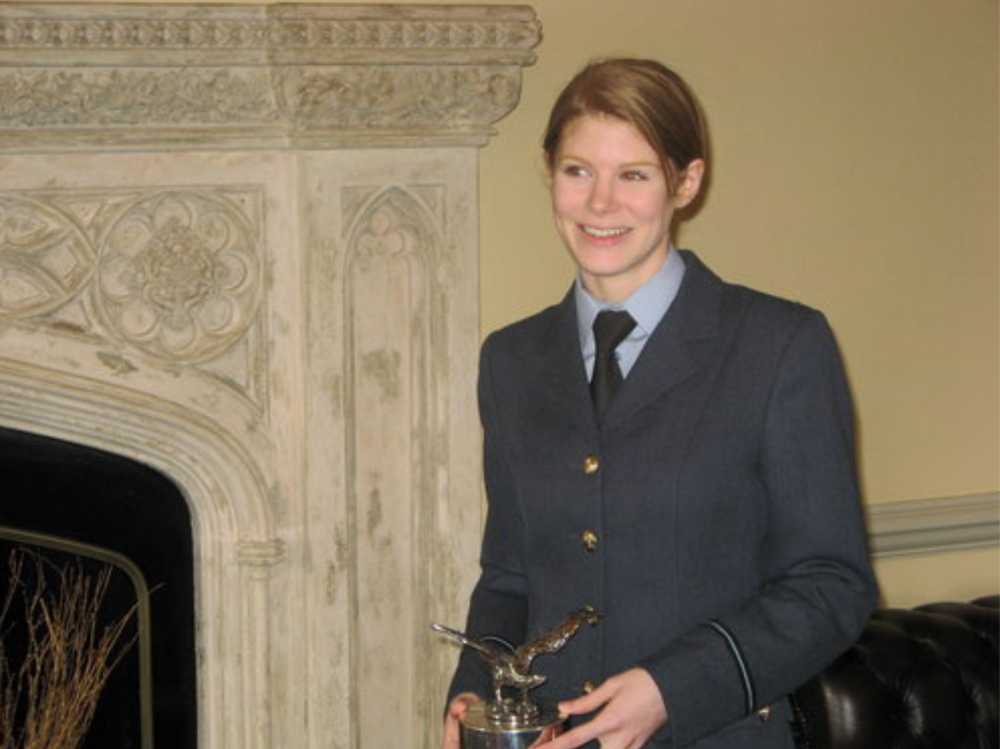
The coaching experience brought me back to academia. I kept noticing how what shows up as individual struggles, like perfectionism and burnout, reflects much bigger systemic patterns. I was not finding what I was looking for in the literature and critical perspectives on leadership and change, and I realised I needed better frameworks to understand how individual experience and systemic transformation connect.
That's what led me to anthropology, and specifically to SOAS. The MA in Anthropology of Global Futures and Sustainability felt like the place where I could finally integrate all of that while learning something genuinely new.
Scholarships make it possible for people with varied life experiences and professional backgrounds to return to study.
What really drew me to SOAS was the programme's critical stance toward traditional Western anthropology and the emphasis on multiple ways of knowing. After years of working across different contexts, I'm fascinated by how we can bridge grassroots transformation and systemic change. Modules like 'How to Change Things' have been exactly the kind of engaged anthropology I'm hungry for. Being at SOAS has challenged my thinking in all the right ways.
The impact of scholarships at every life stage
Doing a full-time Master’s degree has been demanding, and I’m grateful that the scholarship has allowed me to concentrate fully on getting the most from my studies without worrying about making ends meet.
The costs of higher education can be a barrier at every life stage, not just for school leavers. Scholarships make it possible for people with varied life experiences and professional backgrounds to return to study, and that diversity of perspective makes institutions like SOAS richer for everyone.
After graduation, I’d love to bring all my skills to bear on the most pressing issues of our times. I want to work in collaborative research, embedding relational practice in organisations responding to the climate crisis, as a practitioner-researcher with leaders experimenting with ways of working that prioritise relationship over profit.
I’m also considering applying for a PhD at SOAS to continue my dissertation research into the impact of urgency narratives in climate change communications and how we think about change in response to the polycrisis.
Read her piece on rethinking sustainability
In a recent article published on the SOAS Blog, Vix argued that many modern “green” solutions replicate the same disconnected, plug-and-play logic as industrial and military systems, failing to account for people, place, and lived realities.
Drawing on anthropology, she calls for a shift toward relational, locally grounded approaches to sustainability that prioritise connection, accountability, and community over scalable, one-size-fits-all solutions. Read it below.