What I learned about diplomacy from UNEP Executive Director Inger Andersen at SOAS


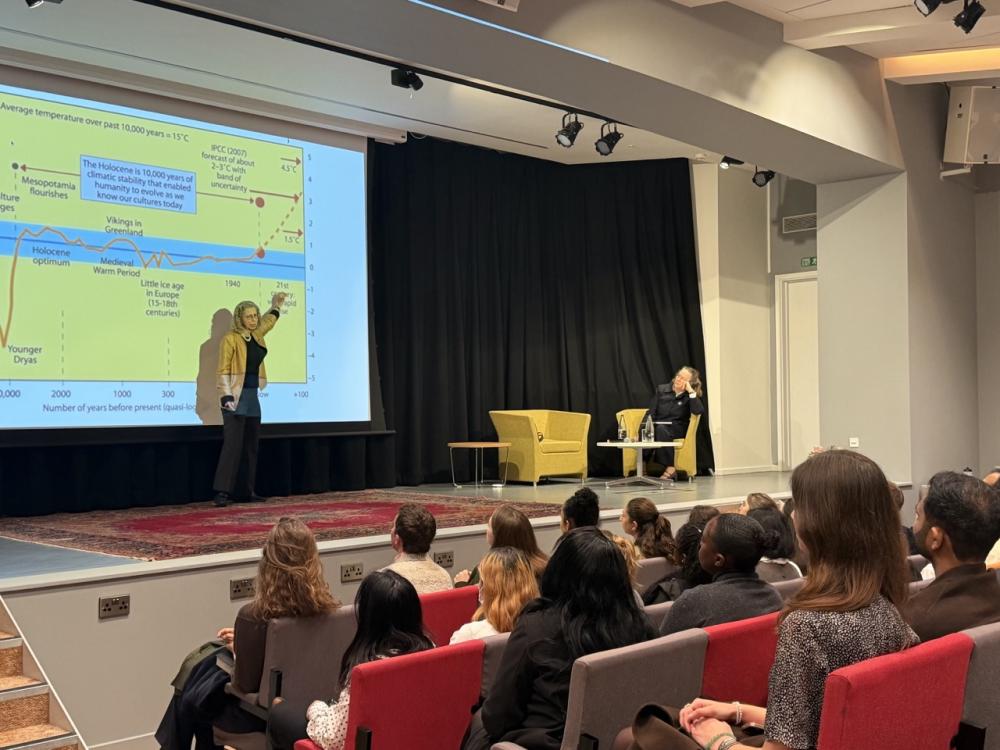
As an MA International Studies and Diplomacy student at SOAS, Lavania had the opportunity to speak with UNEP Executive Director and UN Under-Secretary-General Inger Andersen before her public lecture. For someone hoping to build a career in environmental diplomacy, it was a chance to hear first-hand what international negotiation really looks like.
When I heard that MA International Studies and Diplomacy students would have the opportunity to sit down with Inger Andersen before her public lecture at SOAS, I knew I wanted to be there.
As someone from Calcutta, I am particularly interested in how former colonies continue to bear the consequences of environmental harm, and how grassroots and Indigenous communities have drawn on their knowledge to protect the environments around them.
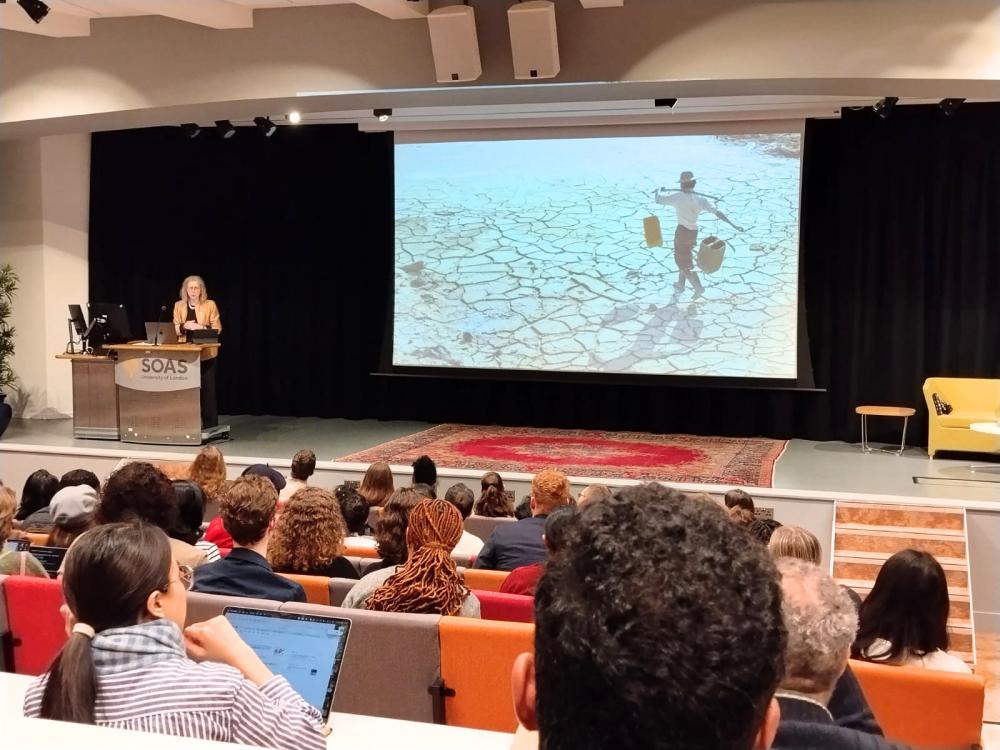
I came to SOAS to study diplomacy because I want to understand how those perspectives can be represented in international decision-making. Sitting down with the Executive Director of the United Nations Environment Programme (UNEP) and a UN Under-Secretary-General meant hearing directly from someone who has negotiated at the very highest level on the issues I hope to work on in the future.
Finding common ground
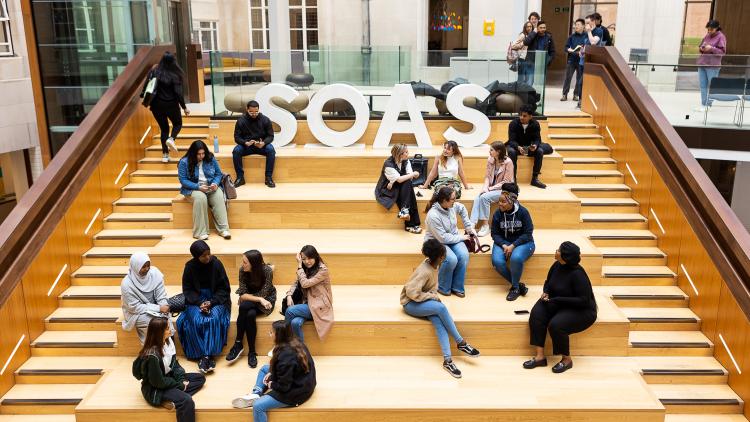
I was nervous, but she made it feel strangely easy. She didn’t speak to us only as Under-Secretary-General; she talked candidly about her life at SOAS. Looking at each of us in the front row, she said, “I’m looking at a rainbow of people right now.” That’s one of the things that attracted me to SOAS in the first place: the diversity of thought is evident in the classroom, with students from the US, Italy, North Macedonia, Romania, Pakistan, India and Iraq describing the issues that affect their regions most.
Hearing how each of them frames the same issue has changed how I think about solutions. Coming from India, where development priorities sit alongside climate change, biodiversity loss and pollution, I can understand that what works well in one region may not work well in another.
What diplomacy looks like in practice
I’d over-researched, so I arrived with a long list of questions about UNEP’s past successes, and I was struck by how the Montreal Protocol, which she called one of its biggest successes, led to the phase-out of about 99% of ozone-depleting substances. That’s exactly the work I want to be a part of after completing my degree.
But she was just as open about the failures. She described a negotiation that fell apart, even with world leaders in the room, and said that as a negotiator, she can’t simply be more forceful, even when she’d like to. Her job is to ensure nobody walks away.
The biggest takeaway for me was that persuasion doesn’t always get you the ambitions you set out for, but having a space for dialogue is still what builds towards them.
The biggest takeaway for me was that persuasion doesn’t always get you the ambitions you set out for, but having a space for dialogue is still what builds towards them. It showed me that diplomacy isn’t about agreeing on everything. It means negotiating between the competing interests of governments, with perseverance and patience, and with enough empathy to understand where someone else is coming from. That’s the rainbow of people again: cooperation depends on it.
For me, one of the most striking points was her discussion of how the climate crisis and conflict reinforce one another: as pressure on natural resources grows, so does competition over them. That makes the stakes for multilateralism even higher, especially for developing countries, which have to balance protecting the environment with their own development needs.
Andersen ended by acknowledging the limitations of multilateralism. She said it is imperfect and may not always deliver, but she still believes it is the only way towards a sustainable planet.
The image I took away
One image from Andersen’s lecture has stayed with me. It was a photograph of her in Colombia, standing in front of a huge Jenga tower sculpture created by an artist. For me, it captured the fragility and interconnectedness of the challenges we had been discussing.
Remove one block from a Jenga tower and you risk destabilising everything around it. Environmental damage works in much the same way: its effects can spread across ecosystems, borders and communities. The same is true of multilateralism. No single country can hold the tower up alone.
Why environmental diplomacy matters to me
Being a diplomacy student can feel daunting because there are so many issues I want to fight for and so many conversations I want to be a part of. Climate change and biodiversity loss are at the forefront for me because of the urgency around them, and it takes me back to the Jenga tower: our lives and ecosystems are interconnected.
After this incredible experience, I’m more determined to carry out the work I originally planned to do: working...to protect the rights and knowledge of indigenous communities and to safeguard sustainable ways of living.
After this incredible experience, I’m more determined to carry out the work I originally planned to do: working within international organisations to protect the rights and knowledge of indigenous communities and to safeguard sustainable ways of living.
My International Studies and Diplomacy degree at SOAS, only in its first few weeks, has taught me to see issues from many perspectives, and it was an honour to be part of that diverse space and to sit in a discussion with Andersen herself. No single country can hold the tower up alone, and I hope to be part of the conversations that keep it standing.
About the author
Lavania Saraf is studying for an MA in International Studies and Diplomacy at SOAS.