Why Britain can't invest its way out of the reparations debate


As the African Union and CARICOM push reparatory justice up the global agenda, Brian Tamuka Kagoro examines three arguments often used to dismiss Britain's responsibility – and why none of them holds up.
In little more than a decade, reparations have moved from the margins of activist politics to the centre of Britain's diplomatic agenda. In 2013, CARICOM set up its Reparations Commission, and a year later it adopted a Ten-Point Plan for Reparatory Justice. In February 2025, the African Union's Assembly formally qualified slavery, deportation and colonisation as crimes against humanity and genocide against the peoples of Africa, with all 55 member states in agreement.
The AU named 2025 the Year of Reparations and 2026–2035 the Decade of Reparations, with Ghana's President Mahama as continental champion. Then, in March 2026, a non-binding UN resolution called on member states to enter "inclusive, good-faith dialogue" on reparatory justice, covering apology, restitution, compensation, rehabilitation and guarantees of non-repetition.
Reparations have moved from the margins of activist politics to the centre of Britain's diplomatic agenda.
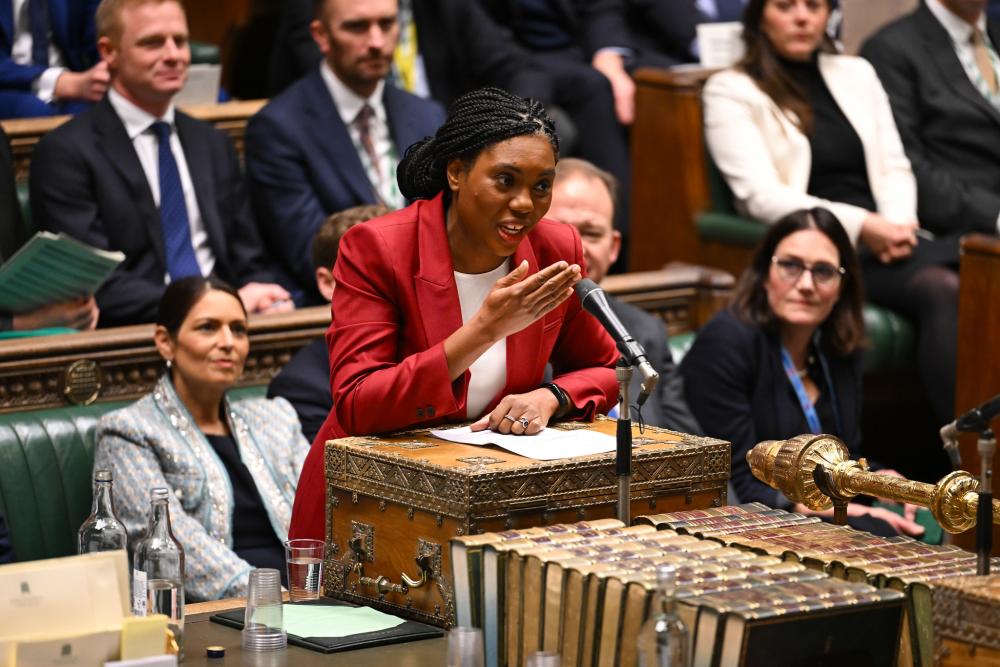
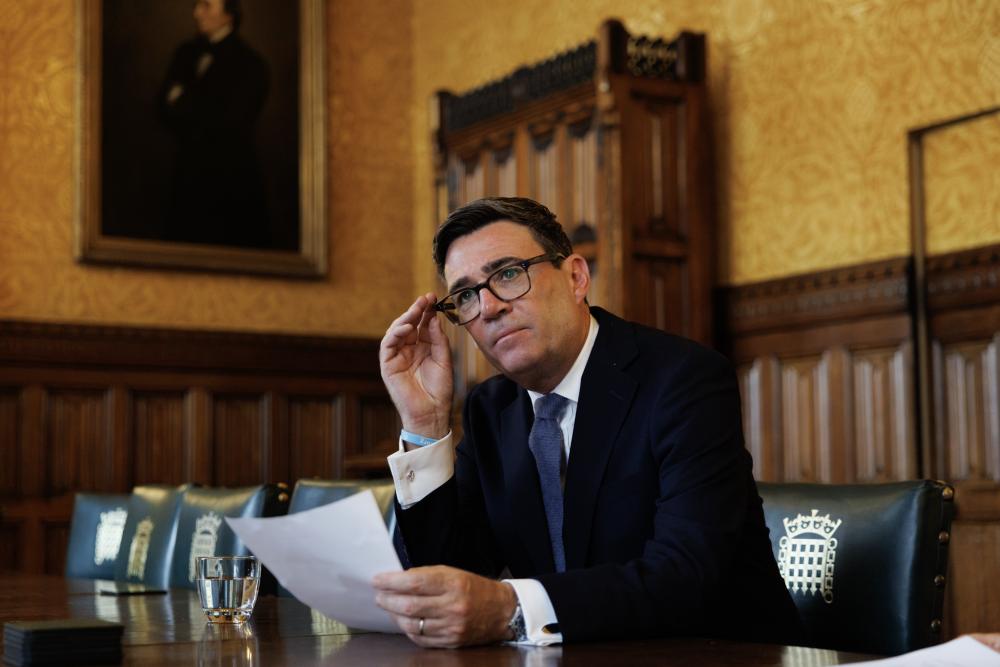
This leaves the Burnham government with a sharp political problem – and gives the Badenoch opposition a clear line of attack. Badenoch has consistently treated reparations as an illegitimate claim on present-day Britons, arguing that Britain's relationship with Africa and the Caribbean should look forward, built on trade and investment rather than retrospective liability. Burnham, by contrast, built much of his political identity on campaigns for historic justice, including Hillsborough and the contaminated blood scandal, and his party describes him as committed to "righting the wrongs of the historic injustices many have faced".
Three arguments come up again and again in the British debate: that African chiefs sold people into slavery; that today's taxpayers bear no responsibility for events two centuries ago; and that Britain can settle whatever obligation remains by investing in Africa and the Caribbean. Each deserves a serious answer.
The scale of what we're talking about
The Trans-Atlantic Slave Trade Database records around 12.5 million Africans embarked on slave ships between the sixteenth and nineteenth centuries. Roughly 10.7 million survived the Middle Passage; an estimated 1.8 million died at sea. British and British colonial vessels carried about 3.1 million people – more than any nation except Portugal – making Britain the Atlantic's leading slave-trading power by the eighteenth century. At emancipation in the 1830s, around 800,000 people were held in slavery in Britain's Caribbean colonies, Mauritius and the Cape.
Slavery was not peripheral to the British economy. In Capitalism and Slavery (1944), Eric Williams argued that slave-trade and plantation profits helped finance British industrialisation – a thesis long contested in its strong form, but substantially rehabilitated in moderated versions by Joseph Inikori and Klas Rönnbäck. Sugar was Britain's largest single import for much of the eighteenth century. The triangular trade fuelled the growth of Liverpool, Bristol and Glasgow, while marine insurance, banking and the Bank of England itself were entangled with slave-system finance – links the Bank has now formally acknowledged.
Slavery was not peripheral to the British economy...The triangular trade fuelled the growth of Liverpool, Bristol and Glasgow, while marine insurance, banking and the Bank of England itself were entangled with slave-system finance.
Then there is compensation. Under the 1833 Slavery Abolition Act and the Slave Compensation Act 1837, the state paid £20 million – around 40 per cent of annual government spending – to some 46,000 claimants, all of them slave-owners. The enslaved received nothing but an unpaid "apprenticeship" of further forced labour. Because the money was borrowed, it became part of the national debt, and the Treasury has confirmed that the loan was only fully repaid in 2015. UCL's Legacies of British Slave-Ownership project has traced how this compensation flowed into railways, insurance, merchant banking, the City, country houses and philanthropy – the foundations of much modern British institutional wealth.
The harm, meanwhile, ran deep. Walter Rodney's How Europe Underdeveloped Africa (1972) and Hilary Beckles's Britain's Black Debt (2013) document the demographic drain on West and Central Africa, the forced restructuring of Caribbean economies around single crops, and a colonial model in which colonies paid for their own administration through debt. CARICOM argues this left the region with "some of the highest debt-to-GDP ratios globally". In 2023, the Brattle Group estimated the total reparations owed by former slave-trading states at US$107.8 trillion, with the UK's share across 14 countries put at around US$24 trillion. That is not a legal judgement, but it is a benchmark of the scale involved.
What the law says
The standard objection, made by the UK, US and EU in the March 2026 General Assembly debate, is that the slave trade was not prohibited by international law at the time, and that rules cannot be applied retroactively. The argument has some force: under the intertemporal law doctrine associated with the Island of Palmas arbitration (1928), acts are judged by the law of their time. But it is weaker than it looks.
Reparations do not need to rest on criminal liability. Under the ILC Articles on State Responsibility (2001), breaches of peremptory norms (jus cogens) – and the prohibition of slavery is now universally recognised as one – engage aggravated responsibility. The "continuing wrongful act" doctrine allows claims based on present-day effects, as the ICJ showed in its 2019 Chagos advisory opinion. The 2001 Durban Declaration had already described the slave trade as a crime against humanity, and the 2026 resolution consolidates that emerging consensus. Precedent also shows that states can build reparative frameworks when they choose to: the 1952 Luxembourg Agreement between West Germany and Israel, the 1988 US Civil Liberties Act, and New Zealand's Treaty of Waitangi settlements. As Accra has noted, the absence of a comparable framework for the transatlantic slave trade "is not a matter of legal impossibility. It is a matter of political will".
At home, limitation periods, state immunity and the act-of-state doctrine block conventional legal claims. The Mau Mau litigation settled for £19.9 million in 2013 only after years of procedural battles – and it succeeded because it exposed the government's own concealed "migrated archive" of colonial abuses. Critical legal scholars argue that these obstacles are not neutral technicalities but part of how law reproduces historical injustice. Yet English law also offers resources for claimants, from unjust enrichment doctrine to a growing body of restitution practice, including the Horniman Museum's 2022 transfer of Benin Bronzes.
"African chiefs sold their own people"
This is the most common deflection, and it starts from something true. The transatlantic trade relied heavily on African political and commercial intermediaries – the kingdoms of Dahomey, Asante and Oyo among them – and some elites grew rich from it. As John Thornton showed in Africa and Africans in the Making of the Atlantic World (1992), Europeans lacked the military capacity to seize captives at scale in the African interior and depended on African sellers. But this does not let Britain off the hook, for four reasons.
First, the guilt of collaborators does not cancel the liability of principals – in any legal tradition. English law's joint enterprise doctrine (R v Jogee [2016] UKSC 8) holds all parties to a criminal venture liable, and Nuremberg Principle IV rejects "others were guilty too" as a defence. If African elites bear historical responsibility, that is additional liability, not a reduction of Britain's.
If African elites bear historical responsibility, that is additional liability, not a reduction of Britain's.
Second, European demand transformed the trade. As Paul Lovejoy's Transformations in Slavery documents, earlier African systems of servitude were varied – often kinship-based, non-hereditary and non-racialised. The Atlantic system was something new in world history: hereditary, racialised, industrial chattel slavery, in which the status of "property" passed to descendants in perpetuity.
Third, Africans resisted as well as collaborated. In 1526, Afonso I of Kongo wrote to the Portuguese crown protesting that his people were being "seized" and his kingdom depopulated. Treating "complicit chiefs" as representative of Africa is like citing Quisling's collaboration against Norway's claims on Germany.
Fourth, the argument proves too much. If local collaboration cancelled liability, no reparation for any historical injustice – Holocaust expropriation, wartime forced labour, colonial massacre – could ever stand, since all involved local collaborators.
"Today's taxpayers aren't responsible"
This is Badenoch's strongest political argument. Obligations attach to people, it goes, and present-day taxpayers are not eighteenth-century slave traders. Collective guilt across generations, critics say, is both illiberal and incoherent in a nation whose citizens include people whose ancestors arrived in 1960 – or were themselves enslaved.
But Britain is not simply a crowd of individuals. The same Treasury, Crown and Parliament that legislated for the trade still exist, and still hold the assets it helped build. Janna Thompson and David Miller – neither of them radicals – argue that nations inherit obligations just as they inherit territory, treaties and national debt. Britain still honours debts contracted in 1694 and treaties signed in 1713. It cannot claim continuity when it is owed and a clean slate when it owes.

The "distant past" framing also collapses against one fact: until 2015, every British taxpayer – including Afro-Caribbean Britons – was helping to pay off the debt used to compensate slave-owners. The transfer between generations that critics call impossible was happening, in the wrong direction, within living memory.
Both the benefit and the harm continue. Banks, insurers, universities and port cities grew partly on slavery-derived wealth, and several institutions have acknowledged as much – the Church of England with a £100 million commitment, and the University of Glasgow with a £20 million programme alongside the University of the West Indies. Meanwhile, racialised wealth gaps, Caribbean debt distress and the commodity dependence of African economies are measurable effects today.
None of this means sending a Bradford care worker the bill for the Royal African Company. Reparations are paid by states, from general revenue, over long horizons – exactly as the 1835–2015 compensation debt was. The question is not whether individuals are guilty, but whether the polity owes.
Can investment replace acknowledgement?
The Badenoch position – deeper trade, maintained or slightly increased aid and investment, and no acknowledgement of debt – runs into three problems.
Legally, aid and reparations are different things. The UN Basic Principles and Guidelines on Reparation (2005) define reparation as something owed to victims as of right, which requires acknowledging wrongdoing; development aid is discretionary. Payment without admission is exactly what claimants have rejected elsewhere: Herero and Nama representatives denounced Germany's €1.1 billion "reconciliation" offer to Namibia as a relabelled aid package. An investment programme that denies the debt exists cannot satisfy the creditor.
The real choice is not between reparations and investment, but between investment offered as charity on Britain's terms and investment negotiated as a settlement on jointly agreed terms.
Economically, the money flows the wrong way. Research synthesised in the Honest Accounts reports estimates that for every dollar entering Africa as aid and investment, several leave through debt service, profit repatriation, illicit financial flows and terms-of-trade effects. Britain's aid budget, meanwhile, has been cut from 0.7 per cent of GNI to 0.5 per cent in 2021, with a further fall to 0.3 per cent announced to fund defence. A slight rise in investment against a baseline that has nearly halved is not something a finance ministry in Accra or Bridgetown will mistake for a settlement.
Politically, refusal buys time, not closure. The reparations coalition is becoming institutionalised – through AU coordination, a proposed AU-CARICOM global reparations fund and the November 2025 Addis Ababa Declaration – and the UN resolution will be re-tabled and built upon. The UK has already found itself isolated alongside the US, Israel and Argentina on a 123-vote question. And Britain's own record on historic injustice – Hillsborough, Bloody Sunday, Mau Mau, the Post Office scandal, Windrush – follows a familiar pattern: decades of denial, then apology and compensation at a higher eventual cost. Burnham, whose premiership is built around exactly this pattern, must decide whether to lead the cycle or be dragged through it.
The outline of a settlement already exists in CARICOM's Ten-Point Plan: a formal apology; repatriation and cultural restitution; an indigenous peoples' development programme; debt cancellation; technology transfer and education funds; and chronic-disease and psychological rehabilitation programmes. Every element is a form of investment. The real choice is not between reparations and investment, but between investment offered as charity on Britain's terms and investment negotiated as a settlement on jointly agreed terms. As the AU and CARICOM put it, "the demand for restitution is not adversarial but a striving for mutual redress and reconciliation".
Delay has never made injustice cheaper
Each of these deflections takes a real fragment of the record – African participation, the passage of time, British aid – and inflates it into a reason to deny liability. The historical evidence, the Bank of England's own acknowledgements, the 2015 repayment, the emerging legal consensus and every modern reparations precedent point the other way. The US$24 trillion figure will never be paid as such.
Its purpose is not to issue an invoice, but to dismantle the idea that what's under discussion is charity rather than a real, quantifiable debt. For the Burnham government, the question is whether to negotiate while the terms are still shaped by reconciliation, or to keep abstaining as the legal and diplomatic architecture hardens around it. History suggests that delay has never made British historic injustices cheaper – only longer.
Header image credit: Christopher Bill via Unsplash.
About the author
Brian Tamuka Kagoro is a Pan-Africanist intellectual, constitutional lawyer and independent activist. He collaborates with the SOAS Centre for Pan-African Studies on questions of Pan-Africanism and African politics.