Why study MSc AI and Sustainability at SOAS? Practical training with a social justice lens


Discover how SOAS’s MSc AI and Sustainability combines hands-on data science training with critical, globally informed perspectives to prepare students for the complex realities of an AI-driven future.
Artificial intelligence is increasingly influencing how societies address environmental challenges, economic development and social change. Yet discussions about AI often focus on technological breakthroughs while overlooking their broader environmental, social and economic consequences.
We spoke with Dr Yannis Dafermos to learn more about what makes the MSc AI and Sustainability at SOAS unique and how it prepares students to engage with one of the most important technological and sustainability challenges of our time.
What is unique about the SOAS MSc AI and Sustainability?
The uniqueness of the SOAS MSc AI and Sustainability lies in its distinctive combination of three core features: (1) a holistic critical approach to the implications of AI for sustainability, (2) a local context-specific perspective to AI and sustainability and (3) an applied training in data science. Together, these features create a programme unlike any other conventional programme on AI and sustainability.
1. A holistic critical approach to AI and sustainability
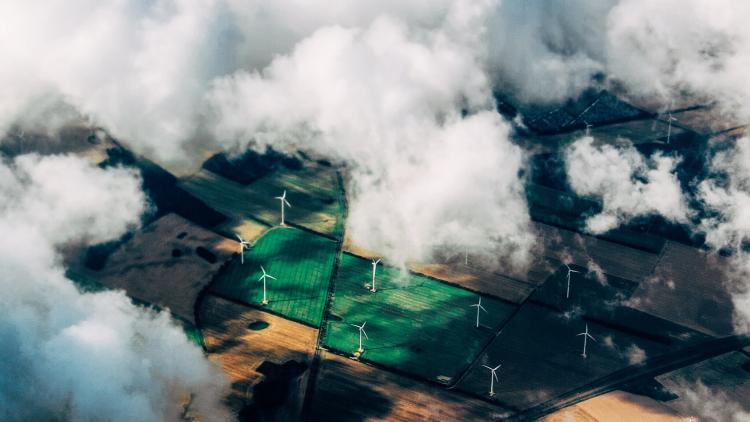
Sustainability is analysed from an environmental, socio-economic and macrofinancial perspective. From an environmental point of view, the rapidly expanding AI infrastructure is exacerbating the ecological crisis. Energy-intensive and water-hungry data centres and hardware production have a large environmental footprint. At the same time, AI technologies have the potential to lead to better use of natural resources, for example, by optimising energy systems and monitoring deforestation.
The programme looks at both sides of the equation, critically assessing green techno-optimist views about AI. From a socio-economic perspective, AI is reshaping labour markets, affecting employment patterns, inequalities and the distribution of power.
The programme approaches these issues through a social justice lens, encouraging students to assess who benefits, who bears the risks, and what public policies are necessary to avoid a world where AI works only for those in positions of power.
The programme approaches these issues through a social justice lens, encouraging students to assess who benefits, who bears the risks, and what public policies are necessary to avoid a world where AI works only for those in positions of power. From a macrofinancial point of view, the surge in often debt-financed investment in AI technologies may stimulate economic growth - but it may also generate asset bubbles and financial instability. Understanding AI’s connection with macrofinancial systems is a distinctive feature rarely addressed in standard AI programmes.
2. A local context-specific perspective
The effects of AI differ across regions and are shaped by local economic structures, institutions, environmental constraints and social conditions. The programme draws on the distinctive regional expertise of SOAS to help students understand how AI and sustainability challenges unfold differently across the world.
Students explore how AI interacts with local development trajectories...particularly important in a field often dominated by Global North-oriented narratives.
Rather than assuming a one-size-fits-all approach to digital transformation, students explore how AI interacts with local development trajectories, how institutional capacities differ across contexts, how colonial legacies shape the distributional effects of AI systems and how sustainability challenges vary depending on regional ecosystems. This perspective is particularly important in a field often dominated by Global North-oriented narratives.
3. Applied training in data science
Students gain hands-on experience with machine learning and other data science methods through the analysis of real-world datasets and applications. They develop practical foundations in data analysis and programming - not in isolation, but in direct connection to sustainability challenges.
This applied approach ensures that graduates do not merely engage with AI at a conceptual level, but they also understand how models are built, how datasets are used in practice, and where limitations and biases may arise. That technical grounding is essential for a critical engagement with AI systems.
Who will the programme appeal to?
The programme is well-suited to students of any disciplinary background who do not have a strong data science expertise and wish to obtain coding skills, understand how to apply data science techniques and develop a critical social science expertise on the analysis of sustainability issues in the era of AI. The programme also appeals to mid-career professionals in international organisations, government agencies, civil society organisations or private companies who may already work on sustainability issues but want to understand how AI is reshaping their field - and how to engage with it in a critical and competent way.
What types of careers do graduates progress to?
Graduates of the programme can work at jobs at the intersection of technology, sustainability, public policy and global development. Because the programme combines applied data science with critical sustainability analysis, it opens job pathways across different types of organisations.
Graduates of the programme can work at jobs at the intersection of technology, sustainability, public policy and global development.
These include (i) international organisations, such as the World Bank and the United Nations agencies, where graduates can work, for example, as AI policy analysts, digital transformation specialists, data & development consultants or sustainable finance analysts, (ii) companies and governments where demand is rising for professionals who understand the technical, economic, environmental and social dimensions of AI systems, and (iii) financial institutions that are increasingly focusing on developing strategies that have AI and sustainability at their core and require professionals with an in-depth understanding of the intersection between AI and macrofinancial and environmental sustainability.
Importantly, the advanced nature of the programme also serves as an excellent foundation for PhD studies.
Do students have opportunities to engage with research during their studies?
The students of the programme conduct research as part of their dissertation, which is supervised by staff members. Moreover, students are eligible to apply for working as short-term, part-time research assistants in projects led by the staff members of the Department of Economics and they have access to the research seminar series of the Department of Economics and the events organised by the Centre for Sustainable Finance, the Centre for Sustainable Structural Transformation and the Centre for AI Futures.
Is there a Study Tour linked to the programme?
Yes, students can take part in our Study Tours and explore the world. Destinations include New Delhi, Lahore, Seoul, Luang Prabang, Almaty, Bishkek, Kigali, Johannesburg and Doha. These tours are designed and delivered by SOAS academics from within the Department of Politics and International Relations, working closely with trusted partners on the ground, and are open to both campus-based and online students.
How are students connected to the job market through the university?
Students are eligible to apply for a co-supervised dissertation, collaborating with leading experts from international organisations, such as the World Bank, the International Trade Centre (ITC), the United Nations Industrial Development Organisation (UNIDO), the United Nations Conference on Trade and Development (UNCTAD) and the International Labour Organisation (ILO).
A unique opportunity for students to work with organisations that are at the forefront of the evolving policy landscape on AI and sustainability.
SOAS also collaborates with the World Bank to facilitate 3-month remote internships at the Bank for the period after the submission of the dissertation (i.e. after mid-September). This provides a unique opportunity for students to engage with work at the forefront of the evolving policy landscape on AI and sustainability. Moreover, students gain access to excellent SOAS career services and the SOAS alumni community, which has a strong presence in job markets worldwide.