After equality: queer television, fan labour, and sapphic memory in Taiwan

Key information
- Date
- Time
-
10:30 am to 12:00 pm
- Venue
- SOAS Main Building
- Room
- KLT
- Event type
- Seminar
About this event
The Centre of Taiwan Studies is delighted to welcome Dr Eva Cheuk-Yin Li to give a talk as part of this year's Centre of Taiwan Studies Summer School on queer fandom, sapphic media, and the gap between legal recognition and cultural representation in Taiwan.
Taiwan occupies a distinctive position in Asian queer media cultures. As the first jurisdiction in the region to legalise same-sex marriage (2019), it is widely regarded as a landmark of LGBTQ+ rights. Yet legal recognition has not straightforwardly translated into affirming or expansive representational space for queer women on screen. This talk examines what happens in that gap, and what queer audiences do when the screen refuses to imagine what the law has already promised.
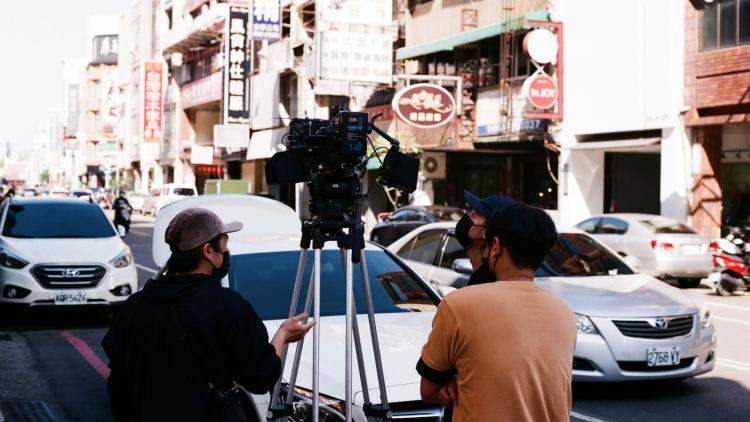
Drawing on digital ethnography of a sapphic fandom of Taiwanese television, centred on the long-running Taigi soap opera Sè-kan-tsîng (2013 to 2015), this talk introduces the concept of mnemonic fan labour to describe the collective memory work through which WLW (women-loving-women) audiences contest representational erasure, archive queer feeling, and rehearse liveable futures.
Li argues that queer fan practices around Taiwanese sapphic television constitute a form of world-making: they reconfigure queer time, memory, and desire in ways that exceed what the screen is willing to show. Situating Taiwan within broader transnational circuits of sapphic media production and reception, Li reflects on what the Taiwanese case can offer to queer media studies at large, and on what it means for a society to lead on rights while 'lagging' on representation.
Image credit: Aleks Dorohovich via Unsplash.
About the speaker
Eva Cheuk-Yin Li is Lecturer in Screen Industries in the Department of Culture, Media and Creative Industries at King’s College London. A media and cultural studies researcher, her work brings together fandom studies and queer Asian studies to examine how communities create, circulate, and negotiate identity, belonging, and social relations through media. She is particularly interested in how transnational popular cultures shape everyday understandings of geopolitics, and how queer and diasporic audiences engage with cultural flows to articulate alternative imaginaries of place, intimacy, and power. Her current research examines transnational queer fandoms of Thai Girls’ Love television and its reception among Sinophone audiences. Her research has appeared in journals including Media, Culture & Society, European Journal of Cultural Studies, Sexualities, Feminist Media Studies, and Feminist Review.