A Crime Does Not Rot: Pan-African Reparations Jurisprudence and its British Colonial Suppression under the 19th‐Century Wars of Dispossession

Key information
- Date
- Time
-
6:00 pm
- Venue
- Senate House
- Room
- SWLT and online
- Event type
- Lecture
About this event
On 25 March 2026, 123 states voted for Ghana's UN resolution declaring racialised chattel enslavement the gravest crime against humanity. 52 abstained.
Among them, Britain invoked intertemporality, declaring that “these principles cannot becircumvented by recourse to the concept of continuing harms,” while the EU dismissed the resolution's invocation of the pan-African legal principle of continuing obligation — a crime does not rot — as “regional jurisprudence” not in keeping with“international law.”
In this lecture, historian and Rapporteur for the AU Committee of Experts on Reparations, Dr Panashe Chigumadzi — who conceptualised and drafted the AU Framework for Reparations A Crime Does Not Rot, 1441–Present, which provided the structural rationale for Ghana's UN resolution — demonstrates that this is not new. This is the 21st-century iteration of a 19th-century British colonial strategy: the temporal suppression of African reparations jurisprudence to legally consolidate the end of Black sovereignty after military conquest.
Drawing from her forthcoming book The World is Dead: Ubuntu as an Ethics of War and Conquest under the Nine Wars of Dispossession, 1779–1878, Chigumadzi demonstrates that a century before the modern pan-African reparations movement, 18th- and 19th-century Black intellectuals and sovereigns consistently and systematically invoked a crime does not rot to critique and contest the colonial statutes of limitations British colonial authorities introduced to nullify indigenous sovereign rights. They operated not as victims of colonial law but as legal actors and theorists of their own jurisprudential traditions, and on this basis offered substantive legal critiques of colonial law that can now be recovered asprecedent for 21st-century legal battles. In the end, drawing on her forthcoming bookItyala Aliboli: Pan-African Reparations Jurisprudence, Sovereignty and the War overTime, she demonstrates that reparations is ultimately a centuries-long struggle oversovereignty — over who determines what a crime is, and over time itself.
Speaker
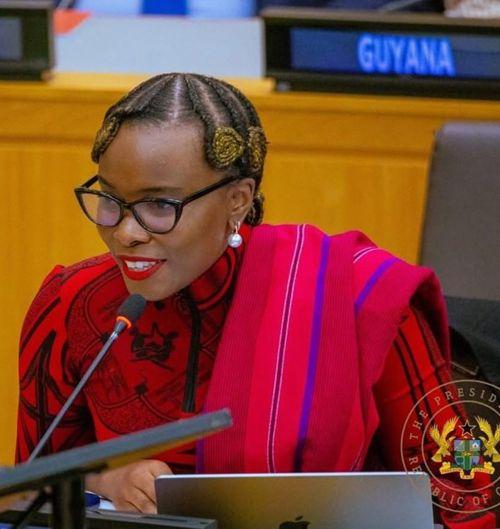
Dr Panashe Chigumadzi, Rapporteur, African Union Committee of Experts on Reparations for Racialised Chattel Enslavement, Colonialism and Apartheid; Assistant Professor of African History, Brandeis University.
Respondents
Professor Gaynel Curry, Chair, UN Permanent Forum on People of African Descent; Head, Law Department, University of the Bahamas.
Professor Verene Shepherd, Co-Chair, CARICOM Reparations Commission; Professor Emerita of Social History, The University of the West Indies.
Organiser
Centre for Global and Comparative Philosophies
Register
Please follow the link at the top of the page to register for this event.
Contact
Image credit: Eugene Golovesov via Unsplash