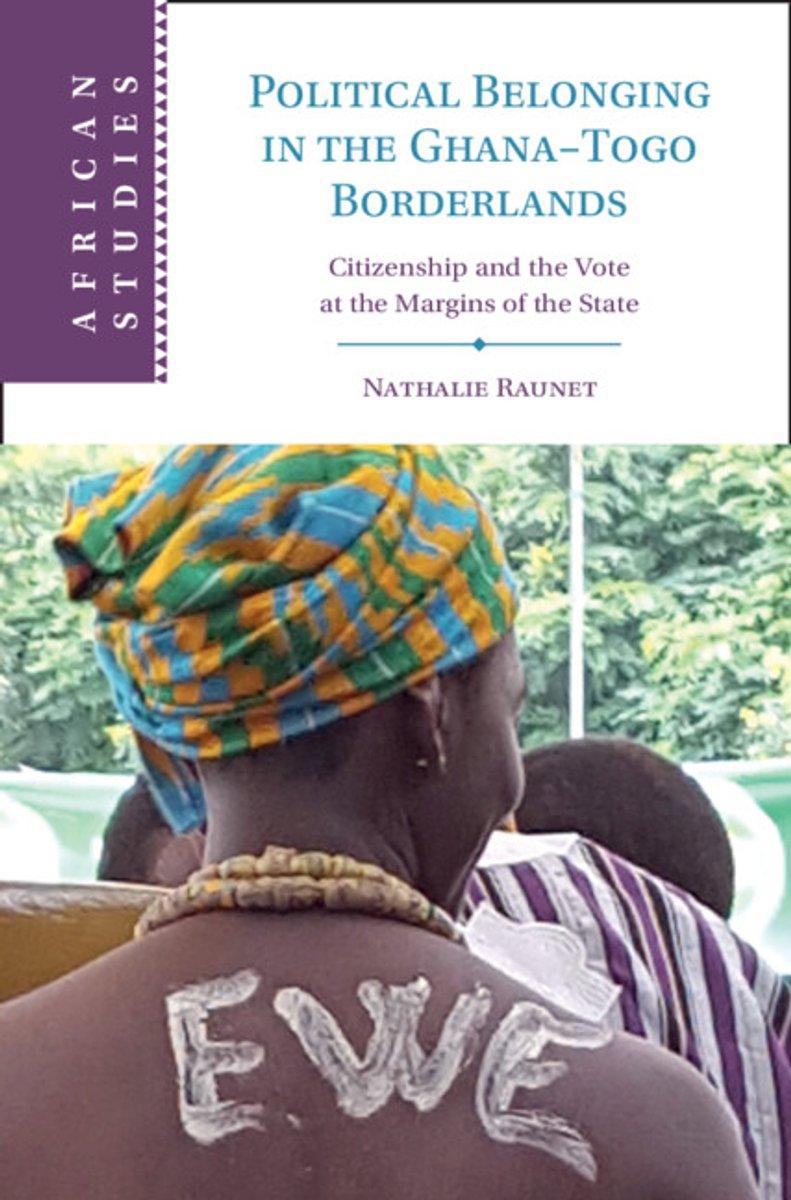
Political Belonging in the Ghana-Togo Borderlands: Citizenship and the Vote at the Margins of the State

Key information
- Date
- Time
-
12:00 pm
- Venue
- SOAS, University of London
- Room
- C 426 (Main Building)
- Event type
- Seminar
About this event
In the wake of the 2016 national elections in Ghana, the issue of cross-border voting triggered a nation-wide debate. But who exactly constitutes the electorate? Who is a national, who is a foreigner, and how are these distinctions identified in the Ghana-Togo borderlands?
This study analyses how political belonging is constructed and how it interacts with the nation-state in the region, especially where communities lie across borders, or at another level than the nation-state. Based on archival research, interviews, oral tradition and newspaper analysis, Nathalie Raunet discusses a pattern based on legitimating narratives of indigeneity at local, regional and transnational scales. In doing so, this study offers a new interpretation of the relationship between the Ewe-speaking people (located across the south of the Ghana-Togo border), the Ghanaian and Togolese Republics, and their colonial predecessor states. Adopting an interdisciplinary approach, Nathalie Raunet connects the history of the region with contemporary power struggles and issues of belonging and citizenship since the turn of the twentieth century.
About the Speaker
Nathalie Raunet is an interdisciplinary scholar in African Studies at the University of Birmingham focusing on West African history, anthropology and politics. Her research interests include belonging, citizenship, transnationalism and borders.
After her PhD in the Department of African Studies and Anthropology (DASA) at the University of Birmingham, she was hired as a Postdoctoral Researcher at SCRIPTS Berlin (Excellence Research Cluster on 'Contestation of the Liberal Script') where she was affiliated to the Cluster Professorship 'Contemporary Politics and Societies in Africa' (Otto-Suhr-Institut) and the Research Unit Borders. This then led her to take up her first position as Assistant Professor in DASA, where she stayed for three years and taught many modules in a variety of themes and disciplines in topics such as migration, development, politics and cultures. She is now continuing her path as Assistant Professor in the International Development Department, working as Co-Investigator on an ESRC Responsive Mode project: 'Global Britain, Backlash, and the Politics of "values" in Contemporary UK-Africa Policy', under the leadership of Jonathan Fisher (PI), and with other Co-Is (Niheer Dasandi, IDD and Molly Sundberg, University of Stockholm). Her next research project focuses on the social and political history of boundary demarcation in Africa.
Image credit: Ghana Togo Border (wikimedia commons)
Book Cover