Department of Politics and International Studies
Dr Frank Maracchione
You are viewing:
Key information

Key information
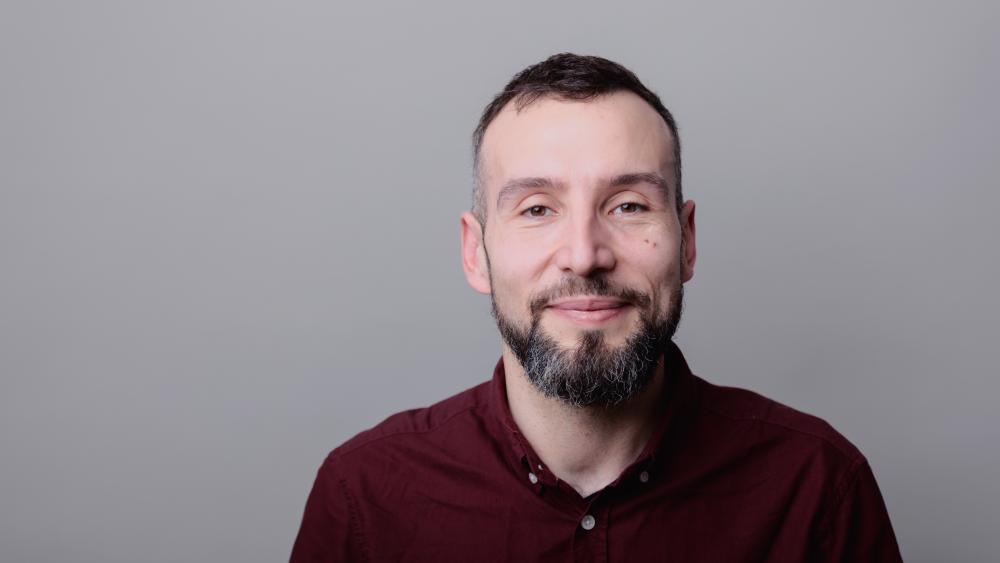
- Roles
- Department of Politics and International Studies ESRC Postdoctoral Fellow
- Building
- Russell Square: College Buildings
- Office
- C223
- Email address
- fm31@soas.ac.uk
Biography
Dr Frank Maracchione is an ESRC Postdoctoral Fellow in the Department of Politics and International Studies.
Frank is a critical political economist and an International Relations scholar focusing on Global China and Central Asia. He is currently ESRC Postdoctoral Fellow at the Department of Politics and International Studies, SOAS University of London, where he is working on a book manuscript based on his PhD on agency and coloniality in China-Uzbekistan normative encounters.
Frank holds a PhD in Politics and International Relations (University of Sheffield), which was funded by an ESRC White Rose DTP Pathway Award for a thesis titled “Amir Timur in Shanghai: Locating agency in Uzbekistan-China relations”, which critiques the top-down dimension of Chinese normative power by focusing on Uzbekistan’s normative agency in its relations with the People’s Republic of China.
Previously, he was a Postdoctoral Researcher working on the political economy of global anti-hegemonic sentiment (focus on Sinophobia and Anti-Americanism) with Dr Jamie Gruffydd-Jones, with whom he is writing a co-authored book on the subject. He is also affiliated with the Sheffield Political Economy Research Institute (SPERI), and the Oxus Society for Central Asian Affairs. He is a co-convenor of BISA’s East Europe and Eurasia working group. He is a member of the Board of Directors of ASIAC – Italian Association for Studies on Central Asia and the Caucasus, and of the editorial board of the journal Studies on Central Asia and the Caucasus.
He was a visiting scholar at the Renmin University of China (2016), George Washington University (2022), the University of World Economy and Diplomacy (2022/2025), Universidad Austral (2025), Nazarbayev University (2025), and Ca’ Foscari University of Venice (2025).
Frank has also worked with policymakers (UK FCDO/Parliament, US Department of State, Italian MFA and Parliament) and private sector organisations such as Global Partners Governance in London, or Central Asian Barometer, on projects connected with China’s role in Central Asia.
Key publications
Journal articles
- Maracchione, F. (2025). Decentring narratives of (de)globalization and crisis: Uzbekistan’s ‘everyday’ political economy amidst Russia’s war in Ukraine. Globalizations, 1–21. https://doi.org/10.1080/14747731.2025.2533666.
- Maracchione, F. (2025). L’Uzbekistan nella Maggioranza Globale: Protagonista della Ri-globalizzazione? (Uzbekistan in the Global Majority: A protagonist of reglobalisation?). Studies on Central Asia and the Caucasus, 2. https://doi.org/10.36253/asiac-3579.
- Maracchione, F. & Jardine, B. (2024). ‘Central Asian Studies in the People’s Republic of China: A Structural Topic Model’, Central Asian Survey. https://doi.org/10.1080/02634937.2024.2314083.
- Maracchione, F., Sciorati, G. & Combei, C.R. (2024). ‘Changing Images? Italian Twitter Discourse on China and the United States during the First Wave of COVID-19’, The International Spectator. https://doi.org/10.1080/03932729.2023.2299452
- Indeo, F. & Maracchione, F. (2024). ‘The Italy-Central Asia 5+1 format in a comparative analysis with China and the US’, Italian Journal of Studies on Central Asia and the Caucasus, ASIAC – Studies on Central Asia and the Caucasus (SCC), 1(1), 181–200. https://doi.org/10.36253/asiac-2416
- Maracchione F. (2023). ‘Multivectoral? A quantitative analysis of Uzbekistan’s foreign policy communication at the United Nations’, Eurasiatica: Armenia, Caucaso e Asia Centrale, Ricerche 2022. http://doi.org/10.30687/978-88-6969-667-1/009
- Maracchione, F. (2022). ‘Relations between the People’s Republic of China and Uzbekistan in the 21st century: agency and China’s security and economic role in Central Asia’, Oriens.Uz, 2(26). Available here. [Article published in Uzbekistani publication].
Edited chapters
- Frappi, C. & Maracchione, F. (2024). Energy geopolitics in Central Asia (La geopolitica delle risorse energetiche in Asia centrale. In: Dian, M. & Diodato, E. (Eds). East Asian Geopolitics (La Geopolitica dell’Asia Orientale). Roma: Carrocci.
Written evidence, reports and policy briefs
- Maracchione, F. (2025). Engaging plural China with industrial cooperation, investment in localised research and specialised diplomatic teams: UK Government’s China Audit. London: Foreign Affairs Committee, House of Commons, UK Parliament. Available here.
- Neafie, J., Maracchione, F., Gabdulhakov, R., Sheraliev, K. and Supyaldiyarov, I. (2024). Beyond the Silk Road: Navigating the Complexities of Central Asian Public Opinion on China. Bishkek: Central Asia Barometer. Available here.
- Maracchione, F. and Sciorati, G. (2024). Tendenze di allargamento nell’Organizzazione di Shanghai per la cooperazione (Enlargement trajectories of the Shanghai Cooperation Organisation). Focus China and Indopacific, n. 5, Observatory of International Politics, Parliament of the Italian Republic. Available here. In Italian.
- Maracchione, F. and Lemon, E. (2023). Chinese-Russian Engagement in Central Asia Amidst the Ukraine Conflict. London: Global Partner Governance. Available on request.
- Maracchione, F. (2023). Energy crises as structural limits for political agency in Central Asia (La crisi energetica come limite strutturale all’azione politica delle repubbliche dell’Asia centrale). Energy Security, n. 8, Observatory of International Politics, Parliament of the Italian Republic. Available here. In Italian.
- Zhu, A., Jardine, B. and Maracchione, F. (2022). Chinese Academia Marches West: A Structural Topic Model of China’s Knowledge-Production in Central Asian Studies. Washington DC: The Oxus Society for Central Asian Affairs. Available here.
Op-eds
- Maracchione, F. ‘The new normal is not deglobalization: it’s reglobalization’. The Diplomat, 28/10/2025. Read here.
- Maracchione F. ‘Licorice and leather: Spotting Chinese soft power in rural Uzbekistan’, Eurasianet, 22/03/2023. Read here.
Podcast episodes
- SPERI Presents…Ground Level: Everyday Political Economy – Podcast series. (Forthcoming).
- SPERI Presents…LIVE: Is Political Violence Central to Capitalism? – Live episode at BISA 2025. Available here.
- Radio Free Europe/Radio Liberty, Majlis podcast – What Do Central Asians Think About China? – Available here.
Research interests
Frank is a critical political economist and IR scholar studying Global China and specialising in how local sociocultural norms and actors shape global political and economic processes. His work approaches globalisation not as a one-directional structural force, but as a site of contestation, where communities, capital/firms, and state elites negotiate meaning, power, and economic futures.
Empirically, he explores the global rise of the People’s Republic of China, and how China’s presence abroad reshapes global knowledge production, development models, and political alignments in the Global South and beyond. His research spans Asia and Latin America, while exploring Europe and the U.S. as counter-sites of reaction, and resistance.
Frank’s work advances a constructivist institutionalist vision of political economy that assigns agency to a plurality of actors, from local communities of workers and carers to political and business elites, challenging structuralist, Eurocentric assumptions that see power as exogenous, fixed, and Western-centred. He builds on these foundations through sustained engagement with post/decolonial and feminist literatures, which foreground conflict, intersectional hierarchies, and grounded forms of resistance.
Three core themes structure Frank’s research agenda:
1) Local grassroots agency in global production: He explores how communities, firms, and subnational actors negotiate foreign investment, industrial and social upgrading (including labour and social rights), and technological transfer, particularly in Chinese-funded production. He has a special focus on green industries like solar panels and electric vehicles (EV) supply chains, particularly in Central Asia (Uzbekistan), and associated shifts in labour-state-capital relations.
2) The political economy of public opinion, contestation, and backlash: Using fieldwork interviews, survey data, and LLM/AI-powered topic modelling, he analyses how sentiment towards foreign powers becomes a political identity-making device. Specifically, he traces how China and the U.S. become symbols around which political claims (sovereignty, security), and economic projects (liberalisation, development, modernisation, poverty reduction) are articulated, through mixed methods (fieldwork in Argentina, Kazakhstan, Uzbekistan and Italy; social media analysis) and quantitative (India, UK; analysis of parliament speeches) case studies.
3) Innovative methods for studying knowledge production and normative power: Frank works with interdisciplinary teams including computational linguists to develop mixed methods frameworks to analyse multilingual corpora. Through applied computational linguistics, his work bridges everyday political economy and epistemic politics, producing methods and research to tackle bias in analyses of diverse knowledge production sources about global politics, development, coloniality, and modernity. Chinese, and Central Asian-language materials are the empirical core targets of his methodological work, but he also worked with material in Spanish, Italian and English.