Alumni Outcomes: Theresa Zischkin

Please introduce yourself, including when you took our programme, where you are from and where you are based now.
My name is Theresa Zischkin. I completed the SOAS-Alphawood Postgraduate Diploma in Asian Art in 2021. I am Austrian and currently work as a research assistant at Ludwig Maximilian University of Munich. In addition, I work as a cataloguer at an auction house in Vienna.
What were you doing before joining the SOAS-Alphawood Asian Art Programme?
Before joining the programme, I had already been working in the art market for several years while continuing my academic studies in art history and archaeology. My work involved close engagement with European works of art as physical objects, which strengthened my interest in materiality. However, I wanted to deepen my academic understanding of art outside Europe and its global contexts, which led me to the SOAS-Alphawood Asian Art Programme.
What are you doing now, and how would you describe your current role or focus?
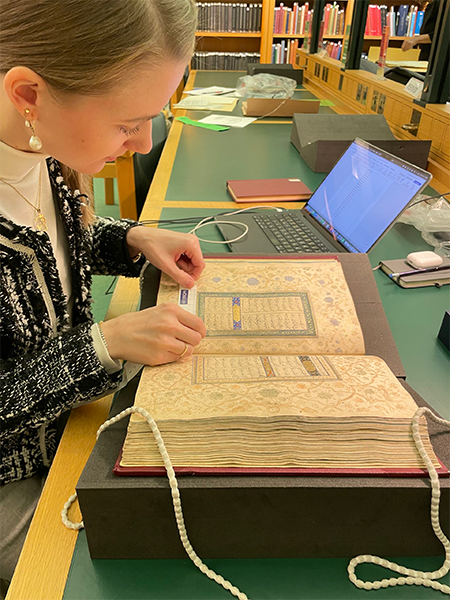
I am currently working on a PhD project on stencilled paper in manuscripts from Central Asia, Greater Iran, and Mughal India. Within the ERC project, I focus on decorated paper traditions in South Asian manuscripts. My research explores the codicological aspects of manuscripts, artistic exchange, and questions of transmediality. Alongside my academic work, my experience in the art market continues to inform how I approach objects and their histories.
Do you have one key achievement or point of pride from your current role that you would like to share?
One point of pride in my current role is contributing to the ERC project GLOBAL DECO PAPER, which investigates the global history of decorated paper. Within this project, I am able to develop my own research on stencilled paper in manuscripts and bring attention to a material that has often been overlooked in manuscript studies. Being part of a collaborative international research environment while contributing to this broader field is very rewarding.
What did the step immediately after completing the SOAS-Alphawood Asian Art Programme look like for you?
After completing the programme, I enrolled as a PhD student and began working more intensively on projects related to Islamic manuscript studies. The programme strengthened my confidence in approaching Asian art within a global framework and helped shape the direction of my current research.
Looking back, what parts of the SOAS-Alphawood Asian Art Programme most directly prepared you for what you’re doing now?
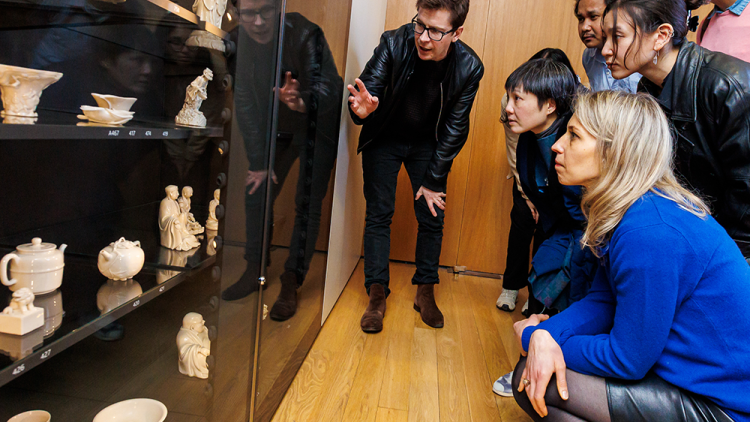
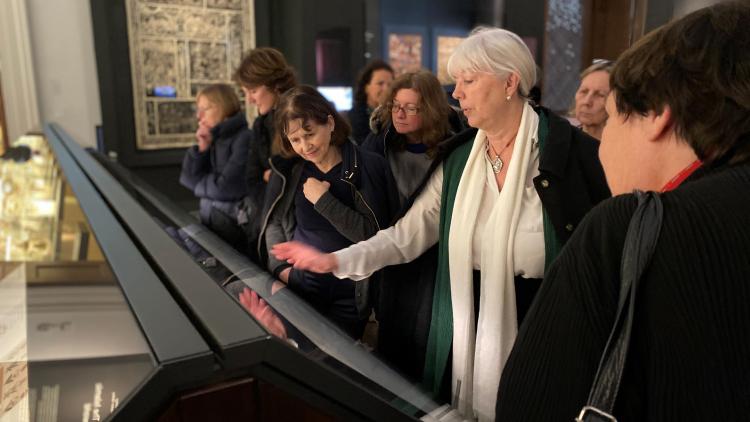
The programme’s emphasis on object-based study and engagement with museum collections was particularly valuable. It encouraged close looking and critical analysis of artworks while also situating them within broader historical and cultural networks. This approach has strongly influenced how I conduct research today.
Was there a moment — academic or professional — where you realised the SOAS-Alphawood Asian Art Programme had changed how you approached your work or area of specialism?
One of the most important shifts for me was learning to approach Asian art within interconnected global contexts rather than isolated regional frameworks. This perspective has shaped how I think about manuscripts and decorated paper as part of wider artistic exchanges across cultures.
What would you say to someone considering the SOAS-Alphawood Asian Art Programme who’s unsure how it translates into real-world outcomes?
The programme provides both a strong academic foundation and practical experience working with objects and collections. This combination is extremely valuable for careers in academia, museums, the art market, and other cultural institutions. It also encourages students to develop their own research interests and networks, which can open many different professional paths.
How would you summarise your experience on the SOAS-Alphawood Asian Art Programme and how it prepared you for your current work in one or two sentences?
The SOAS-Alphawood Asian Art Programme provided an inspiring and rigorous environment for studying Asian art through direct engagement with objects and collections. It strengthened my research perspective and helped shape the interdisciplinary approach that defines my work today.
View Theresa's profile at Ludwig Maximilian University of Munich
View Theresa's Linkedin profile