Art historian appointed advisor to Cambodian government national culture committee


Dr Peter D. Sharrock, an expert on the ancient history of the Khmer Empire at SOAS University of London, has been officially appointed an advisor to Cambodia's new National Committee for Khmer Culture, History, and Civilization (NCKCHC), chaired by Deputy Prime Minister Vongsey Vissoth.
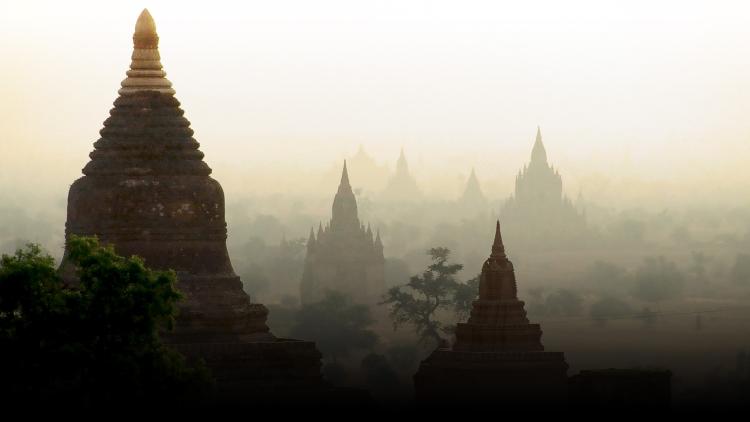
The new Committee will oversee a major update to the Southeast Asian country's national archives and educational materials. This is aimed at incorporating recent evidence-based scholarship uncovering the major historical place in world politics, religion and trade of the former capital, Angkor, in the 12th century CE, and elucidating the country's subsequent development.
Joining NCKCHC is an honour that will bring SOAS closer to Cambodian cultural research and restoration institutes in a period rich in new discoveries.
Dr Sharrock, who reported the American war in Indochina as a Reuters correspondent, joined SOAS via the renowned SOAS post-graduate Arts Diploma directed by Dr Hettie Elgood. He is now Director of Regional Partners and Summer Programmes in the SOAS Alphawood Group in the College of Humanities.
Dr Sharrock said: "Joining NCKCHC is an honour that will bring SOAS closer to Cambodian cultural research and restoration institutes in a period rich in new discoveries.
"Helicopter-borne LiDAR remote-sensing technology has proven that Angkor - today still mostly covered by tropical forest - rivalled the Chinese capital of Chang'an in scale with a population of approximately one million, when London had 20,000 and Paris 40,000.
"The Khmer Empire constructed a major road and water management system, making it a massive rice producer, while its military power used the road network to extend its territory from the Mekong Delta, across modern Thailand and Lao and into modern central Vietnam.
"The ancient Khmers were also known from India to China as experts in medicinal herbs and in the 12th century they applied this in a world-first innovation by Buddhist King Jayavarman VII, creating a national health service, delivered through a chain of 102 regularly supplied, free hospitals manned by doctors and nurses trained at Ta Prohm university-temple.
"Our students will, as Helen Churchill Candee did in 1924, experience that '[the] tale of it is incredible; the wonder which is Angkor is unmatched in Asia."
A century of French research into 'Khmerologie' is now being extended by scholars and restorers from Cambodia, Australia, USA, Japan, China and Germany. It is currently being channelled, via the NCKCHC, into state archives and the libraries of universities, museums and schools to promote a fuller understanding of Khmer history and civilisation, and to strengthen national cultural identity damaged under the Khmers Rouges.
One of Dr Sharrock's early Diploma students was US journalist and television entrepreneur Fred Eychaner, now President of the Alphawood Foundation in Chicago, which led to Alphawood becoming SOAS's largest donor with an endowment of more than £25 million providing 200 scholarships for Southeast Asian students to study in London, and for new SOAS teaching posts in Southeast Asian and Tibetan art history, archaeology and museology. The Alphawood gift also supports Dr Sharrock's annual Summer Programmes in the Region, which have produced two SOAS-Alphawood anthologies of new research - The Creative South (ISEAS Singapore 2022) and From the Periphery to the Centre.
Fred Eychaner was decorated in 2021 by US president Joseph Biden with the National Medal of Arts (the highest U.S. government award for artists and arts patrons) with special mention of his contribution to art education in Asia.