Bukhara music and dance performance takes place at SOAS


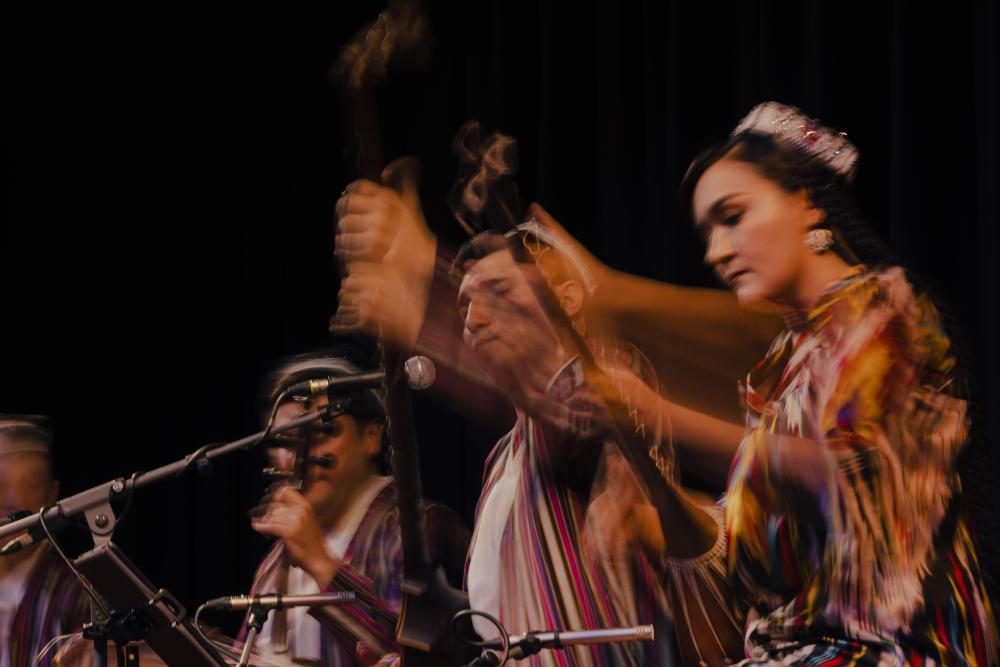
The internationally acclaimed Ilyos Arabov Ensemble from Uzbekistan performed a bilingual Uzbek-Tajik programme of Shashmaqom at SOAS in March, as part of an international tour in London, York and Venice, supported by the Maqām Beyond Nation project.
Titled 'Music and Dance of Bukhara: Spiritual Heartland of Central Asia', the programme was specially curated by Dr Saeid Kordmafi and Ilyos Arabov for the tour, and is original in various ways.
The ensemble presented sections from a single Shashmaqām suite: Maqām Navā. The pieces come mainly from the Uzbek Shashmaqām, yet the performance also includes three Persian-language pieces. Arabov’s bilingual arrangement illustrates how maqām performance can be fluid, flexible, and responsive to different contexts, revealing the creative potential of the Shashmaqām repertoire beyond the rigid canonical structures.
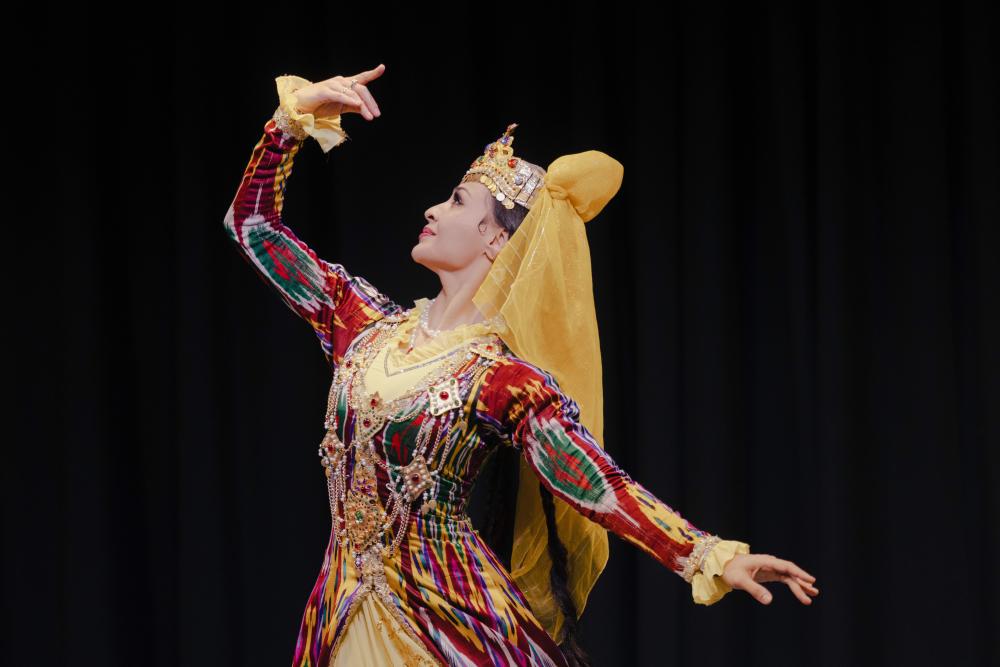
The second part of the programme included a vibrant dance performance of Mavrigī, given by the outstanding dancer Dilorom Madrakhimova, accompanied on frame drums and Persian lyrics, representing the celebratory music of Bukhara.
Bukhara and its musics testify to the cultural diversity of Central Asia. The city embodies multiple forms of border-crossing: a major pilgrimage destination, a centre of learning, poetry and music, where Sufi aesthetics and Jewish musical artistry developed together within a shared urban tradition. The Bukharan Shashmaqām, the pre-eminent repertoire of Central Asian art music, was patronised by the court of the Bukharan Emir in the 19th Century, set to classical Persian poetry and sung by Jewish performers. It is the primary source for the modern national musical canons of both Tajikistan and Uzbekistan, and the basis of a rich living tradition of contemporary performance. Notwithstanding the political transformations of the 20th Century, Bukhara remains a site where the boundaries melt away.
One of Uzbekistan’s leading vocalists, and a multi-instrumentalist, Ilyos Arabov exemplifies Bukhara’s linguistic and musical heritage. Born and raised in Bukhara, he speaks Tajik Persian as well as the Uzbek national language. Arabov studied the dutār with masters of the city, and later in the Tashkent conservatoire he learned the vocal art of Shashmaqām.
Images: Mike Skelton
Ilyos Arabov ensemble with Dilorom Madrakhimova at SOAS