High-Level Event in Washington, D.C. Addresses Global Debt, Climate Crisis, and Geopolitical Fragmentation


SOAS Centre for Sustainable Finance co-organises high-level expert talk on the sidelines of the 2025 Annual Meetings of the World Bank Group and the International Monetary Fund.
Washington, D.C. – October 14, 2025 – A high-level expert discussion, “Sovereign Debt, the Climate Challenge, and Geoeconomics: Pathways for a Sustainable Global Response,” convened on the sidelines of the 2025 Annual Meetings of the World Bank Group and the International Monetary Fund to tackle the increasingly complex intersection of global sovereign debt burdens and climate vulnerability amidst geopolitical fragmentation.
The discussion, co-hosted by the Heinrich Böll Foundation, the Atlantic Council, and the SOAS Centre for Sustainable Finance, brought together policymakers and experts to explore the shrinking fiscal space and rising borrowing costs faced by economies, particularly in the Global South. These countries are grappling with heavy debt loads, which severely constrain their ability to mobilise resources for decarbonization, adaptation, and coping with mounting climate shock costs.
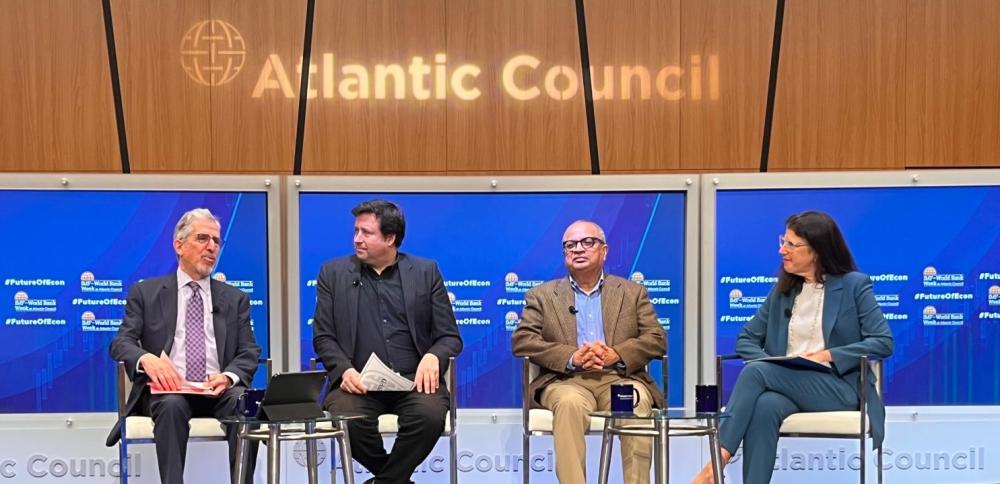
Held at the Atlantic Council headquarters in Washington, D.C., the event sought to identify cooperative, sustainable response pathways to reform the international financial architecture, which many experts argue has failed to produce meaningful change despite mounting calls for reform.
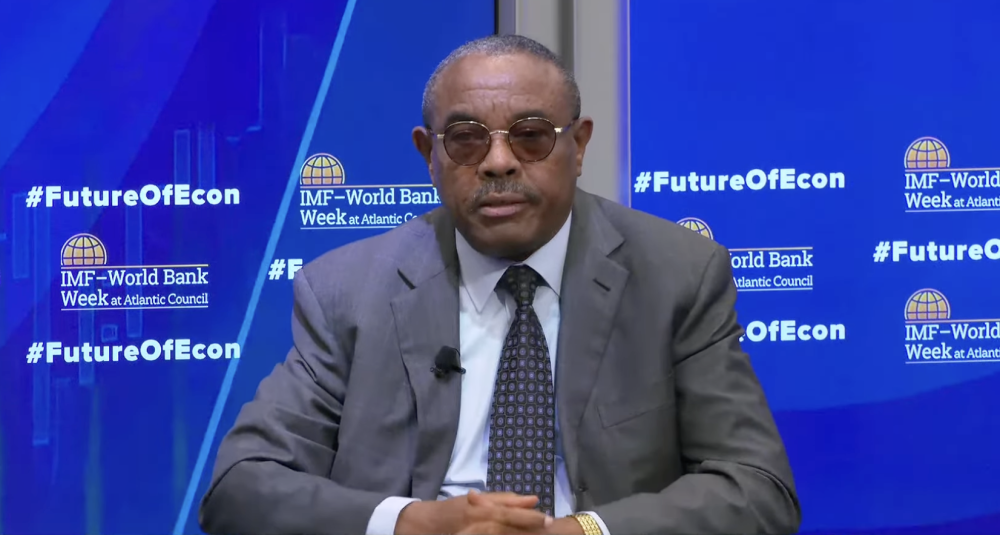
The event started with welcome remarks from Josh Lipsky, Director of the Atlantic Council Geoeconomics Center, and a fireside chat between Hailemariam Desalegn Boshe, former Prime Minister of Ethiopia and Member of the African Leaders Debt Relief Initiative, and Nicole Goldin, Senior Fellow at the Atlantic Council. H.E. Boshe stressed that improving debt sustainability is a shared responsibility. Developing economies must strengthen fiscal management, enhance tax collection, ensure transparency, and curb illicit financial flows — but these domestic actions must be complemented by international support that help to deal with the increasing number of external shocks. According to him, debt relief and climate-responsive finance are indispensable to macroeconomic stability.
This was followed by a panel discussion between Nicole Goldin; Professor Ulrich Volz, the Director of the SOAS Centre for Sustainable Finance; and Vasuki Shastry, Senior Advisor at Gatehouse. The discussion highlighted the urgent need to address climate change and sovereign debt in an integrated manner, recognising that current geopolitical shifts are fundamentally reshaping global economic stability and investment flows. A video recording of the event is available.
The public event was preceded by a closed breakfast roundtable with high-level representatives from governments, international organisations, and think tanks. The closed-door discussion was convened in accordance with Chatham House rules. Participants agreed that the common narrative portraying developing economies as “over-indebted” misses the point. Many have too little productive debt that supports growth and investment. A two-track approach will be needed: comprehensive debt restructuring with full creditor participation and concessional finance for debt-distressed countries, combined with expanded concessional lending, targeted Special Drawing Rights reallocations, and climate-linked instruments — such as thematic bonds, debt-for-climate swaps, and disaster clauses — for solvent but liquidity-constrained economies. These tools can ease borrowing costs and expand fiscal space.
Header image credit: Harold Mendoza via Unsplash.
Video recording of the event
A global response to sovereign debt pressures and climate change