Major European Commission grant awarded for research on international landmine detection


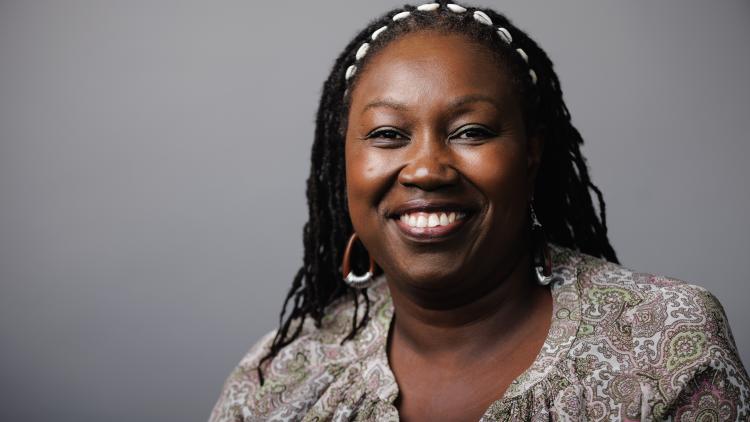
Dr Sarah Njeri, Reader in Peacebuilding, Humanitarianism and Conflict Studies at SOAS, has been awarded a €1,4 million grant from Horizon Europe as part of a research consortium to enhance the efficiency, coordination, and impact of landmine action. Horizon Europe is administered by the European Research Executive Agency.
REMEDIS (Risk Education and Mines/Explosives Detection Improvement Strategies) will develop and test a new range of landmine detection systems, combining a range of drone-based sensors to locate explosive hazards more quickly, cheaply, and reliably in a range of terrains.
Post-war explosive ordnance risk creates a range of interconnected humanitarian, socioeconomic and environmental challenges; threatening lives, delaying reconstruction, limiting access to land and natural resources, damage to ecosystems, and impeding on the return of displaced communities. This has been recognised across regions of both Asia, Europe and Africa, most notably in Ukraine.
The project brings together an exceptional range of expertise from across Europe and Ukraine to address the humanitarian consequences of landmines and explosive remnants of war.
With a focus on Ukraine, regions across Europe and internationally, Horizon Europe is supporting REMEDIS to create shared standards, protocols, and training programmes so that over 100 mine action operators in Ukraine can work in more of a collaborative and data‑driven approach.

Dr Njeri will lead work on Explosive Ordnance Risk Education (EORE), which will contribute evidence and practical approaches that help communities understand and navigate risks while supporting longer-term recovery and resilience.
Speaking on the project, Dr Njeri said:
"The project brings together an exceptional range of expertise from across Europe and Ukraine to address the humanitarian consequences of landmines and explosive remnants of war.
“This work will place affected communities at the centre of the research and will build on the rich community of practice that already exists within EORE. This aligns closely with the strength of REMEDIS: its collaborative approach, which combines technological innovation with meaningful engagement with affected populations to ensure that solutions are both effective and grounded in local realities.
Professor Laura Hammond, SOAS Deputy Vice-Chancellor of Research and Knowledge Exchange added:
"Post-war explosive ordnance is a major challenge for societies emerging from conflict, and the holistic approach that Sarah and the team are taking to this research will inform concrete actions to help reduce the threats and facilitate peace building. I’m absolutely delighted to see this grant being funded."
The four-year REMEDIS project aims to generate robust evidence-based research on the kinds of explosive ordnance risk education (EORE) that actually work to co‑design better, locally grounded education and coordination approaches that reduce civilian casualties and strengthen European mine action policy frameworks. The total project grant budget is €5,9 million.
Other REMEDIS consortium partners include the HALO Trust (UK/Europe), the Interregional Center for Humanitarian Demining and Rapid Response of the State Emergency Services (Ukraine), the Kyiv Aviation Institute (Ukraine), PostUp Foundation (Poland), the Royal Military Academy of Belgium, the University of Oviedo (Spain), and Tech 4 Tracing (Netherlands).