Professor Volz delivers keynote speech on climate finance for vulnerable countries on the sidelines of the UN climate conference in Baku


Keynote speech sketches out five complementary approaches that would enable climate vulnerable developing countries to undertake strategic investment in both climate adaptation and mitigation.
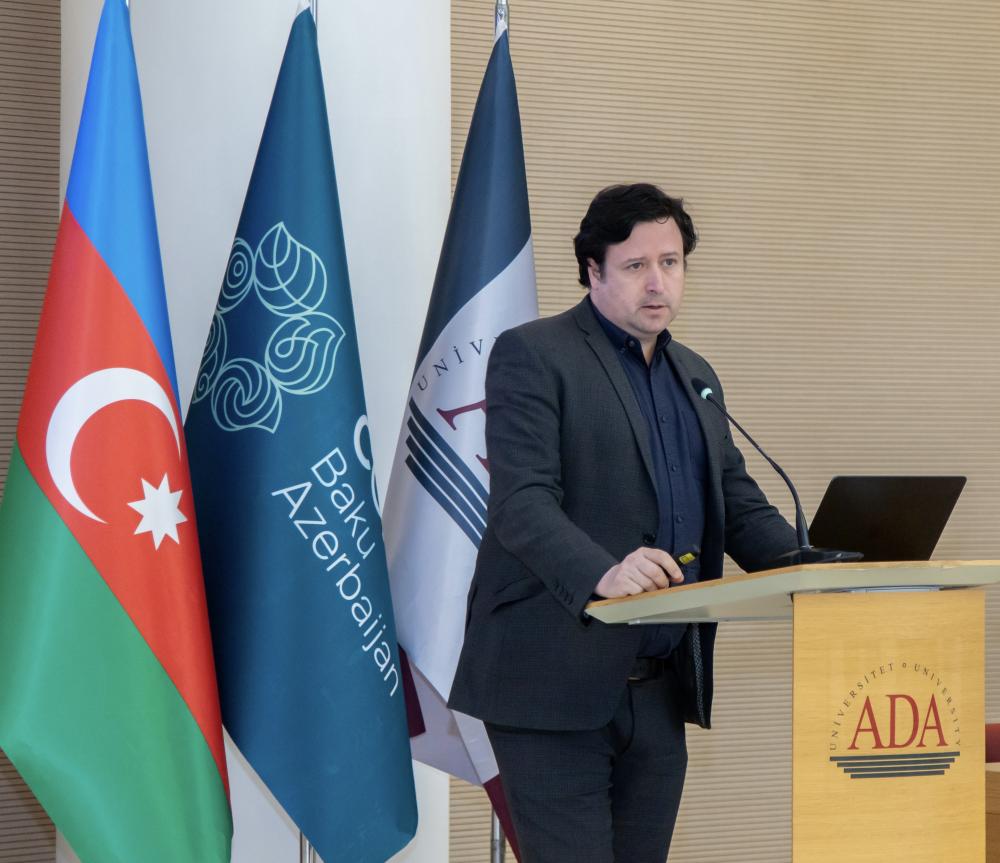
Professor Ulrich Volz, the Director of the SOAS Centre for Sustainable Finance, delivered a keynote speech on the sidelines of the UN Climate Conference in Baku on 17 November. He spoke at a conference organised by the Asian Development Bank (ADB), the ADB Institute at ADA University.
In his keynote speech on “Climate Finance Solutions for Climate-vulnerable Developing Countries”, Professor Volz highlighted that anthropogenic climate change poses a severe threat to the public finances and economic development prospects of climate vulnerable countries, requiring urgent investments in climate resilience and adaptation. Yet not only are current climate finance flows to developing countries far too small, resulting in significant investment gaps. The cost of capital facing most developing countries is also far too high, inhibiting critical climate investments.
Against this backdrop, Professor Volz advanced five complementary proposals to mobilise investment and deal with debt vulnerabilities. First, he emphasised the crucial importance of strengthening domestic financial resource mobilisation and pointed to the driving role that public development banks could play in this process. Second, he pointed to a significant potential of leveraging digital sustainable finance solutions for climate action. Third, he called for a targeted allocations of Special Drawing Rights to countries hit by climate shocks. Fourth, he presented a proposal for front-loading international climate finance through a new Financing Facility against Climate Change. Fifth, he highlighted that more than 50 developing countries were facing severe sovereign debt problems and called for an ambitious debt relief initiative that would free resources in for green and inclusive recovery.
These five complementary proposals would help climate vulnerable developing countries to undertake strategic investment in both climate adaptation and mitigation. Without addressing sovereign debt problems, lowering the cost of capital, and mobilising domestic (local currency) financial resources and international concessional capital, there is little hope that climate (and SDG) investment gaps can be filled.
Earlier this year, Professor Ulrich Volz was appointed by the Brazilian G20 Presidency to the Group of Experts of the G20 Task Force for the Global Mobilization against Climate Change (TF-CLIMA). The Group of Experts recently launched its final report with recommendations to the G20 governments.
Header image credit: Lloyd Alozie via Unsplash.