SOAS CAMHRA contributes to new approach for mental health care in reducing hospital admissions


The Centre for Anthropology and Mental Health Research in Action (CAMHRA) has contributed to the nationwide ODDESSI trial (Open Dialogue: Development and Evaluation of a Social Network Intervention for Severe Mental Illness), a major NHS-funded study led by UCL.
Published in The Lancet Psychiatry, the study conducted over 10 years found that patients treated through Open Dialogue, an alternative approach to mental healthcare, are three times less likely to be admitted to psychiatric inpatient hospital, compared to those receiving treatment as usual. The study also found lower chances of re-referral to crisis care over the study’s two-year follow-up period – indicating that Open Dialogue may help to reduce NHS costs.
The ODDESSI trial shows that when care is built around relationships, mutuality, continuity and shared decision-making, people report better recovery, better quality of life and better experiences of care.
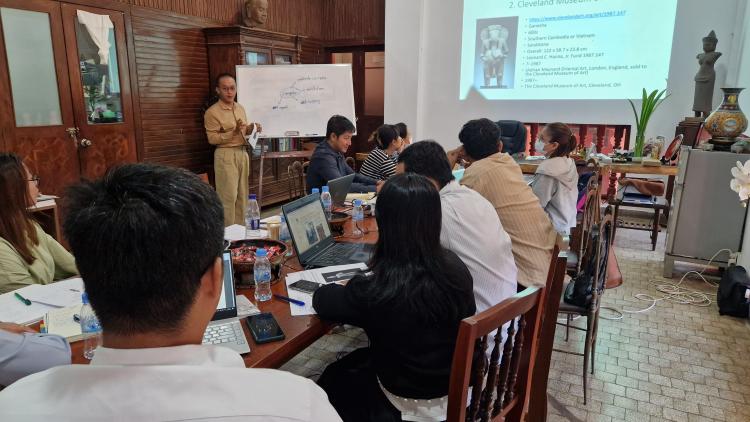
A team of anthropologists from SOAS CAMHRA joined NHS teams implementing the approach in the trial as trained practitioner-ethnographers to help understand the actual process of Open Dialogue – furthering understanding of the contextual factors that make Open Dialogue more successful.
Open Dialogue is designed to bring together clinicians, patients, families and wider support networks to make collaborative decisions and reduce reliance on traditional crisis services. The programme looks to transform and improve patient outcomes, understand the financial value of Open Dialogue, and enhance the overall experience of mental health care services for patients, carers and staff alike.
Speaking on the findings and wider outcomes of the programme, Director of SOAS CAMHRA Professor David Mosse said:
“The Open Dialogue approach evaluated in the ODDESSI trial brings together in a structured way many things known to be effective in psychiatric crisis care: involving families, continuity of care, emotional presence and listening, flexibility (among other things). The trial shows as an approach that Open Dialogue is effective in key respects. Our parallel in-depth ethnographic study addressed questions the trial was not designed to: how and for whom does the approach work, what are the contextual factors (etc.)? insights on the local processes and conditions of Open Dialogue will be crucial to its uptake more widely as an alternative way of organising mental health care. “
Co-author of the findings Russell Razzaque, Professor of Relational Psychiatry at SOAS, added: “Mental health services are under enormous pressure, with many people stuck in a revolving door of crisis care and hospital admissions.
Too often care is disjointed, families are left out and not enough time is spent on forging a deep and lasting therapeutic relationship in our services. The ODDESSI trial shows that when care is built around relationships, mutuality, continuity and shared decision-making, people report better recovery, better quality of life and better experiences of care, while at the same time making far less use of inpatient or crisis services.”