SOAS Centre for Yoga Studies opens Chinese exhibition exploring 1,000 years of yoga

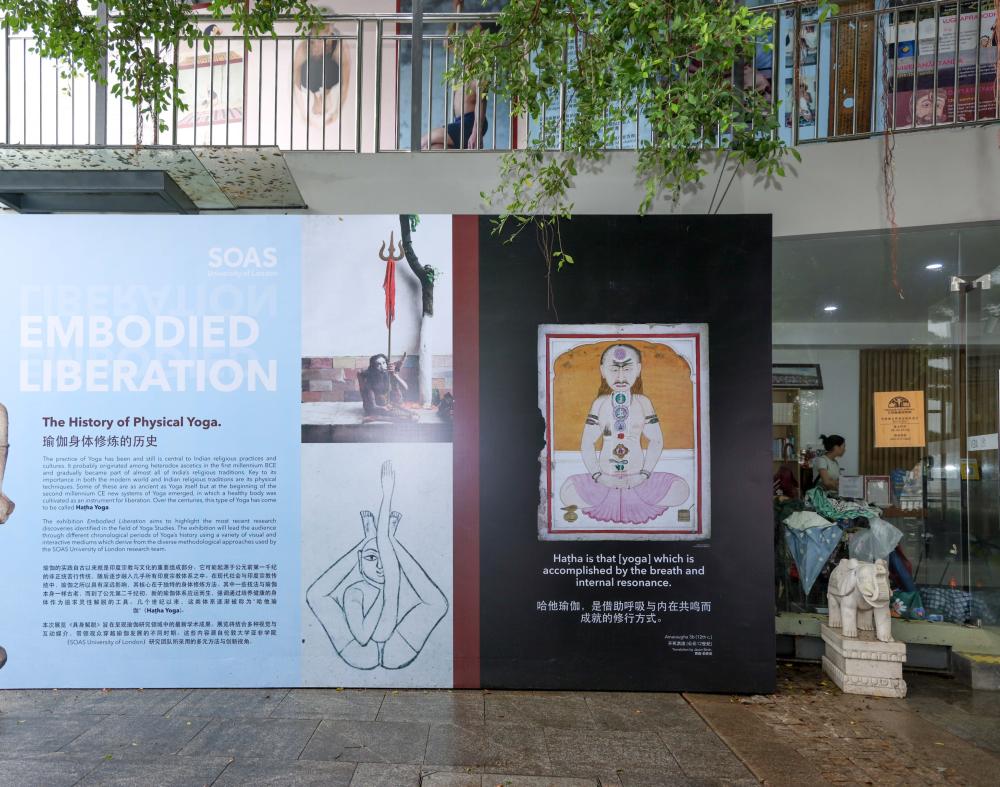
A new exhibition from The Centre for Yoga Studies launched the ‘Embodied Liberation: The History of Physical Yoga’, on the banks of the Pearl River in Guangzhou, China.
Extending back across 1,000 years, the exhibition is a celebration and exploration into the origins, development and traditions of Yoga in India and how it has evolved across the world.
Through this exhibition, I hope modern practitioners discover something new and feel that their own journey is deepened and enriched by this expanded understanding.
Featuring images of ancient stone carvings that highlight early yoga poses and illustrated manuscripts with translations from Persian, Sanskrit, and local languages the displays reveal how physical yoga was widely practiced and adapted across South Asia - supported by insights and findings from the centre's Hatha Yoga research project, which ran from 2015 to 2020.
Jacqueline Hargreaves, Project Manager and Programme Convener at the SOAS Centre of Yoga Studies, who curated the exhibition said:
“Telling the story of physical yoga, from antiquity to modernity, was a visceral challenge. For those who practice yoga regularly, its techniques can feel deeply familiar – we literally breathe, move, and devote significant time to refining these techniques in our own bodies.
With Embodied Liberation, I wanted to challenge some of the assumptions people hold about yoga: what is it, how is it known, what does it mean to be accomplished in it? Through this exhibition, I hope modern practitioners discover something new and feel that their own journey is deepened and enriched by this expanded understanding."
The opening was live-streamed via WeChat to an online audience of over 2000 people across China with an in-person audience of over 100 students. The Indian Consul General to Guangzhou China also toured the exhibition last month to mark the International Day of Yoga. The exhibition runs until the end of July 2025.