SOAS-led report uncovers realities of community unrest in Leicester 2022


The outcome of an inquiry examining the violence that took place between Muslim and Hindu groups in Leicester in August and September 2022 has been published in a SOAS-led report.
The inquiry 'Better Together: Understanding the 2022 Violence in Leicester' completed over the course of almost three years, represents the most comprehensive investigation into the Hindu-Muslim violence that occurred nearly four years ago.
Led Dr Subir Sinha, Director of the SOAS South Asia Institute, in collaboration with Professor Juan Méndez - American University, Washington DC and Professor Chetan Bhatt from London School of Economics, the report examines the causes and impact of the unrest, and to identify lessons for not only for the city Leicester but across other regions in the UK.
We hope that this report, in which we brought together social science research methodologies with community voices, will be useful for citizens, civil authorities and community organisations in Leicester to forge new forms of conviviality and co-existence.
The key findings from the report identified - but were not limited to - that the wave of violence was preceded by mounting tension in early 2022, misinformation via social media fueled fear and mistrust across both Muslim and Hindu communities, and local responses from police and councils being cited as inconsistent with the realities faced by residents in Leicester.
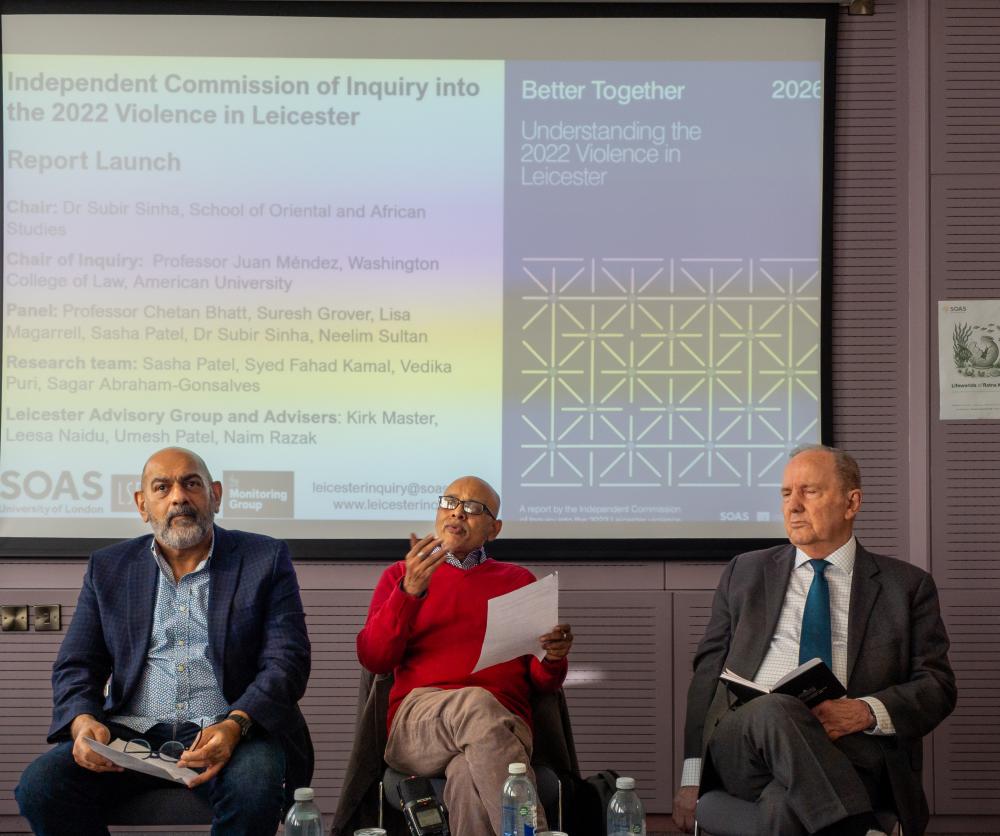
The report’s recommendations and preventative measures included; targeted investment in youth services, housing, education, and community regeneration, community-led, accountable policing with improved understanding of communal dynamics and faster responses to emerging tensions, national and local action to counter misinformation and disinformation, including digital literacy initiatives, clear political leadership that promotes shared civic identity, and long-term rebuilding of shared community spaces, that accounts for youth and religious communities.
Speaking on the report, Dr Sinha said: “We hope that this report, in which we brought together social science research methodologies with community voices, will be useful for citizens, civil authorities and community organisations in Leicester to forge new forms of conviviality and co-existence.
We also hope that there are lessons here for other cities and for national government to spot early signs of breakdown of community relations, and to prevent violent conflict."
The report can be read in full via Independent Commission of Inquiry into the Violence in Leicester.