Women farmers in South Africa risk losing land due to state neglect


Empowering women in agriculture falls short when state neglect and failing infrastructure is pushing farmers off the land, according to findings from a 15-year study exploring the collapse of support for a smallholder farming group in South Africa.
The breakdown of irrigation infrastructure, which is cited as the root cause, has led to ceased farming activity for many women and led to broader consequences for income, food access, and local social networks.
The breakdown of irrigation infrastructure, which is cited as the root cause, has led to ceased farming activity for many women...
The study, published in a report Left Without Water: Cooperative Farming and Infrastructure Breakdown in Makhathini was conducted by Dr Elizabeth Hull, Senior Lecturer in Anthropology at SOAS and Khulekani Dlamini, an independent research consultant.
It is the result of long-term engagement since 2011 with the Isibonelo Cooperative, a smallholder farming group, where 60 members manage individual gardens within a shared 10-hectare plot, coordinated through a formal committee structure. It is situated within the Makhathini Irrigation Scheme, a legacy of apartheid agricultural planning in northern KwaZulu-Natal.
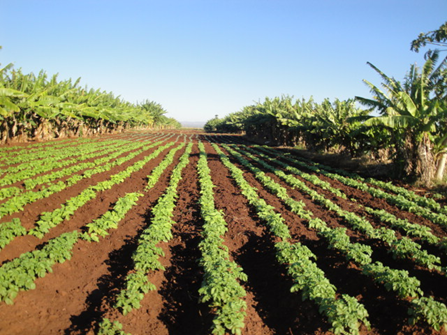
The study shows that while much of the political focus has been directed at land transfers as part of the government’s flagship land reform programme, much less has been given to support and infrastructure maintenance of existing schemes such as Makhathini.
Dr Elizabeth Hull said: “Since 2018 farming activity has ceased due to broken water pipes and access to water. Despite repeated efforts by members to raise the issue with relevant authorities, water supply to the gardens has not been restored.
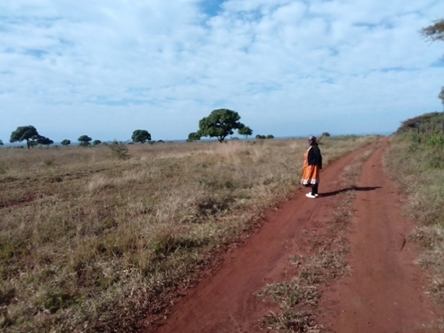
“Land reform is not only about land transfer, but about water, infrastructure and local governance. Investment, repair and maintenance is needed, but long-term sustainability of these projects will depend on strengthening local accountability, including greater institutional engagement with smallholder groups.”
As well as urgent repair and maintenance, the report also recommends greater institutional engagement with smallholder farming groups, particularly women-led initiatives, and improved coordination between scheme management, local government and traditional leadership structures.
Dr Hull has also published an article in The Conversation - Women farmers in South Africa pay the cost of broken irrigation systems – the story of one cooperative.
Hero image: Winter farm landscape in the kwaZulu-Natal Midlands region of South Africa image by Richard.