Department of Anthropology and Sociology
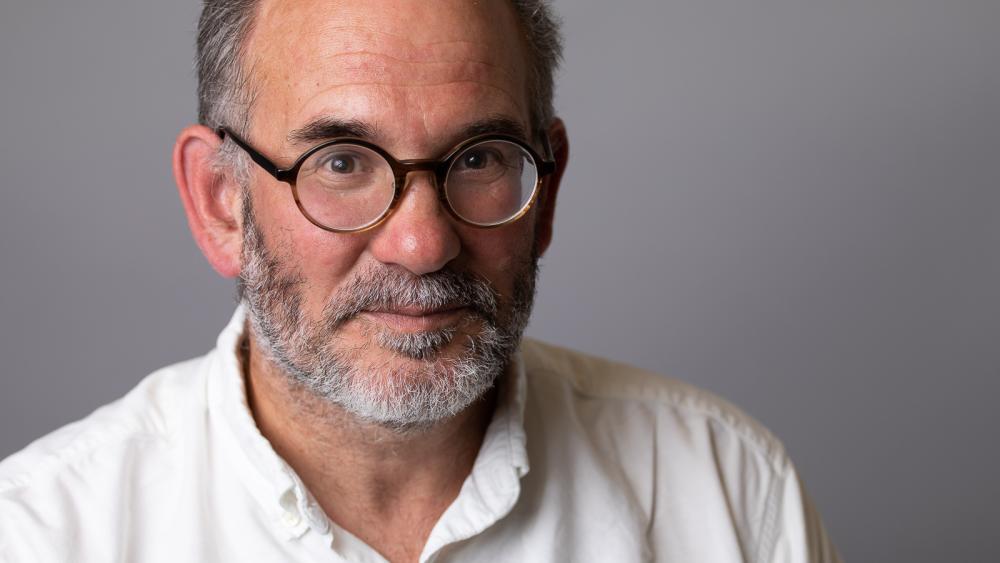
Dr Richard Axelby
You are viewing:
Key information

Key information
- Roles
- Department of Anthropology and Sociology Senior Researcher Academic staff
- Department
- Department of Anthropology and Sociology
- Qualifications
- BA, MA (Hull), PhD (SOAS)
- Building
- Russell Square: College Buildings
- Office
- 574
- Email address
- ra39@soas.ac.uk
Biography
Richard Axelby’s research explores the intersections of social justice, environmental sustainability and democracy, linking local experiences with global systems of governance. Drawing on ethnographic fieldwork carried out in diverse sites - Himalayan grazing pastures, the subterranean basements of the British Library, Ethiopian Universities, Council meetings held inside Sheffield Town Hall - Richard’s work examines how social, political and cultural relationships shape collective decision-making and the pursuit of the common good.
Richard’s long-term ethnographic research in India’s western Himalayas focuses on the strategies employed by ‘Scheduled Tribe’ communities as they adapt to environmental and institutional change. His doctoral research (SOAS, 2005) investigated the historical development of forest management and nomadic herders’ responses to shifting property regimes in Himachal Pradesh. Returning regularly to the region, he has extended this work to explore how access to education, labour markets and government services continues to shape rural livelihoods (2014-15) and how political identities are constructed in village and state parliaments (2022-3).
Beyond the Himalayas, Richard’s has contributed to the anthropology of organisations through a series of books and articles on international development (2013), university research management (2022), and local government in the UK (forthcoming), alongside documentary films such as Full Council (2024), which explores the inner workings of Sheffield City Council.
A member of the Global Research Network on Parliaments and People (GRNPP) since it was established in 2017, Richard has worked to deepen knowledge of the relationships between politicians and citizens and to promote more inclusive, participatory forms of democracy. As Programme Manager of the AHRC-funded Deepening Democracy project (2017–2021), he oversaw the distribution of £1 million in grants to artists, activists and academics in Myanmar, Ethiopia and Bangladesh, supporting training, advocacy and dissemination.
Richard has contributed to major international research collaborations including the ERC-funded project Global Comparative Ethnographies of Parliaments, Politicians and People (2020-2024) which brought together ethnographers from five countries to explore the work of parliaments and the challenges of democratic representation. This culminated in the Living Democracy exhibition at London’s Brunei Gallery (2024) which Richard co-curated with Shirley van der Maarel. His recent and ongoing projects include the AHRC-funded ‘Mursi Encountering Others’ (MEO, 2023-2026) and the ISPF-supported ‘Agro-Pastoralists Educate Outsiders’ (APEO, 2024-25), both of which build partnerships with agro-pastoralist communities in southern Ethiopia to enhance participation, improve collaboration with government agencies, and advocate for recognition and rights.
Committed to innovative public engagement, Richard collaborates with photographers, filmmakers and artists to communicate research findings through creative media. His recent outputs include documentary films (as director of Full Council, 2024), theatrical productions (as executive producer of Tiranya Ko Koisani, National Theatre of Ethiopia, 2022), and exhibitions (as co-curator of Living Democracy, London 2024; and Learning from South Omo, Addis Ababa 2025).
Richard is an active member of the Royal Anthropological Institute’s Policy and Practice Committee, which he helped establish in 2018 to promote anthropology’s relevance to policy-making and applied practice. His collaborative approach to research and teaching continues to demonstrate that anthropology can powerfully connect policy, art and lived experience to foster more just and inclusive democratic futures.