Department of Economics
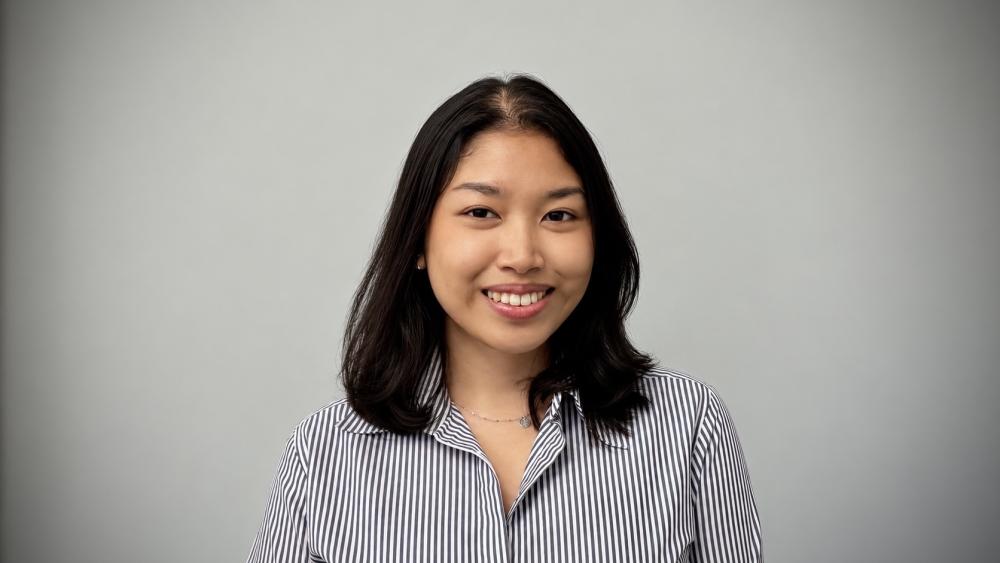
Sylvia Febiandita
You are viewing:
Key information

Key information
- Department
- Department of Economics
- Qualifications
- BSc (Yogyakarta), MSc (London)
- Email address
- 732912@soas.ac.uk
- Thesis title
- The Political Economy of Resource-Based Industrialisation and Technological Catch-Up: Critical Minerals in Indonesia (preliminary title)
- Internal Supervisors
- Professor Antonio Andreoni & Dr Sophie van Huellen
Biography
Sylvia Febiandita is an MPhil/PhD student in Development Economics at SOAS University of London, an Arryman Scholar, and an affiliate of the Centre for Sustainable Structural Transformation (CSST).
Her doctoral research explores the political economy of industrialisation and technological learning in resource-rich developing economies. Focusing on Indonesia's historical and contemporary industrialisation trajectories, she is particularly interested in how evolving state-business relations and institutional arrangements shape industrial policy choices and the prospects for technological catch-up through resource-based industrialisation.
Prior to joining SOAS, Sylvia worked on research and policy projects with the Centre for Strategic and International Studies (CSIS), Jakarta, and Indonesia's Ministry of National Development Planning, covering trade and industrial policy, climate policy, and poverty reduction. Her work includes contributing to the development of Indonesia’s national productivity master plan, assessing the economic and environmental implications of Indonesia’s nickel downstreaming policies, and estimating the impact of European Union’s Carbon Border Adjustment Mechanism (CBAM) on Indonesian economy.
Sylvia holds an MSc in Development Economics from SOAS University of London, supported by the Arryman Scholarship, and a BSc in Economics from Universitas Gadjah Mada, Indonesia, where she was recognised as the Best Graduate in the Department of Economics. She was also awarded an international scholarship programme to study at the University of Pennsylvania and was selected for McKinsey & Company’s Young Leaders for Indonesia programme in 2022
Research interests
- Industrial policy
- Technological learning and catch-up
- Political economy
- Economic history
- Institutional change
Contact Sylvia
- Social media